U.S. President Donald Trump has vowed a forceful response after two United States service members and one American civilian were killed in an attack in Syria that Washington has blamed on the Islamic State group, marking the deadliest assault on US forces there in more than a year.
“There will be very serious retaliation,” Reuters cited Trump saying on Saturday, warning that those responsible would face consequences.
“This was an ISIS attack against the U.S., and Syria, in a very dangerous part of Syria, that is not fully controlled by them,” he said in a post on social media.
Speaking to reporters at the White House, Trump said Syria’s interim president, Ahmed al-Sharaa, was “devastated by what happened”, stressing that Syrian forces were operating alongside US troops. In his online post, Trump added that al-Sharaa was “extremely angry and disturbed by this attack”.
US Central Command said the attack was carried out by a lone Islamic State member in central Syria. Three other US service members were wounded in the ambush, although Trump said the injured “seem to be doing pretty well”.
The US military confirmed that the gunman was killed during the incident. Syrian officials said members of Syria’s security forces were also wounded.
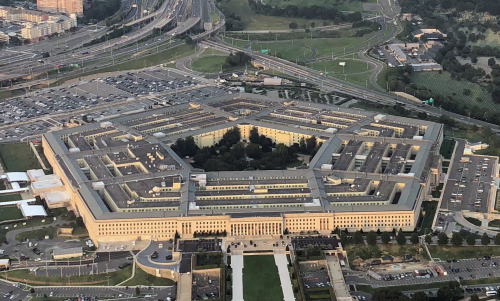
The Pentagon’s chief spokesman, Sean Parnell, said the American civilian who was killed was a US interpreter. He added that the attack targeted soldiers involved in ongoing counterterrorism operations and remains under active investigation.
The shooting took place near the ancient city of Palmyra, according to Syria’s state-run SANA news agency. The wounded were evacuated by helicopter to the Al-Tanf garrison near the borders with Iraq and Jordan.
Republican Senator Joni Ernst of Iowa said the two soldiers killed were members of the Iowa National Guard, where she once served herself.
“Our Iowa National Guard family is hurting as we mourn the loss of two of our own and pray for the recovery of the three soldiers wounded,” she said.
Syria’s Interior Ministry spokesman Nour al-Din al-Baba said a gunman linked to IS opened fire at the gate of a military post. He said authorities were investigating whether the attacker was formally affiliated with the group or merely influenced by its extremist ideology.
Al-Baba later said the attacker was a member of Syria’s Internal Security forces operating in the desert, adding that he “did not have any command post” within the forces and was not a bodyguard for a senior commander.
He said around 5,000 members had joined the Internal Security forces in desert areas and were evaluated on a weekly basis.
According to al-Baba, an assessment conducted three days before the attack concluded that the gunman might hold extremist views, and a decision on his case was expected on Sunday.
“The attack occurred on a Saturday which is a day off for state institutions,” he said in an interview with state television.
US officials made no reference to the attacker being part of Syrian security forces. Asked about the claim, a Pentagon official did not directly address the issue but said:
“This attack took place in an area where the Syrian President does not have control.” The official spoke on condition of anonymity to discuss sensitive military matters.
U.S. Defense Secretary Pete Hegseth issued a stark warning following the attack, posting on X: “Let it be known, if you target Americans — anywhere in the world — you will spend the rest of your brief, anxious life knowing the United States will hunt you, find you, and ruthlessly kill you.”
The United States maintains several hundred troops in eastern Syria as part of an international coalition battling Islamic State remnants. Although IS was defeated territorially in Syria in 2019, the United Nations estimates the group still has between 5,000 and 7,000 fighters across Syria and Iraq, operating mainly through sleeper cells.
The attack was the first on US forces in Syria to result in fatalities since the fall of former president Bashar Assad a year ago. Relations between Washington and Damascus have improved since Assad’s ouster, with al-Sharaa making a historic visit to the White House last month.
It was the first visit by a Syrian head of state since the country gained independence from France in 1946 and followed the lifting of US sanctions imposed during Assad’s rule.
Al-Sharaa led rebel forces that overthrew Assad in December 2024 and was appointed interim leader in January. He previously had ties to al-Qaida and was once the subject of a US bounty of US$10 million.
Last month, Syria formally joined the international coalition against Islamic State as it sought to rebuild ties with Western governments.
Despite those efforts, US forces stationed in areas such as the Al-Tanf garrison in Homs province remain targets. One of the deadliest previous attacks occurred in 2019 in the northern town of Manbij, when a bombing killed two US service members and two American civilians during a patrol.
Saturday’s attack has renewed concerns over the enduring reach of Islamic State and the risks facing foreign troops operating in Syria’s unstable and fragmented security landscape. - December 14, 2025