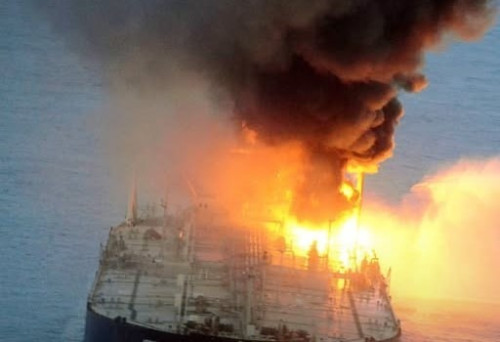
EXPLOSIONS reverberated across Tehran at dawn on Wednesday as the escalating conflict between Iran, the United States, and Israel entered its fifth consecutive day, following earlier strikes on Iranian nuclear sites and retaliatory attacks launched by Tehran across the Gulf.
Iranian state media confirmed multiple blasts in and around the capital, while Israeli authorities reported activating air defences in response to incoming missile fire from Iran.
AP reported the violence has so far claimed over 1,000 lives in Iran, including individuals whom U.S. President Donald Trump noted were once considered potential future leaders of the country.
The conflict has spread beyond Iran, with Lebanon struck by Israeli retaliatory attacks targeting Hezbollah positions.
State media in Lebanon reported at least four fatalities, including civilians, in an Israeli strike on a residential complex in Baalbeck.
The hostilities began after Israel conducted airstrikes on Iranian missile launchers and a nuclear research site. Iran responded by targeting Israel and U.S. interests across the region, including attacks on American diplomatic compounds in Saudi Arabia and the United Arab Emirates.
While dozens of ballistic missiles were fired toward Israel, most were intercepted, although eleven Israeli civilians have perished.
The U.S. military confirmed the deaths of six American service members, four of whom were U.S. Army Reserve soldiers killed in a drone strike on a command centre in Kuwait.
Their identities were released, including Capt. Cody A. Khork of Florida, Sgt. 1st Class Noah L. Tietjens of Nebraska, Sgt. 1st Class Nicole M. Amor of Minnesota, and Sgt. Declan J. Coady of Iowa, who received a posthumous promotion. Two additional service members also died in the same strike.
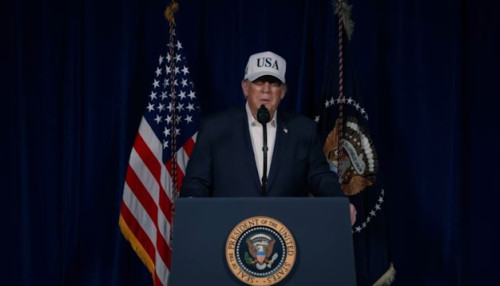
U.S. President Trump has suggested the conflict could endure for several weeks or longer.
While the initial objectives reportedly included crippling Iran’s missile capabilities, dismantling its navy, and disrupting its nuclear ambitions, senior administration officials have stated that regime change is not the goal.
Trump, speaking from the Oval Office, acknowledged that “the people we had in mind” to lead Iran following the conflict are now dead, and warned that a successor might be “as bad as the previous person.”
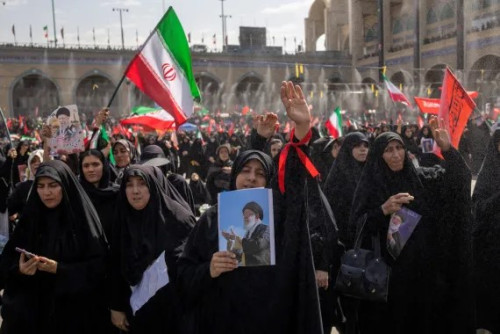
Iranian authorities are reportedly in urgent deliberations to replace Supreme Leader Ayatollah Ali Khamenei, who ruled for 37 years.
The selection process is fraught with uncertainty, with candidates ranging from hard-liners committed to confrontation with the West to reformists seeking diplomatic engagement.
Meanwhile, U.S. military commander Adm. Brad Cooper stated that nearly 2,000 targets in Iran have been struck, including ballistic missile sites and drones, while satellite imagery suggested damage to the presidential complex in Tehran.
Israel also reported hitting a building in Qom, reportedly intended for clerics involved in selecting Khamenei’s successor, as well as Iran’s alleged underground nuclear research facility, described as developing components for nuclear weapons—claims not independently verified.
Diplomatic sites have been affected, with drone strikes on the U.S. Embassy in Riyadh and the U.S. consulate in Dubai causing fires, although all personnel were accounted for.
In response, the U.S. evacuated non-essential staff and families from multiple Middle Eastern countries, urging American citizens to leave the region as airspace closures and rising hostilities disrupted travel.
As the conflict intensifies, the region faces unprecedented instability.
Observers warn of a deepening humanitarian crisis and heightened geopolitical uncertainty, with both the United States and Israel asserting that military operations have only just begun, leaving the future of the Middle East precariously uncertain. - March 4, 2026