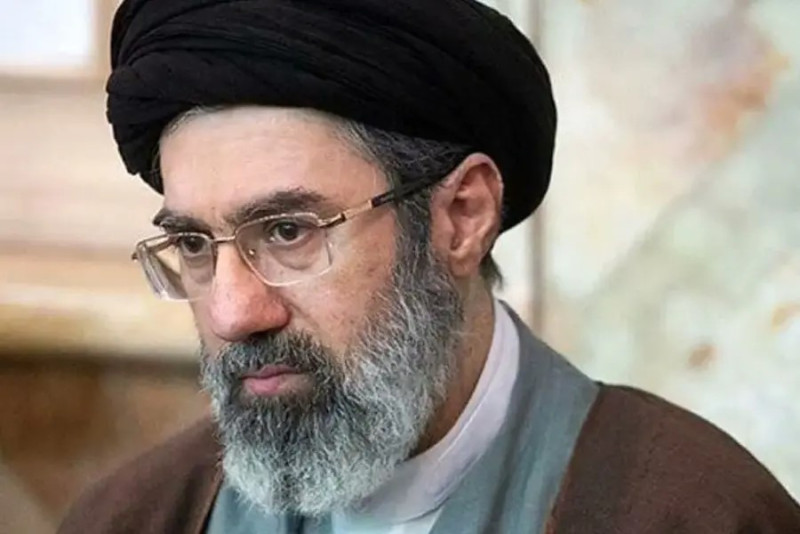
IRAN’S clerical establishment has installed Mojtaba Khamenei as the country’s new supreme leader, a move widely seen as a direct challenge to Washington and a signal that Tehran intends to confront rather than compromise with the United States and Israel.
The appointment follows the killing of Supreme Leader Ayatollah Ali Khamenei in a joint US-Israeli strike at the start of the conflict, now entering its second week. Iran’s Assembly of Experts selected Mojtaba as successor despite warnings from US President Donald Trump, who had previously declared the cleric “unacceptable”.
Reuters, on Monday, cited analysts saying the decision entrenches hardline control in Tehran and could reshape the trajectory of the war while reverberating across the Middle East.
“Having Mojtaba take over is the same playbook,” said Alex Vatanka, a senior fellow at the Middle East Institute.
“It’s a big humiliation for the United States to carry out an operation of this scale, risk so much, and end up killing an 86-year-old man, only to have him replaced by his hardline son.”
Under Iran’s theocratic system, the supreme leader is the country’s ultimate authority, overseeing foreign policy, the nuclear programme and the armed forces, while guiding the elected president and parliament.
Regional officials and analysts say the choice of Mojtaba — a deeply conservative cleric whose wife, mother and other family members were reportedly killed in US-Israeli strikes — sends a clear message that Iran’s leadership has rejected any prospect of compromise.
According to insiders, the new leader faces severe internal and external pressures from a dissatisfied population and an expanding war. He is expected to move rapidly to consolidate power, potentially granting broader authority to the Islamic Revolutionary Guard Corps, intensifying domestic controls and crushing dissent.
“The world will miss the era of his father,” a regional official close to Tehran told Reuters. “Mojtaba will have no choice but to show an iron fist... even if the war ends, there will be severe internal repression.”
The shift comes after months of escalating unrest across Iran, the most violent since the 1979 Islamic Revolution.
Even before the war, the Islamic Republic faced a worsening economic crisis marked by soaring inflation, a collapsing currency and widening poverty, alongside tightening political repression that had fuelled public anger and protests.
Those pressures are now expected to intensify under wartime rule.
Difficult days lie ahead under Mojtaba, with tighter internal controls, growing domestic strain and a more aggressive posture abroad, said another Iranian insider familiar with conditions inside the country.
Paul Salem, a senior fellow at the Middle East Institute, said the new leader was unlikely to pursue diplomatic engagement with Washington.
“Nobody emerging now is going to be able to compromise,” Salem said. “This is a hardline choice, made in a hardline moment.”
Among many clerics in Iran, the killing of Ali Khamenei — long denounced in official rhetoric as a target of the “Great Satan”, the United States — has elevated him to the status of a martyr.
Clerical narratives have compared the slain leader to Imam Hussein, the Shi’ite symbol of sacrifice and resistance against oppression.
“Mojtaba is even worse and more hardline than his father,” said Alan Eyre, a former US diplomat and Iran specialist, adding that he was the preferred candidate of the Revolutionary Guards. “He’s going to have a lot of revenge to exact.”
The appointment also carries risks. Israel has warned that any successor to Khamenei could become a target, while Trump has suggested the conflict may not end until Iran’s military leadership and ruling elite are removed.
Mojtaba, 56, has long been associated with the most conservative factions within Iran’s political system and has consistently opposed reformist groups advocating engagement with the West.
His close ties to senior clerics and the Islamic Revolutionary Guard Corps — which wields immense power across Iran’s security forces and economy — have helped cement his influence.
Iranian state media reported that the country’s armed forces had pledged allegiance to the new supreme leader, while the Revolutionary Guards issued a statement declaring their readiness to follow him.
Ali Larijani, Iran’s security chief, said the Assembly of Experts convened despite threats that the body itself could be targeted.
“Mojtaba could lead the country under the current sensitive conditions,” Larijani said on state television, urging national unity behind the new leadership.
For years Mojtaba accumulated influence under his father, acting as a key figure within the security establishment and the vast economic network linked to it.
Analysts say he operated as Ali Khamenei’s gatekeeper and, in practice, a “mini-supreme leader”.
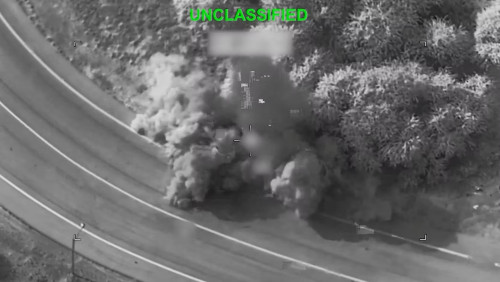
His rise comes as the US-Israeli campaign against Iran intensifies. Joint strikes have hit fuel depots and other strategic targets inside the country, while Iranian missiles and drones have struck Gulf states, widening the regional conflict.
Educated in the conservative religious seminaries of Qom — the centre of Shi’ite theological scholarship — Mojtaba holds the clerical rank of Hojjatoleslam.
The US Treasury sanctioned him in 2019, saying he represented the supreme leader in an official capacity despite never holding an elected or formal government post.
Regional officials view his appointment as a signal that Tehran intends to fight rather than retreat.
“This tells Trump and Washington that Iran will not back down, they will fight on until the finish,” said a Gulf source familiar with regional government thinking.
Salem said Iran’s trajectory could begin to resemble that of regimes that endured years of war and isolation, such as Iraq under Saddam Hussein after 1991 or Syria under Bashar al-Assad after 2012.
“They’re doubling down on the hard line,” Salem said. “Internally, it’s terrible — and deeply destabilising.” - March 9, 2026