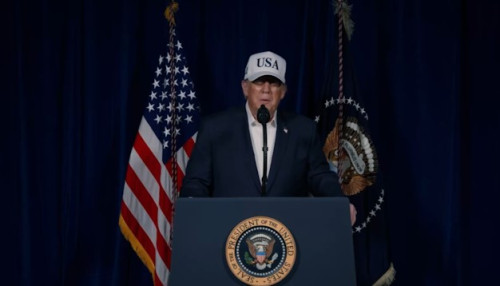
U.S. President Donald Trump has indicated the United States may soon begin winding down its military campaign against Iran, even as several of his administration’s stated war aims remain either unmet or ambiguously defined one month into the conflict.
AP reported on Sunday that the evolving list of objectives — now numbering five after earlier iterations — underscores a shifting strategy amid mounting global economic strain, pressure on alliances and unresolved questions over the war’s long-term outcomes.
The White House has maintained that the campaign is progressing successfully. Press secretary Karoline Leavitt said, “We are very close to meeting the core objectives of Operation Epic Fury, and this military mission continues unabated,” describing it as “ahead of schedule and performing exceptionally.”
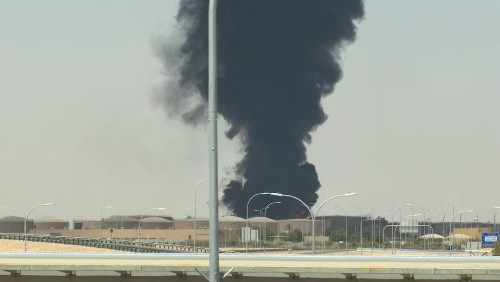
Among the central aims outlined by Trump is the destruction of Iran’s missile capabilities. While he has claimed that around 90 per cent of Tehran’s launchers and stockpiles have been neutralised, Iran continues to carry out missile and drone strikes, including attacks targeting Israel.
A related goal — dismantling Iran’s defence industrial base — has at times been treated as a separate objective but is often subsumed into the broader effort to cripple missile production. Despite reported strikes on weapons facilities, Iran’s ability to sustain attacks suggests this capability has not been fully eliminated.
The United States and Israel have also sought to neutralise Iran’s naval and air forces. Defence Secretary Pete Hegseth said more than 150 Iranian vessels have been damaged or destroyed, and air superiority has been quickly established.
However, Iran’s asymmetric naval units and continued disruption of shipping lanes, particularly in the Strait of Hormuz, indicate residual operational strength.
Preventing Iran from nearing nuclear capability remains one of the most complex and contested objectives.
Trump previously claimed the programme had been “obliterated”, yet officials later warned Tehran was only weeks away from developing a nuclear weapon.
Strikes on nuclear-related facilities have been reported, but uncertainty persists over how to secure or eliminate Iran’s stockpile of enriched uranium without escalating the conflict further.
A fifth objective — protecting US allies in the Middle East — has added another layer of ambiguity. Trump stated the aim is to safeguard partners including Israel, Saudi Arabia, Qatar and the United Arab Emirates, while suggesting that responsibility for securing key maritime routes such as the Strait of Hormuz should fall to other nations.
“Protecting, at the highest level, our Middle Eastern Allies, including Israel, Saudi Arabia, Qatar, the United Arab Emirates, Bahrain, Kuwait, and others.
The Hormuz Strait will have to be guarded and policed, as necessary, by other Nations who use it — The United States does not!” he said in a recent statement.
Despite these ambitions, Iran continues to demonstrate its capacity to strike regional targets, raising doubts over how far Washington is willing to go to guarantee security in the region.
Regime change, while frequently alluded to by Trump, has not been formally declared as a war aim, even after senior Iranian leadership figures were reportedly killed in joint US-Israeli strikes.
Trump suggested the impact was nonetheless decisive.
“You could really say we have regime change because they have been killed,” he said in a Fox News Channel interview.
At the same time, Washington is reportedly exploring talks with elements of Iran’s existing government in a bid to bring the conflict to a close and reopen vital shipping lanes, though Tehran has publicly denied engaging in negotiations.
Another objective that has receded from prominence is the effort to sever Iran’s support for proxy groups across the region.
While strikes against aligned militias in Iraq and expanded Israeli operations against Hezbollah in Lebanon have been reported, the administration has offered limited detail on how it intends to permanently curtail Tehran’s influence over such groups.
Officials insist the goal remains intact, with the White House stating that “proxies are hardly putting up a fight because our United States Military is so strong and lethal.”
As the administration weighs a potential exit, the gap between tactical gains and strategic outcomes continues to raise questions over what, ultimately, the conflict will have achieved. - March 29, 2026