FOREIGN aid organisations say they are continuing to face severe operational restrictions in the occupied Palestinian territories, including war-devastated Gaza, despite Israel’s Supreme Court suspending a government ban on several international charities.
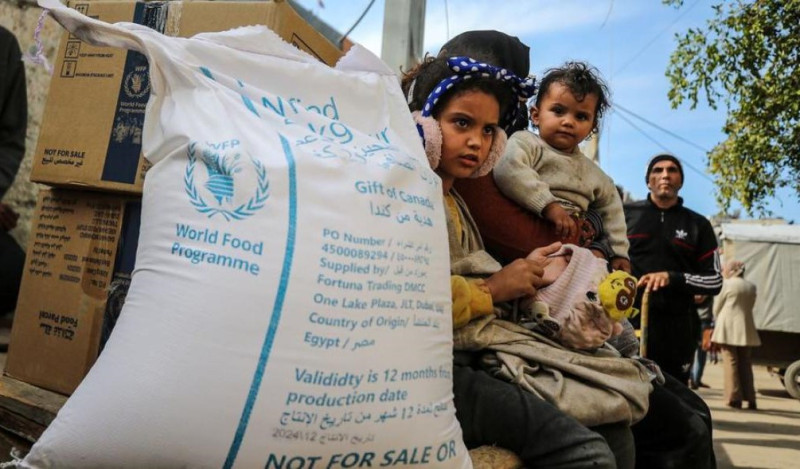
Speaking on April 20, a senior aid official said that, in practice, access for personnel and relief supplies remains heavily obstructed, leaving large volumes of humanitarian assistance stranded outside the territory.
Israel had announced in December that 37 non-governmental organisations would be barred unless they submitted detailed information on Palestinian staff members, a move humanitarian agencies warned would further restrict already limited aid access to Gaza.
AFP reported on Tuesday that, although Israel’s Supreme Court temporarily froze the ban in February pending a final ruling, aid groups say the situation on the ground has not significantly improved.
“Foreign staff continued to be rejected, supplies continued to be rejected,” said Alan Moseley, director for the Palestinian territories at the Danish Refugee Council.
He added that almost no international NGO affected by the restrictions has been able to deliver aid into Gaza in recent months.
While commercial deliveries have been permitted under a fragile ceasefire agreement reached in October, he said these goods are often unaffordable for civilians after months of conflict and economic collapse.
Some organisations have managed limited deliveries via United Nations convoys or by purchasing goods directly inside Gaza for distribution, but overall access remains constrained.
“There’s tonnes of supplies sitting over the border, in Egypt and in Jordan, and there’s a huge amount of energy put into trying to unblock these supplies,” he said.
Israel has argued that certain items are restricted due to “dual-use” concerns, meaning they could potentially be repurposed for military use. However, aid groups say the scope of restrictions is excessively broad.
“You hear that things can be used for making weapons or something else – but we see wheelchairs, prosthetics, school supplies, children’s clothing, everything can be blocked,” Moseley added.
He said that aid worth millions of dollars remains unable to enter Gaza.
“There’s tonnes of supplies sitting over the border, in Egypt and in Jordan, and there’s a huge amount of energy put into trying to unblock these supplies,” he said.
Moseley said the Supreme Court had recently offered NGOs the option of withdrawing their legal challenge or submitting detailed personal data on Palestinian staff during a March hearing, but organisations refused.
“But we decided not to do that and we requested a full judgment by the court,” he said.
Aid groups argue that such demands place staff at risk, noting that many workers are already registered with Palestinian authorities and that Israeli officials seeking the information lack jurisdiction.
They also stress that occupying powers have a legal responsibility to facilitate humanitarian access rather than restrict it.
The crisis unfolds against the backdrop of a fragile ceasefire agreement reached in October following two years of conflict that began after Hamas launched an attack on Israel on 7 October 2023.
That attack killed 1,221 people in Israel, most of them civilians, according to official figures.
Israel’s subsequent military campaign in Gaza has killed more than 72,000 people, mostly civilians, according to Gaza’s Hamas-run health ministry, figures the United Nations considers credible. - April 21, 2026