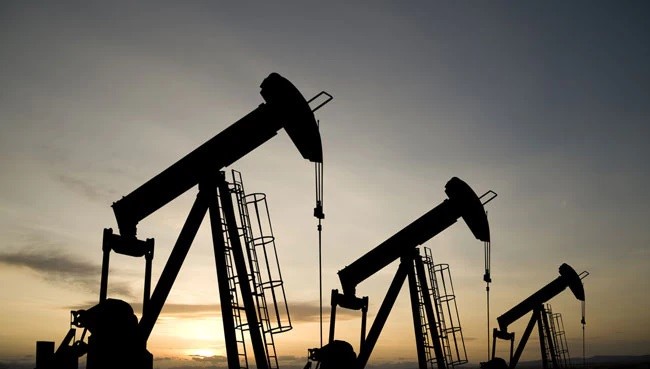
THE reported decision by the United Arab Emirates to leave the Organisation of the Petroleum Exporting Countries (OPEC) is set to mark a major turning point for the global oil industry, with analysts warning it could sharply diminish the cartel’s influence over crude markets.
The move is expected to intensify competition among Gulf producers as they seek to reclaim market share following the conclusion of the Iran conflict, raising the prospect of a renewed price war in global oil markets.
Reuters reported on Wednesday that the development comes at a time of unprecedented volatility in the energy sector, with Gulf oil and gas exports recently disrupted for nearly two months due to the closure of the Strait of Hormuz, severely undermining OPEC’s traditional ability to stabilise supply during crises.
UAE Energy Minister Suhail Mohamed al-Mazrouei told Reuters that the country’s decision to exit OPEC is driven by the need to meet rising global energy demand.
While demand considerations are cited, analysts suggest the move also reflects Abu Dhabi’s desire for greater flexibility to expand production without the constraints of OPEC quota restrictions.
The UAE is currently OPEC’s fourth-largest producer after Saudi Arabia, Iran and Iraq, accounting for around 12 per cent of the group’s output, according to the International Energy Agency.
It has production capacity of about 4.85 million barrels per day, with plans to increase output to five million barrels per day by 2027, a target widely seen as increasingly incompatible with OPEC-imposed limits.
Speculation over a possible UAE withdrawal from the cartel has circulated for years, driven by long-standing tensions over production quotas and market share strategy.
Like other Gulf producers, the UAE benefits from vast reserves and some of the world’s lowest production costs, allowing it to remain profitable even during prolonged periods of low oil prices.
However, OPEC-led production cuts, largely driven by Saudi Arabia, have often been viewed in Abu Dhabi as limiting revenue growth and ceding market share to higher-cost competitors.
These internal divisions have been further strained by recurring disagreements between Riyadh and Abu Dhabi over output compliance, with the UAE frequently exceeding agreed quotas in recent years.
Tensions have also spilled into wider regional geopolitics, including differing positions on conflicts in Yemen, Libya and Sudan, as well as contrasting responses to recent Iranian military actions.
The reported withdrawal would represent a significant blow to OPEC, weakening an alliance already facing structural pressures from rising non-OPEC supply, particularly from the United States, Canada and Brazil.
OPEC, which currently includes 12 members, has seen its global production share decline from around 50 per cent in the 1970s to approximately 30 per cent today, despite still holding nearly 80 per cent of global oil reserves.
The creation of OPEC+ in 2016, which brought Russia into the broader alliance, temporarily restored some of the group’s market influence, enabling coordinated production management that accounts for more than 40 per cent of global supply.
However, that coordination has remained heavily dependent on Saudi Arabia’s ability to enforce discipline among members.
The UAE’s exit could further erode that cohesion and encourage other producers to reassess the value of output restrictions, increasing the risk of fragmentation within the alliance.
Beyond structural market shifts, the timing of the move is particularly sensitive, coming amid ongoing regional instability linked to the Iran conflict.
The prolonged disruption of the Strait of Hormuz has already removed an estimated 13 million barrels per day from global supply chains, representing roughly 13 per cent of global oil output and a fifth of liquefied natural gas flows.
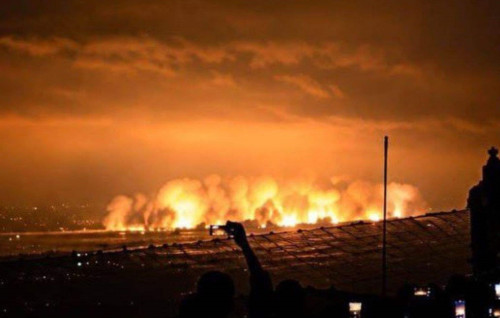
Iranian missile and drone strikes across Gulf states, including OPEC members, have further destabilised energy infrastructure and exposed vulnerabilities within the organisation’s political unity.
Abu Dhabi has also expressed frustration over what it perceives as insufficient regional security support following Iranian attacks, underscoring how security concerns are increasingly influencing economic and energy policy decisions.
Other countries have previously exited OPEC, including Qatar in 2019, Ecuador in 2020 and Angola in 2024, though none carried the scale or strategic weight of the UAE.
Analysts warn that the departure of a major producer with ambitions for rapid output expansion could significantly weaken OPEC’s remaining influence at a time when global demand is expected to peak in the coming decades before entering structural decline due to the energy transition.
As post-conflict market conditions emerge following the end of the Iran war, competition between OPEC+, the UAE and non-OPEC producers, particularly the United States, could intensify sharply, raising the risk of sustained price volatility and a prolonged reshaping of global energy power structures. - April 29, 2026