US President Donald Trump has declared that the United States does not require China’s assistance to resolve the escalating conflict with Iran, despite growing international concern over the continued closure of vital shipping lanes through the Strait of Hormuz and the absence of progress towards a permanent peace agreement.
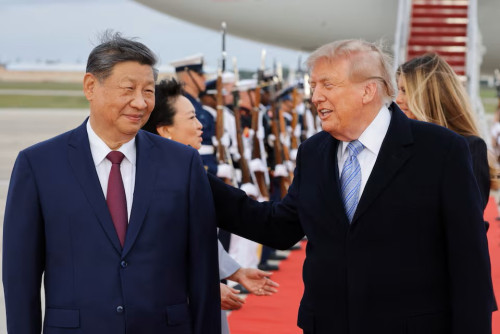
Speaking ahead of a high-level summit in Beijing with Chinese President Xi Jinping, Trump dismissed suggestions that Washington would need Beijing’s influence over Tehran to secure an end to the conflict.
“I don't think we need any help with Iran. We'll win it one way or the other, peacefully or otherwise,” Reuters reported Trump telling reporters on Tuesday.
The remarks came more than a month after a fragile ceasefire between the United States and Iran formally took effect, with negotiations since failing to produce a comprehensive settlement capable of ending hostilities across the region.
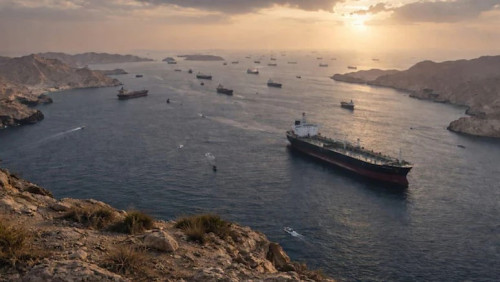
At the centre of the deadlock remains the Strait of Hormuz, the narrow maritime passage through which approximately one-fifth of the world’s daily oil supply normally passes.
Iran has increasingly consolidated its influence over the strategic waterway, according to sources familiar with regional negotiations, including through arrangements with Iraq and Pakistan involving the transportation of oil and liquefied natural gas.
Officials and analysts believe additional countries may pursue similar agreements, potentially entrenching Tehran’s leverage over one of the world’s most economically significant trade routes.
The Trump administration sought on Tuesday to project unity with Beijing on maintaining open navigation through the strait, stating that senior American and Chinese officials had agreed last month that no nation should impose tolls or restrictions on international maritime traffic in the region.
China, which remains one of Iran’s largest oil customers and maintains extensive diplomatic ties with Tehran, did not publicly challenge the American characterisation of those discussions.
Trump is expected to raise the Iran conflict directly during meetings with Xi this week, amid speculation that Washington will encourage Beijing to pressure Tehran into accepting American conditions for ending the war.
Those demands include the dismantling of Iran’s nuclear programme and the removal of what Washington describes as Tehran’s “chokehold” over the Strait of Hormuz.
Iran, however, has responded with sweeping counter-demands, including financial compensation for wartime destruction, the lifting of the American naval blockade and an end to military operations involving Iranian allies across the region, particularly in Lebanon where Israel continues fighting Hezbollah forces backed by Tehran.
Trump dismissed those Iranian conditions earlier this week as “garbage”.
The prolonged impasse has sent shockwaves through global energy markets.
Brent crude prices climbed above US$107 per barrel as uncertainty surrounding maritime access through Hormuz intensified and shipping traffic remained severely disrupted.
The United States military has simultaneously expanded its naval posture in the region.
US Central Command confirmed that the aircraft carrier USS Abraham Lincoln is operating in the Arabian Sea as part of enforcement operations linked to the American blockade.
According to military officials, the carrier group has redirected 65 commercial vessels and disabled four others during operations in the region.
The financial burden of the war has also continued to rise sharply.
The Pentagon disclosed that the total cost of military operations has now reached US$29 billion, representing an increase of US$4 billion compared with estimates released late last month.
Officials attributed the revised figure to higher operational expenditures, equipment replacement and repair costs.
The conflict is also increasingly affecting domestic political and economic conditions inside the United States.
Rising oil prices have pushed petrol costs higher nationwide, contributing to accelerating inflation and producing the steepest annual increase in consumer prices in almost three years.
At the same time, public opposition to the conflict appears to be intensifying ahead of congressional elections scheduled in less than six months.
A Reuters/Ipsos poll completed on Monday found that two-thirds of Americans believe Trump has failed to clearly explain the rationale for entering the war.
The survey also indicated divisions within the Republican Party itself, with approximately one-third of Republican voters expressing dissatisfaction alongside overwhelming opposition among Democrats.
Despite mounting economic pressure and international concern, Iranian officials signalled that Tehran remains unwilling to retreat from its strategic position.
According to Iran’s Fars News Agency, an official from the Islamic Revolutionary Guard Corps said Tehran had broadened its operational definition of the Strait of Hormuz to encompass a larger maritime zone stretching from the coastal city of Jask in the east to Siri Island in the west.
Iranian state television also reported that Revolutionary Guard forces had begun new military drills “centred on preparation to confront the enemy”.
The developments underscore the increasingly fragile nature of the ceasefire and highlight fears among global markets and allied governments that renewed conflict could destabilise international trade routes, further disrupt energy supplies and deepen geopolitical divisions between Washington, Tehran and Beijing. - May 13, 2026