A SENIOR international envoy overseeing stabilisation efforts in Gaza has warned the United Nations Security Council that the territory remains far from recovery despite progress under the current ceasefire arrangement, describing conditions across the enclave as catastrophic and unsustainable.
Nickolay Mladenov, the Board of Peace high representative for Gaza, said the ceasefire had delivered important but fragile gains, including the silencing of most large-scale fighting and the return of hostages, yet stressed that the humanitarian and physical devastation across Gaza remained overwhelming.
“When I last appeared before you, the framework for the decommissioning of weapons in Gaza had been agreed upon among the guarantors and presented to the parties, and I told you the engagement was serious. The first written report on the implementation of Security Council Resolution 2803 (2025) of the Board of Peace is now before you,” Bernama-Anadolu reported him saying.
Mladenov acknowledged that conditions had marginally improved since the ceasefire took effect after nearly two years of conflict.
“The guns have largely fallen silent across Gaza for the first time in two years. Every hostage has been returned to their family.
“The number of people receiving food assistance has risen from 400,000 to roughly 2 million. None of this was inevitable. None of it should be taken for granted,” he said.
However, he firmly rejected suggestions that Gaza was entering a period of recovery.
“I will not stand before this Council and call this recovery, because there is no recovery,” Mladenov declared.
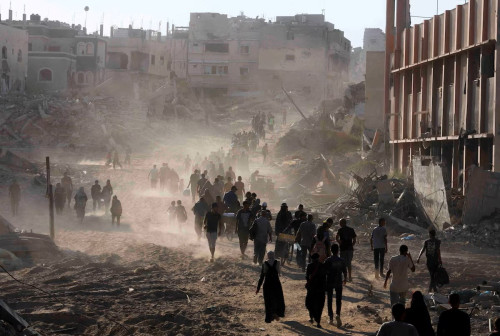
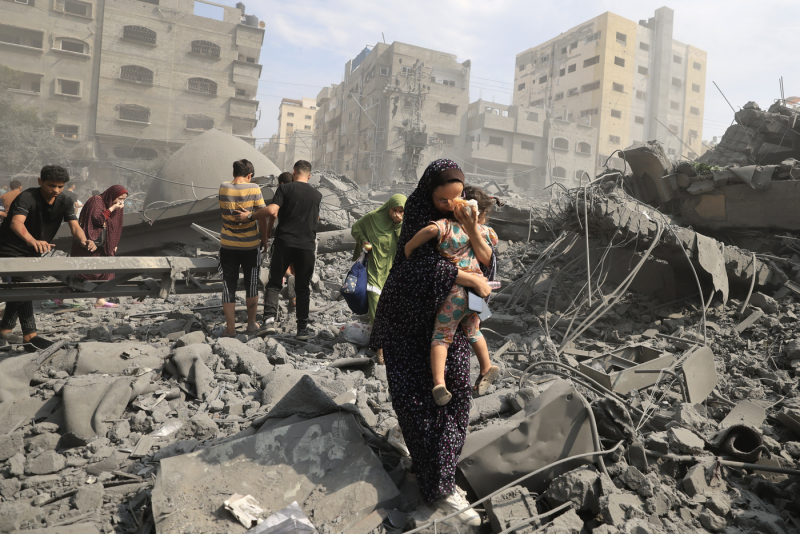
He described an unprecedented scale of destruction throughout Gaza, where millions of tonnes of debris now cover entire urban districts previously occupied by homes, hospitals and schools.
“Some 70 million tonnes of rubble lie where homes and schools and hospitals used to stand, much of it mixed with unexploded ordnance,” he said.
According to Mladenov, more than one million Palestinians remain without permanent housing and are continuing to survive in tents or heavily damaged buildings, while unemployment and economic paralysis have reached severe levels.
He added that essential public services across the enclave remained critically degraded despite the ceasefire framework.
Although major combat operations have largely subsided, Mladenov warned that the truce remained fragile and imperfect.
“Although the ceasefire is largely holding, it is holding in a way that is not perfect. There are daily violations,” he said.
The envoy also cautioned that continued restrictions and delays affecting humanitarian access were eroding public confidence in the stabilisation process and prolonging civilian suffering.
Meanwhile, the United States welcomed the progress made under the Board of Peace mechanism and efforts aimed at establishing post-war governance structures in Gaza.
US deputy ambassador to the United Nations Tammy Bruce praised recent developments, including plans for the Office of the High Representative, an International Stabilisation Force and a National Committee for the Administration of Gaza.
“The United States does have the pleasure of applauding the accomplishments of the Board of Peace over the recent months and the steps toward establishing the Office of the High Representative, the International Stabilisation Force and the National Committee for the Administration of Gaza,” she said.
Bruce acknowledged, however, that substantial obstacles remained before Gaza could achieve long-term peace and stability.
“As we have just heard today, there are still significant challenges to overcome in the reconstruction and rebuilding of Gaza and securing enduring safety, stability, and prosperity,” she said.
“A future of peace, freedom, personal and economic in West Asia is in all of our interests. We must work together to make it happen. The United States will continue to work with Israel, its neighbours, and our partners on the Board of Peace to achieve that goal,” she added. - May 22, 2026