UNITED STATES and Iranian officials have established a framework agreement to conclude their military conflict, terminate the American blockade of Iranian ports, and reopen the crucial Strait of Hormuz shipping route.
The preliminary accord has immediately driven down global energy prices, though the ultimate resolution of the Iranian nuclear programme has been deferred to upcoming negotiations.
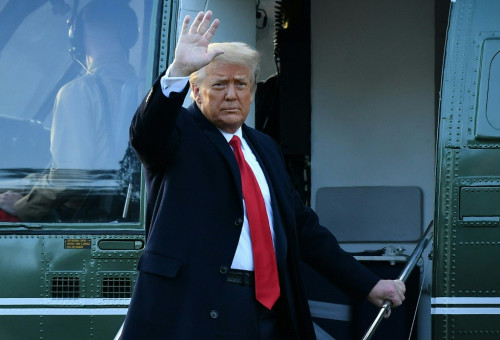
Reuters reported on Monday that the deal with the Iran is now complete, US President Donald Trump announced on his Truth Social platform at approximately 2130 GMT on Sunday.
The announcement followed a statement from Pakistani Prime Minister Shehbaz Sharif, who acted as a mediator and confirmed that the agreement had been reached early on Monday local time.
The memorandum of understanding is set for an official signing ceremony in Switzerland this Friday.
While the precise stipulations were not comprehensively disclosed, Sharif stated on the social media platform X that the pact demands the immediate and permanent termination of military operations on all fronts, including in Lebanon.
The secretariat of Iran's Supreme National Security Council echoed this timeline, confirming that war and military operations would cease permanently from Monday evening. Israel, which maintained it was not a participant in the bilateral discussions, offered no immediate reaction.
The reopening of the Strait of Hormuz on Friday represents a significant shift for global maritime trade, following months of an effective Iranian shutdown.
Trump confirmed he had ordered an end to the American blockade of Iranian ports, stating, “Ships of the World, start your engines. Let the oil flow!”
The economic response was swift, with Brent crude futures dropping by 4 per cent and US West Texas Intermediate falling more than 4.6 per cent during early Monday trading, while Asian stock markets experienced a sharp upward turn.
The agreement has drawn domestic political scrutiny in Washington. Matthew Miller, a former State Department spokesperson under the Biden administration, observed that Trump had made significant concessions simply to restore the previous status quo.
“We have no assurances the nuclear program will ever be addressed, but Iran has shown the world it can take the global economy hostage and get something from the U.S. in return,” Miller said.
Conversely, Republican Senator Lindsey Graham commended the development while noting that Congress would maintain strict oversight. “Under our law, any nuclear deal with Iran will be sent to Congress for review and a vote, Graham stated, adding, Congratulations to all in getting us to this point.”
The conflict, which escalated on 28 February with US and Israeli strikes, has resulted in thousands of fatalities, predominantly in Iran and Lebanon.
Iran countered those initial attacks by targeting Israel and Gulf states hosting American bases, alongside the maritime blockade.
The resulting surge in domestic fuel prices had become a distinct political liability for the Trump administration ahead of the upcoming November midterm elections.
The broader diplomatic resolution will be contested over a 60-day ceasefire period. Iranian Deputy Foreign Minister Kazem Gharibabadi indicated that this window would be used to negotiate a more expansive agreement, including comprehensive sanctions relief.
A central point of friction will be the 400 kilogrammes of uranium enriched to near bomb-grade purity that Iran accumulated after Trump withdrew the US from the 2015 multilateral pact.
Prior to the official announcement, a senior US official suggested the final framework would mandate the destruction and removal of this stockpile to dismantle the nuclear programme.
However, a senior Iranian official countered that the draft terms would allow Iran, which maintains its nuclear intentions are entirely peaceful, to dilute the material domestically.
The draft framework also reportedly includes the release of US$25 billion in frozen Iranian assets.
Geopolitical tensions remain high following an Israeli strike on Lebanon this Sunday, an action criticized by both Washington and Tehran.
Israeli Prime Minister Benjamin Netanyahu has openly resisted American pressure to limit operations in Lebanon, insisting that Israel must retain operational freedom.
In an interview with the New York Times, Trump referred to Netanyahu as a very difficult guy, suggesting the Israeli leader should show gratitude for American efforts to prevent a nuclear-armed Iran. - June 15, 2026