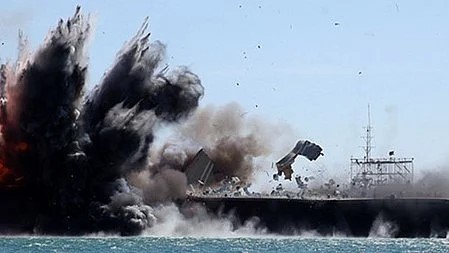
THE United States carried out strikes on Iranian missile and drone facilities after accusing Tehran of targeting a commercial cargo vessel in the Strait of Hormuz, in an escalation that drew threats of retaliation from Iran and heightened tensions in the Gulf.
US Central Command (CENTCOM) said it struck missile and drone storage sites and coastal radar installations, describing the action as a response to what it said was an Iranian drone attack on the Ever Lovely cargo ship.
US Vice President JD Vance said Washington had adhered to a ceasefire agreement reached with Iran and urged Tehran to address disputes through diplomatic channels.
“Iran signed a ceasefire agreement. We have honoured it. If they have disagreements about how the memorandum of understanding is being applied, they can pick up the phone,” Aljazeera cited Vance writing on X, adding that “violence will be met with violence.”
Iran’s Islamic Revolutionary Guard Corps (IRGC) condemned the US strikes, saying Washington had violated its commitments, and said it had targeted locations in the region where US forces are deployed. It warned that further action would be met with a wider response.
“If the aggression is repeated, our response will be more extensive,” the IRGC said.
Ebrahim Azizi, chairman of the Iranian parliament’s National Security Committee, accused US President Donald Trump of abandoning the principles of negotiation and described the strikes as a “reckless violation of the ceasefire”.
Iran has repeatedly said control of the Strait of Hormuz remains a key strategic asset and a source of leverage in talks with Washington, with officials indicating they are prepared to defend that position.
The escalation has added uncertainty to global energy markets. Ship-tracking firm Kpler said the QatarEnergy-chartered liquefied natural gas tanker Umm Slal reversed course near the Strait of Hormuz, following a similar move by the Gaslog Shanghai earlier in the week, underscoring concerns over commercial shipping in the waterway.
Separately, diplomatic efforts continued after Israel and Lebanon signed a US-mediated framework agreement aimed at reducing hostilities, which Washington described as an initial step towards longer-term stability. Hezbollah rejected the deal, saying it would serve Israeli interests. - June 27, 2026