A QUARTER of France, including the capital Paris, was placed under the country's highest heat alert on Saturday as a severe heatwave disrupted tourism, public events and major sporting activities.
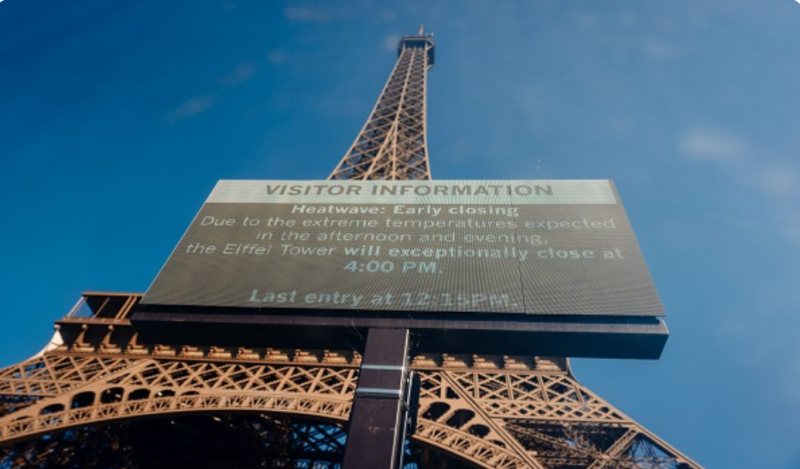
The extreme temperatures forced several iconic Paris landmarks, including the Eiffel Tower, the Louvre Museum and Musée d'Orsay, to close earlier than usual as authorities prioritised public safety.
The operator of the Eiffel Tower said the 324-metre landmark closed at 4pm local time on Saturday and Sunday due to the intense heat, despite normally operating until after midnight during the peak tourist season.
The tower attracts around seven million visitors annually.
The Louvre closed at 4pm from Friday to Monday, while the Musée d'Orsay reduced its operating hours until 5pm from Saturday to Wednesday.
The early closures disappointed some tourists, including Antonia Conerney from England, who had planned a visit to the Eiffel Tower as part of her wedding anniversary celebrations.
"I am quite disappointed. I almost cried because I had planned everything specifically," AFP reported her saying.
However, other visitors supported the safety measures. Scottish tourist Donald John Mackenzie said the decision was understandable despite the disappointment.
"We are a bit sad that we cannot go up, but hopefully the weather will be better tomorrow and we will have the opportunity to visit the Eiffel Tower," he said.
The heatwave also affected the Tour de France, with organisers shortening Sunday's 185.5-kilometre stage by 30 kilometres — the first time in the race's history that a route has been reduced due to extreme weather conditions.
A steep section of the route was also removed after riders faced temperatures exceeding 35 degrees Celsius throughout the week.
The latest heatwave follows a record-breaking hot spell in June that was linked to more than 2,000 deaths, compared with around 300 deaths in the previous month.
France's meteorological service expects high temperatures to continue until Bastille Day on July 14, raising further concerns over health risks and the impact of prolonged extreme heat. - July 12, 2026