PLANS for Gaza's post-war future have been in development for months, with international and regional stakeholders preparing frameworks for governance, security and humanitarian assistance despite the risk of renewed fighting in the devastated territory.
However, most proposals remain at the planning stage due to the lack of political agreement, credible security guarantees and sustainable financial commitments needed to rebuild Gaza.
AFP cited on Sunday that security remains the biggest obstacle facing both local and international efforts, with Israel insisting that Hamas must disarm before meaningful progress can be made, while the Palestinian group has rejected giving up its weapons unless Israeli forces withdraw and a new Palestinian governing authority is established.
A senior official from the Peace Council established by United States President Donald Trump to support Gaza's post-war preparations said Hamas' disarmament was no longer considered an immediate requirement for implementing plans on the ground.
"The entire planning is based on the worst-case scenario," the official said, referring to proposals for establishing a pilot humanitarian zone in Rafah, southern Gaza.
"We may not achieve anything from negotiations, but we will continue with the plan."
One major proposal involves the creation of an International Stabilisation Force (ISF) to help maintain security and support a transition in Gaza.
According to officials, Morocco, Kosovo, Albania and Kazakhstan have expressed commitment to the initiative.
Preparations are also under way for a logistics base in Israel near the Kerem Shalom crossing, which is expected to accommodate around 500 personnel as an initial deployment point before any operations inside Gaza begin.
Efforts to establish a Palestinian police force are also continuing, with around 20,000 applications reportedly received. However, diplomats and security sources said the process has faced significant delays.
One diplomatic source said training had yet to begin and Israel had rejected a proposed list of candidates following screening, arguing that a planned force of 5,000 police officers would be too large for Gaza.
Despite a ceasefire that began in October 2025, violence has continued almost daily, with Israel carrying out strikes against what it describes as violations by Hamas fighters and other Palestinian armed groups.
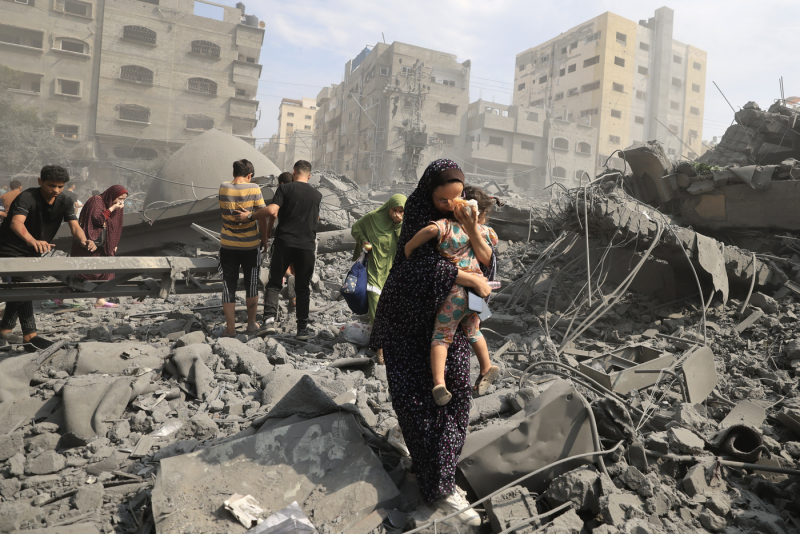
The United Nations estimates that rebuilding Gaza will take years and require tens of billions of dollars, while shortages of construction materials and equipment needed to clear widespread destruction remain severe.
The Peace Council is now considering the establishment of a pilot humanitarian zone in Rafah capable of housing tens of thousands of Palestinians who have undergone security screening, according to officials involved in the planning.
The initiative highlights the scale of the challenge ahead, as efforts to rebuild Gaza depend not only on humanitarian support but also on resolving the deeper political and security disputes that have shaped the conflict. - July 12, 2026