UNITED States President Donald Trump said that Washington and Tehran had agreed to continue diplomatic discussions despite renewed military confrontation, while insisting that the ceasefire reached between the two sides last month was no longer in force.
"The Islamic Republic of Iran has asked us to continue 'talks'. We have agreed to do so, but the United States has stated to them, in no uncertain terms, that the Cease Fire is OVER!" Reuters cited Trump writing on his Truth Social platform.
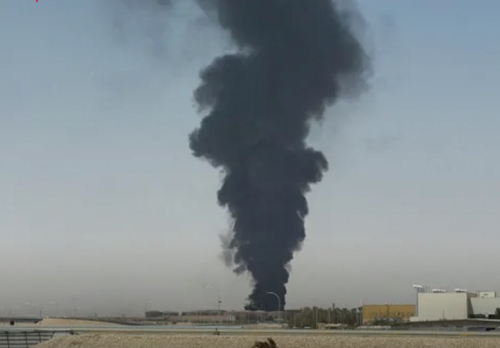
His remarks came after a week of renewed hostilities that saw three commercial oil tankers linked to Qatar and Saudi Arabia come under attack, prompting US strikes on Iranian military sites and retaliatory Iranian attacks on American military facilities in Gulf states.
No new attacks were reported on Friday as regional mediators intensified efforts to revive diplomacy aimed at ending a conflict that began on 28 February.
However, Iran rejected Trump's account, with the Foreign Ministry stating that Tehran had not requested fresh negotiations with Washington. Instead, Iranian officials said they had agreed to receive a Qatari mediation delegation in Tehran to discuss de-escalation and maritime security.
A source familiar with the discussions said Qatari negotiators met Iranian officials on Friday to address regional tensions and ensure the safe passage of vessels through the Strait of Hormuz.
Iranian Foreign Minister Abbas Araqchi is also expected to travel to Oman for talks on arrangements to safeguard international shipping through the strategically vital waterway.
Washington has meanwhile intensified pressure on Tehran, demanding a public commitment that Iranian forces will cease attacks on commercial shipping and guarantee unrestricted navigation through the Strait of Hormuz without imposing tolls.
"What we're demanding is that the Iranians issue a public statement that acknowledges all channels of the Strait of Hormuz are open and they're not shooting at ships anymore. They're either going to give us that statement or we're not having a good outcome for them," a senior US official said.
The latest escalation followed US accusations that Iranian forces attacked three commercial tankers operating near the Strait of Hormuz. Washington responded with strikes on Iranian military targets, after which Iran launched retaliatory attacks against US military installations in Gulf countries.
According to Iran's Health Ministry, at least 17 people were killed and 115 others wounded in US strikes carried out across six Iranian cities on Wednesday and Thursday.
Despite the military exchanges, US officials described recent diplomatic contacts between Washington and Tehran as constructive.
Iran also warned that any violation of understandings by the United States would be met with "reciprocal action", according to the Iranian Foreign Ministry.
The renewed fighting has heightened concerns over global energy supplies, with the Strait of Hormuz — through which roughly one-fifth of the world's oil and liquefied natural gas shipments normally pass — remaining at the centre of the confrontation.
The disruption has already unsettled energy markets, with crude oil recording its largest weekly gain in eight weeks. The US Energy Information Administration also reported that national gasoline inventories fell by 1.9 million barrels last week, leaving stockpiles nearly 10 million barrels below the five-year seasonal average.
Meanwhile, Iran buried Supreme Leader Ayatollah Ali Khamenei on Thursday in the holy city of Mashhad following his death in an airstrike on the opening day of the conflict. Attention has since shifted to his successor, Mojtaba Khamenei, who has yet to appear in public after reportedly being injured in the same strike, fuelling speculation over Iran's political leadership during the ongoing crisis. - July 11, 2026