A 60-DAY deadline for the United States and Iran to reach a lasting agreement to end their war has expired with little progress towards a settlement, as both sides remain entrenched over control of the Strait of Hormuz, sanctions and Tehran’s nuclear programme.
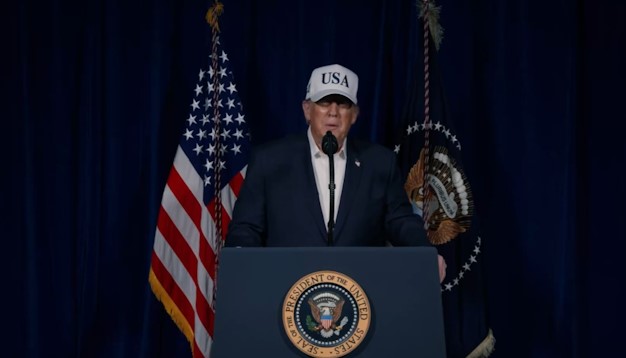
The deadline was set under a June Memorandum of Understanding signed by US President Donald Trump at Versailles, which called for an end to military operations and negotiations towards a permanent settlement.
Instead, the two sides have moved further apart, with talks largely centred on reopening the Strait of Hormuz and lifting a US blockade of Iran — measures that were supposed to form part of the interim agreement.
There has been no indication of a compromise over the strategic waterway, nor clear evidence that detailed negotiations over Iran’s nuclear programme have begun.
AP reported on Monday that the impasse leaves Trump facing difficult choices over a war that the United States launched alongside Israel.
Accepting Tehran’s latest demands could effectively hand Iran significant control over a waterway through which about a fifth of the world’s traded oil and gas flowed before the conflict, while potentially being portrayed as an admission of defeat.
Escalating the war, meanwhile, risks further depleting US stocks of advanced missile interceptors, placing additional pressure on the global economy and driving up fuel prices ahead of US congressional elections.
For now, both Washington and Tehran appear to be betting that the other side will eventually yield.
The June agreement initially called for the Strait of Hormuz to be reopened, but included a loosely defined role for Iran in facilitating maritime traffic, leaving open the possibility of Tehran imposing fees after the 60-day period.
Iran has since seized on that provision to assert a role in controlling the waterway.
The interim arrangement began to unravel within weeks.
Iran subsequently opened fire on vessels using a route along the Omani coast intended to bypass Iranian control and monitored by the US military. The United States responded with strikes on Iran, prompting Tehran to attack Arab states hosting American forces, including Jordan, Kuwait and Bahrain.
Washington then cancelled waivers that had allowed Iran to sell oil internationally under the agreement, while Trump restored a blockade of Iranian ports.
Both sides accused the other of violating the June agreement, leaving little of the original arrangement intact.
Although the intensity of the fighting later declined, a separate truce between Israel and Iran-backed Hezbollah in Lebanon has largely held, despite Israeli forces continuing to occupy parts of southern Lebanon.
Iranian officials say they stopped negotiating directly with Washington in June, although messages have continued to pass through intermediaries.
Trump, however, has maintained that negotiations are continuing and has occasionally suggested that progress is being made, particularly when stepping back from threats of further major military strikes.
Pakistan, which played a key role in brokering the June agreement, acknowledged last week that the deadline was approaching while expressing hope it could be extended.
“We are not closing the chapter,” Pakistan Foreign Ministry spokesman Tahir Andrabi said.
“Pakistan is making all-out efforts to bring the two parties to the negotiating table.”
Tehran has meanwhile hardened its position on the Strait of Hormuz.
Earlier this month, Iran presented a list of demands for reopening the waterway, including an end to the US blockade, the withdrawal of American forces from the region and reparations for damage caused during the conflict launched by the United States and Israel on February 28.
Iran has also insisted that the strait would remain under its control and could become subject to fees under an arrangement being negotiated with Oman, rather than returning to its previous status as an open, toll-free international waterway.
The situation has also widened beyond the strait, with Iran-backed Houthi rebels in Yemen attacking Saudi oil tankers in the Red Sea, threatening another major trade route that has helped offset disruptions to shipping through Hormuz.
Trump has rejected Iran’s demands, arguing that Tehran should instead pay reparations and maintaining that the United States controls the strait.
His administration appears to be relying increasingly on economic pressure, including the blockade and existing sanctions, to force Iran’s leadership into concessions.
Iran’s economy has already been severely weakened by the war and international isolation, while inflation has surged and the economic crisis risks fuelling renewed anti-government unrest.
Meanwhile, traffic through the Strait of Hormuz, which briefly increased after the interim agreement, has fallen back to only a fraction of pre-war levels.
The longer the disruption continues, the greater the risk of higher fuel and commodity prices spreading beyond the Middle East.
With the 60-day deadline now expired, Washington and Tehran remain locked in a high-stakes standoff — with neither side showing signs of blinking first. - August 17, 2026