By Murray Hunter
IRAN is no longer fighting a war of reciprocal strikes.
The era of tit-for-tat missile exchanges and sporadic retaliatory gestures has given way to something more deliberate and patient.
What appears to some observers as Iranian restraint or hesitation is, on closer examination, a calculated shift.
Tehran has moved beyond symbolic responses and is pursuing two interlocking objectives: the progressive elimination of American military presence and influence in the Persian Gulf, and the political destruction of the Trump presidency through economic and strategic pressure timed to the American electoral calendar.
This approach reflects a more sophisticated reading of the political and military landscape than the mere kinetic exchanges of the earlier phases.
Iran has registered the pattern of American targeting decisions that have largely spared its most critical military assets.
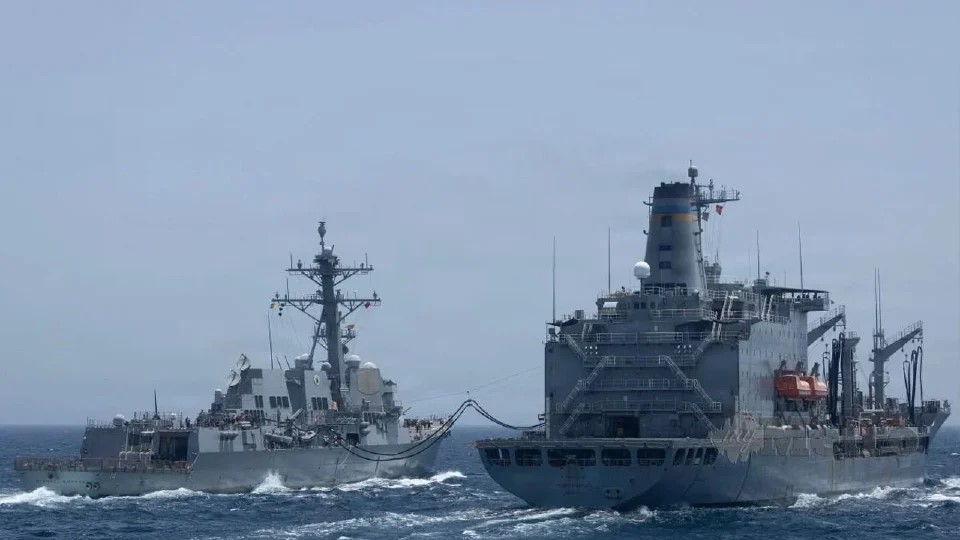
In contrast, the visible strain on U.S. naval forces, the thinning of American ground presence at key Gulf bases, and the growing constraints on munitions stockpiles are wearing down US military strength.
Pentagon planners appear to lack a coherent theory of victory that does not risk broader escalation.
In such conditions, Iran has concluded that the wisest course is to allow the adversary’s own errors and logistical limits to compound rather than to force a decisive confrontation that might rally American resolve.
The first prong of the strategy is therefore continually working on the steady erosion of US power projection in the region.
Iranian-aligned forces continue to pressure remaining American positions and logistical nodes while Tehran works to neutralise residual anti-Iranian networks inside Iraq.
Gulf Arab states, watching the vulnerability of host-nation bases that shelter US forces, are already exploring tighter regional defence arrangements. The presence of American troops and aircraft is increasingly perceived by some of these governments as a liability rather than a guarantee of security.
Iran does not need to seize every base by force; it needs only to make the cost of hosting them politically untenable.
Any future American strikes would now have to originate from greater distances, complicating logistics and extending response times.
In this environment, Iran can continue to consolidate influence across the northern Gulf without inviting the kind of overwhelming retaliation that might reverse its gains.
The second prong is political and economic, aimed squarely at the domestic American political arena, US President Trump’s support base.
Recent polling consistently ranks the maintenance of low oil prices among the highest foreign-policy priorities for US voters.
Iran’s leverage over the Strait of Hormuz, combined with ongoing disruptions affecting Saudi and other shipments through the Red Sea, gives Tehran the ability to keep energy markets unsettled.
Iran does not require a full closure of the strait to produce sustained upward pressure on prices.
Only the credible threat of disruption and the intermittent interference already achieved are sufficient to keep markets nervous and prices elevated.
These pressures feed directly into the midterm election environment in November.
A president already facing questions about the wisdom and cost of confrontation with Iran risks further erosion of congressional support if gasoline and energy costs remain high.
By maintaining a relatively low kinetic profile against Israel despite the substantial American military buildup on and around Israeli territory, and despite Iran’s theoretical capacity to inflict severe damage, Tehran is deliberately preserving political space inside the US.
Aggressive action against Israel at this juncture would likely consolidate bipartisan support for the administration and shift the domestic debate toward solidarity rather than accountability.
Iran prefers that members of Congress focus on the strategic and economic consequences of the current policy. Should Republicans lose control of one or both chambers in November, the path opens for intensified investigations, possible impeachment proceedings, and a broader political unravelling of the administration’s foreign-policy legacy.
From Tehran’s perspective, the collapse of the Trump presidency under the weight of its own Iran policy would constitute a strategic victory of greater durability than any battlefield success.
These two lines of effort reinforce each other.
Military attrition in the Gulf weakens American capacity and raises the political cost of continued presence, while economic pressure at home constrains the administration’s freedom of action and accelerates domestic political fatigue.
Iran appears content to let time and American electoral processes work in its favour rather than to seek dramatic battlefield climaxes that could reverse the current trajectory.
Victory, in this framing, is defined less by the destruction of Israeli military power in the near term and more by the removal of US forces from the Gulf and the political demise of the administration that chose confrontation.
Whether this strategy succeeds will depend on numerous factors beyond Tehran’s control.
The resilience of American logistics, the willingness of Gulf partners to reduce their dependence on U.S. security guarantees, the actual trajectory of oil prices, and the capacity of American domestic politics to absorb prolonged costs are all factors.
Yet the pattern of Iranian behaviour of measured military pressure, careful avoidance of certain high-visibility targets, and sustained economic leverage aligns closely with the two objectives outlined above.
Iran has recalibrated from reactive retaliation to a longer game of attrition and political exhaustion.
That recalibration is the most consequential development in the conflict to date. – August 20, 2026



.jpeg)