THE United Arab Emirates has suspended all trade and financial transactions with Iran until further notice after accusing Tehran of renewed missile fire, delivering a major economic blow to an Islamic Republic already facing sweeping US sanctions and an increasingly restrictive blockade.
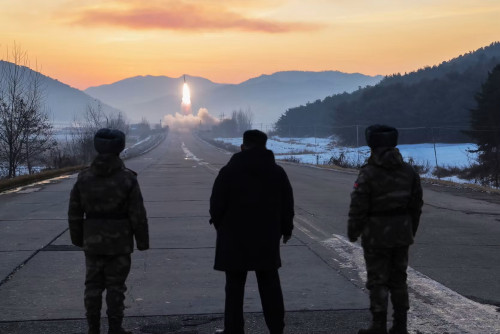
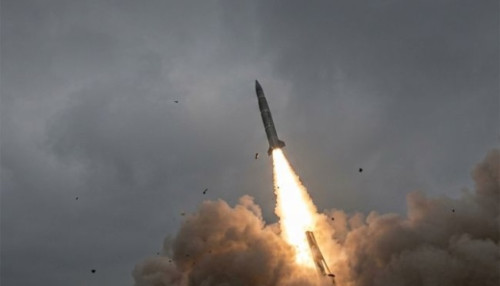
The UAE’s decision came after two ballistic missiles were launched towards the country late Tuesday, triggering nationwide warnings for residents to seek shelter for the first time in weeks. Both missiles eventually fell into the Persian Gulf, according to Emirati authorities.
The UAE Foreign Ministry announced the suspension on Wednesday, while reaffirming its commitment to “dialogue, cooperation and regional integration”.
The UAE Defence Ministry said its initial assessment indicated that the missiles had targeted maritime traffic, although it remained unclear whether Emirati vessels or UAE territorial waters were the intended targets.
Iranian Foreign Ministry spokesman Esmail Baghaei denied that Tehran had launched missiles towards the UAE.
The move threatens to further constrict Iran’s access to international markets at a time when its economy is already under severe strain and its access to trade through the Strait of Hormuz has been sharply curtailed by the conflict.
Before the war, the UAE was one of Iran’s most important trading partners and served as a critical re-export hub through which Tehran could obtain goods from third countries despite sanctions.
“the UAE has been very important for Iran as a re-export hub and has helped the country absorb some of the shocks caused by sanctions,” Reuters cited Mohammad Farzanegan, a professor of Middle Eastern economics at Germany’s University of Marburg saying.
“Iran therefore depends heavily on the UAE, not because the UAE itself produces one-third of Iran’s imports, but because it serves as a major gateway for Iran to access third-country goods and commercial infrastructure.”
Trade between the two countries had largely collapsed during the early stages of the conflict, when Iran repeatedly came under attack from the United States and Israel and retaliated with missile and drone strikes across the region.
Some maritime trade resumed in late June as hostilities temporarily eased, according to Iran’s state-run IRNA news agency.
But tensions have since intensified around the Strait of Hormuz, one of the world’s most strategically important waterways, through which roughly one-fifth of global oil and natural gas trade passed before the war.
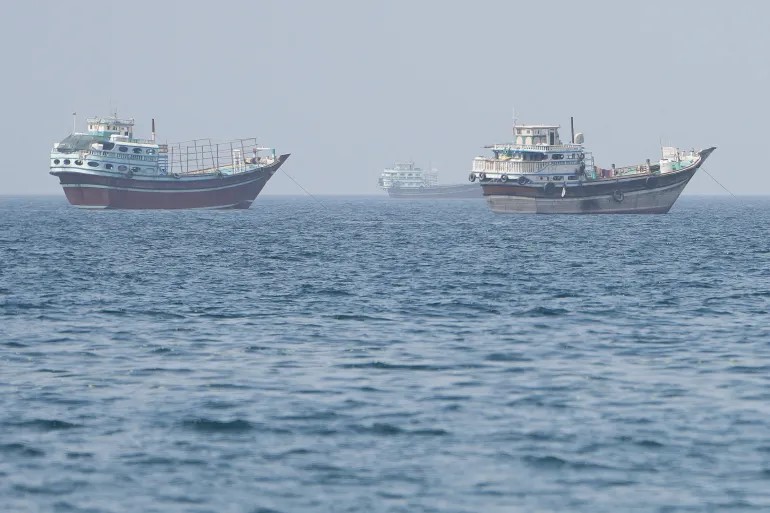
Iran has repeatedly targeted vessels attempting to navigate the strait as part of efforts to restrict traffic through the waterway, including four tankers owned by Abu Dhabi state oil company ADNOC during the past two weeks.
No injuries were reported in those attacks, but they drew strong condemnation from the UAE and other Gulf states, including Kuwait and Bahrain.
Since the beginning of the conflict, nearly 20 ADNOC vessels have been targeted by Iranian missiles and drones, killing one person and injuring another 20, according to UAE authorities.
The UAE’s suspension of trade comes as Washington prepares additional economic pressure on Tehran.
US Treasury Secretary Scott Bessent said last week that new measures would combine economic isolation with the continued blockade of Iranian ports, adding to the pressure generated by the military campaign against Iran.
Iran has accused the UAE and other US allies in the Gulf of assisting American military operations against Tehran.
Iranian Chief of Staff Gen Ali Abdollahi issued a fresh warning on Wednesday to countries along the southern shores of the Persian Gulf.
“Any assistance or facilitation provided to the aggressor U.S. military amounts to participation alongside U.S. military forces,” he said in a statement distributed by Iran’s semiofficial Fars news agency.
The confrontation has also severely reduced shipping through the Strait of Hormuz. Only 10 vessels transited the waterway on Tuesday, according to MarineTraffic, fewer than one-tenth of the number that typically passed through before the conflict.
US President Donald Trump insisted on Tuesday that the strait remained “open and operating” and posted a map depicting it as US territory, prompting a sharp response from Iranian Deputy Foreign Minister Kazem Gharibabadi, who called Trump a “deluded man.”
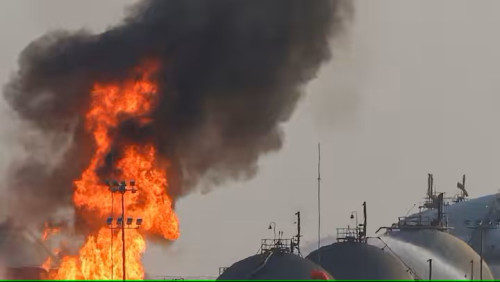
Iran has launched hundreds of ballistic missiles and thousands of drones during the conflict, with Tehran saying it was targeting US assets. The attacks have also struck buildings in Dubai and Abu Dhabi, Dubai’s commercial airport, ports and energy infrastructure.
The UAE’s decision carries significant economic risks for both sides.
The World Trade Organization’s latest figures show that the UAE accounted for more than 30% of Iran’s imports in 2024, worth about $21 billion, while nearly 13% of Iranian exports, valued at about $7 billion, went to the UAE.
Farzanegan said the UAE itself could suffer from prolonged confrontation because its economy depends heavily on regional stability, particularly as it seeks to maintain its position as a global business, financial and tourism hub.
“As a relatively small country seeking to remain a regional hub for business and finance while attracting tourists and investors, the UAE depends heavily on regional stability,” he said. “Any major conflict with Iran can therefore cause substantial damage to its economy.”
The economic squeeze comes as Iran’s wider financial crisis deepens.
The International Monetary Fund forecasts Iranian inflation of nearly 70% this year and an economic contraction of 5.4%, while the rial has fallen to record lows.
The UAE’s trade embargo therefore threatens to remove one of Iran’s most important commercial gateways just as Tehran faces mounting military, financial and diplomatic pressure — further narrowing its economic room for manoeuvre as the conflict continues. - August 20, 2026