CHINA has developed hypersonic glide vehicles capable of launching air-to-air weapons against high-value targets thousands of kilometres away, marking a significant expansion of the country’s efforts to use its growing missile arsenal for a wide range of military missions, according to a person with direct knowledge of the matter.
The development could pose a serious challenge to US air operations in any future conflict with China, particularly by threatening aircraft that provide critical support to combat forces while operating far from the battlefield.
The weapons are reportedly designed to target high-value aircraft such as aerial refuelling tankers, airborne early-warning and control aircraft and flying command posts, including the US Air Force’s E-4B Nightwatch.
China has also incorporated air-to-air capabilities into some hypersonic cruise missiles and developed anti-ship capabilities for several missile types, the person said, speaking on condition of anonymity because of the sensitivity of the information.
The developments form part of a broader Chinese effort to expand the roles of its missile forces.
China has the world’s largest ballistic missile arsenal, with the Pentagon estimating that it possessed at least 3,150 ballistic missiles and 300 ground-launched cruise missiles as of 2024.
The number of ballistic missiles represented a 147% increase from 2015, while ground-launched cruise missiles increased by 50% over the same period.
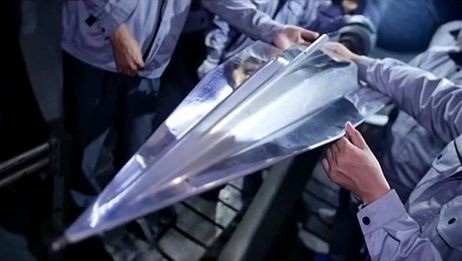
A hypersonic glide vehicle, or HGV, is a manoeuvrable warhead that travels through the atmosphere at hypersonic speeds after being launched by a missile. Its ability to manoeuvre during flight can extend its effective range and make interception more difficult.
An HGV deployed from China’s DF-17 missile could travel about 2,414 kilometres, putting it within reach of distances comparable to the separation between mainland China and the US territory of Guam, a major American military installation.
China’s DF-27 missile has an estimated maximum range of about 8,000 kilometres, potentially putting targets as far away as Hawaii within range.
No other country is publicly known to operate a weapon combining an HGV with air-to-air missiles.
A 2026 report by the US Air Force’s China Aerospace Studies Institute said China’s missile modernisation efforts were increasingly focused on the ability to inflict coordinated, system-level damage across an adversary’s military architecture.
However, using a weapon derived from a ballistic missile to attack a distant aircraft would present significant operational challenges.
A ballistic missile travelling at maximum range could take 20 minutes or more to reach its target, requiring highly accurate and continuously updated targeting information.
The resulting “kill chain” — linking distant sensors, command systems and the missile itself — could provide an adversary with opportunities to disrupt the attack before the weapon reaches its target.
There is also a risk that the launch of a ballistic missile could be mistaken for a nuclear strike, creating what military planners describe as a discrimination problem and increasing the danger of unintended escalation during a major conflict.
China nevertheless appears to be accelerating its missile development.
Bloomberg reported in May that Chinese missile production increased in 2025 at its fastest pace since President Xi Jinping took office in 2013, highlighting the scale of investment in the sector.
China’s long-range PL-15 air-to-air missile also saw combat during the brief India-Pakistan conflict in 2025, with Pakistan saying it used the weapon to shoot down several Indian aircraft.
The development comes as the United States is also expanding its own long-range air-to-air capabilities.
The US Navy said on August 22 that it was testing the AIM-424 Malice air-to-air missile, developed by RTX unit Raytheon, with a reported range of more than 482 kilometres.
The United States has also developed the AIM-174B from RTX’s SM-6 air-defence missile. Its precise range remains classified, although the ground-launched SM-6 has a range of at least 250 miles.
The Lockheed Martin AIM-260, which is already in production but has yet to enter service, is also expected to provide an extended-range air-to-air capability.
In Europe, MBDA’s Meteor missile uses ramjet propulsion and can engage targets at ranges exceeding 161 kilometres.
The emerging competition highlights the growing importance of long-range air-to-air weapons in any potential future conflict, particularly as both China and the United States seek to protect their own support aircraft while threatening those underpinning an adversary’s air operations. - August 25, 2026