Since a second intifada, or uprising, erupted on September 28, 2000, Palestinians have faced a string of military turnarounds and diplomatic defeats as well as their own internal divisions.
A recap:
'Al-Aqsa Intifada'
On September 28, 2000, right-wing Israeli opposition leader Ariel Sharon visits the Al-Aqsa mosque compound in annexed east Jerusalem, a highly sensitive site sacred in both Islam and Judaism.
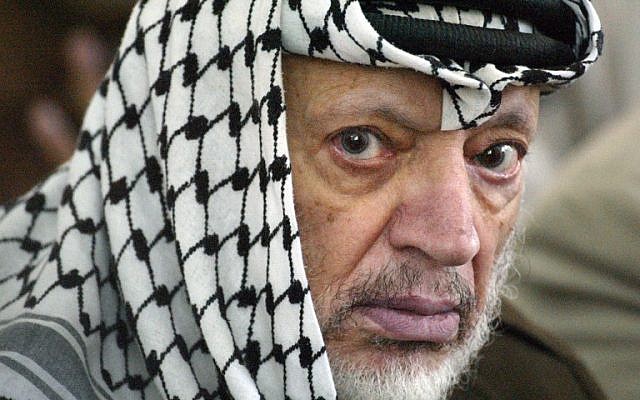
The next day, the first Palestinians are killed. An advisor to the Palestine Liberation Organization's leader Yasser Arafat accuses Sharon of sparking a religious war.
The first intifada against Israeli occupation broke out in 1987 in a refugee camp in the Gaza Strip and ended in 1993 with the signature of the Oslo Accords.
Arafat confined
The second uprising is punctuated by suicide attacks on civilian targets in Israel and armed violence against Israeli troops and settlers in the occupied territories.
On February 6, 2001, Sharon becomes Israel's prime minister.
A year later in March he leads the biggest Israeli offensive in the West Bank since 1967, destroying the main section of the PLO's headquarters.
Arafat is confined to two rooms without electricity.
Israel start building a security wall, and its army reoccupies nearly the whole of the West Bank.
Palestinian activists are targeted and leaders in Islamist group Hamas are killed and arrested as part of Israel's "liquidation operations".
The second intifada ends in February 2005, with a joint announcement by Sharon and Mahmud Abbas, successor to the late Arafat.
In all some 4,700 people died in the second intifada, of which nearly 80 percent were Palestinians.
In September Israel withdraws all troops and settlers from Gaza.
Palestinian factions
In January 2006, Hamas wins Palestinian legislative elections, crushing its rival Fatah, the party led by Abbas.
In June 2007, Hamas seizes control of Gaza after ferocious fighting with Fatah, which remains in power in the West Bank.
The factions mean the Palestinian territories are divided between two rival powers, and reconciliation attempts have so far failed although recently Hamas and Fatah appear united by their opposition to Arab-Israeli normalisation deals.
Gaza unrest
In 2008 Israel launches a massive air then ground offensive in an attempt to stop rocket fire from Gaza.
Two deadly operations are carried out in 2012 and 2014.
From March 2018, Palestinians hold a weekly "Great March of Return" in Gaza demanding the right to return to homes in Israel from which they fled or were expelled in the late 1940s.
Pro-Israel White House
From his entry into the White House in 2017, US President Donald Trump maintains a staunchly pro-Israel stance.
In December Trump recognises Jerusalem as the capital of Israel, ignoring Palestinian claims on the Holy City and breaking with decades of US policy.
The US embassy is officially transferred from Tel Aviv to Jerusalem on May 14, 2018. The day is marked by clashes in the Gaza Strip where about 60 Palestinian protesters are killed by Israeli fire.
Abbas says the US can no longer play its historic role as peace talks mediator.
On January 28, 2020, Trump unveils his controversial Middle East peace plan, which is seen as favouring Israel, but offers Palestinians a pathway to a limited state.
'Stab in the back'
On September 15 the United Arab Emirates and Bahrain sign historic deals normalising ties with Israel at the White House.
The landmark accords break with decades of Arab consensus that further ties with the Jewish state should not be normalised until it has signed a comprehensive peace deal with the Palestinians.
Under the deals, Israel agrees to "suspend" annexation of parts of the occupied West Bank, without saying for how long.
The Palestinian authorities slam the move as a "stab in the back".
On September 22 the Palestinians step down from a key Arab League role in protest at the regional bloc's failure to take a stand against the Israeli-Arab deals. - AFP, September 27, 2020