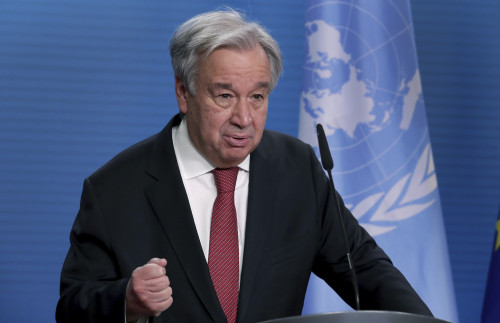
GENEVA – United Nations (UN) secretary-general Antonio Guterres today criticised countries that are using the pandemic to justify cracking down on dissent, reining in the media and suppressing criticism.
Speaking at the opening of the UN Human Rights Council’s main annual session, Guterres charged that authorities in a number of nations were using restrictions meant to halt the spread of Covid-19 to weaken their political opposition.
“Using the pandemic as a pretext, authorities in some countries have deployed heavy-handed security responses and emergency measures to crush dissent, criminalise basic freedoms, silence independent reporting, and curtail the activities of non-governmental organisations,” he said, without naming the countries.
“Human rights defenders, journalists, lawyers, political activists, and even medical professionals are being detained, prosecuted and subjected to intimidation and surveillance for criticising government pandemic responses – or the lack thereof,” he added.
In some countries, he warned, “pandemic-related restrictions are being used to subvert electoral processes, weaken opposition voices and suppress criticism”.
Speaking in a pre-recorded video message to the largely virtual meeting of the Geneva-based body, the UN chief also decried widespread misinformation around the world about the coronavirus and the pandemic.
In a number of cases, he said, “access to life-saving Covid-19 information has been concealed, while deadly misinformation has been amplified, including by those in power”.
Guterres dedicated much of his annual speech before the UN’s top rights body to the wide-ranging effects of the pandemic, which “hit the world without mercy”.
“Covid-19 has deepened pre-existing divides, vulnerabilities and inequalities, as well as opened up new fractures, including fault-lines in human rights,” he said.
He pointed to the hundreds of millions of families who have seen their lives “turned upside down” due to job losses and soaring debt.
At the same time, he said, “the disease has taken a disproportionate toll on women, minorities, persons with disabilities, older persons, refugees, migrants and indigenous peoples.”
As a result, he warned, “progress on gender equality has been set back years (and) extreme poverty is rising for the first time in decades”.
In addition to inequalities within countries, the UN chief slammed inequalities between nations when it comes to accessing the Covid-19 vaccines coming to market as a “moral outrage”.
A full 75% of all vaccine doses have been administered in just 10 countries, he pointed out, while more than 130 countries have yet to receive a single dose.
“Vaccine equity is ultimately about human rights,” Guterres said. “Vaccine nationalism denies it.”
Beyond the pandemic, Guterres also highlighted the need for more action globally against systemic racism and ideas of white supremacy.
“The rot of racism eats away at institutions, social structures and everyday life, sometimes invisibly and insidiously,” he said.
He welcomed the “new awakening in the global fight for racial justice”.
“We must also step up the fight against resurgent neo-Nazism, white supremacy and racially- and ethnically-motivated terrorism,” Guterres said.
“The danger of these hate-driven movements is growing by the day,” he said, warning that they were “more than domestic terror threats”. “They are becoming a transnational threat.” – AFP, February 22, 2021