VANCOUVER – At least 69 people in Canada’s Vancouver area have died in a record-smashing heatwave engulfing the west of the country and the US Pacific Northwest, police said yesterday.
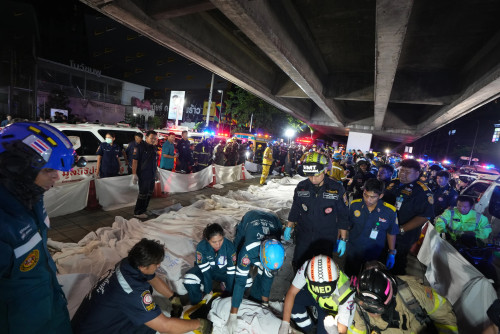
Most of the dead in the Vancouver suburbs of Burnaby and Surrey over the past 24 hours were elderly or people with underlying health conditions, the Royal Canadian Mounted Police (RCMP) said.
Other local municipalities have said they too have responded to many sudden death calls since Monday, but have yet to release tolls.
“Although still under investigation, heat is believed to be a contributing factor in the majority of the deaths,” RCMP corporal Michael Kalanj said in a statement.
Climate change is causing record-setting temperatures to become more frequent. Globally, the decade to 2019 was the hottest recorded, and the five hottest years have all occurred within the last five years.
The scorching heat stretching from the US state of Oregon to Canada’s Arctic territories has been blamed on a high-pressure ridge trapping warm air in the region.
On Monday, Canada set a new all-time high temperature record of 118ºF (47.9ºC) in Lytton in British Columbia, about 155 miles (250km) east of Vancouver.
And forecasters were expecting the record to go again on Tuesday, predicting 120ºF heat in western Canada.
Temperatures in the US Pacific Northwest cities of Portland, Oregon, and Seattle, Washington, reached levels not seen since record-keeping began in the 1940s: 115ºF in Portland and 108ºF in Seattle, according to the National Weather Service.
Vancouver on the Pacific coast has for several days recorded temperatures above 86ºF (or almost 20 degrees above seasonal norms). Inland along the Fraser River delta, due to high humidity, climatologists said it felt like 111ºF yesterday.
‘Hottest week ever’
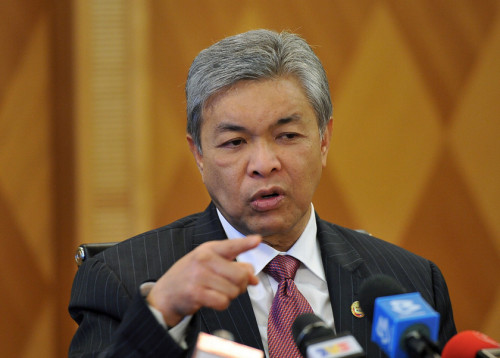
“We are in the midst of the hottest week British Columbians have ever experienced, and there are consequences to that, disastrous consequences for families and for communities,” British Columbia Premier John Horgan told a news conference.
“How we get through this extraordinary time is by hanging together,” he said.
He urged “checking up on those people we know might be at risk, making sure we have cold compresses in the fridge or we’re staying in the coolest part of our homes, and making sure that we’re taking steps to get through this heatwave.”
Environment Canada has issued alerts for British Columbia, Alberta, and parts of Saskatchewan, Manitoba, Yukon and the Northwest Territories, saying the “prolonged, dangerous and historic heatwave will persist through this week”.
The US National Weather Service issued a similar warning, urging people to “stay in air-conditioned buildings, avoid strenuous outdoor activities, drink plenty of water, and check on family members/neighbours.”
The heatwave has forced schools and Covid-19 vaccination centres to close in the Vancouver area, while officials set up temporary water fountains and misting stations on street corners.
Stores quickly sold out of portable air conditioners and fans, so several people without cooling at home told AFP they hunkered down in their air-conditioned cars or underground parking garages at night.
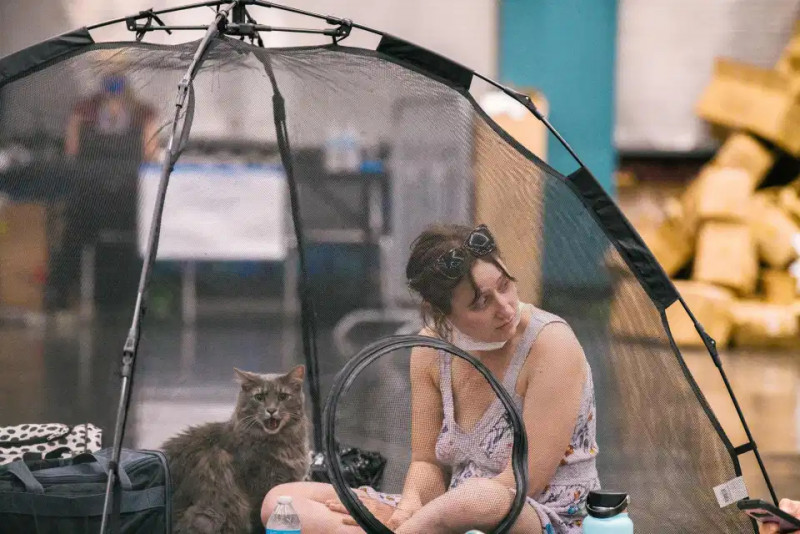
Cities across the western United States and Canada opened emergency cooling centres and outreach workers handed out bottles of water and hats.
In Eugene in Oregon, organisers were forced to adjust the final day of the US Olympic track and field trials, moving afternoon events to the evening.
The extreme heat, combined with intense drought, also created the perfect conditions for several fires to break out over the weekend, and one blaze on the California-Oregon border had already burned some 600ha by Monday morning.
“Dubai would be cooler than what we’re seeing now,” David Phillips, a senior climatologist for Environment Canada, told AFP on Monday. – AFP, June 30, 2021