TOKYO – When Yoshihide Suga took over as Japan’s prime minister last year, hopes were high that skills honed over the years as a keen backroom operator, and a common touch from his rural roots, would enable him to lead his nation through the Covid-19 pandemic.
Instead, the virus surged back amid a rocky vaccination roll-out and a series of “states of emergency” that did little to stop the spread of the more contagious Delta variant.
Suga, 72, also insisted on holding the Tokyo 2020 Olympics, postponed from last year, despite widespread public opposition.
His support rates sank below 30% ahead of a ruling Liberal Democratic Party leadership race and general election this year.
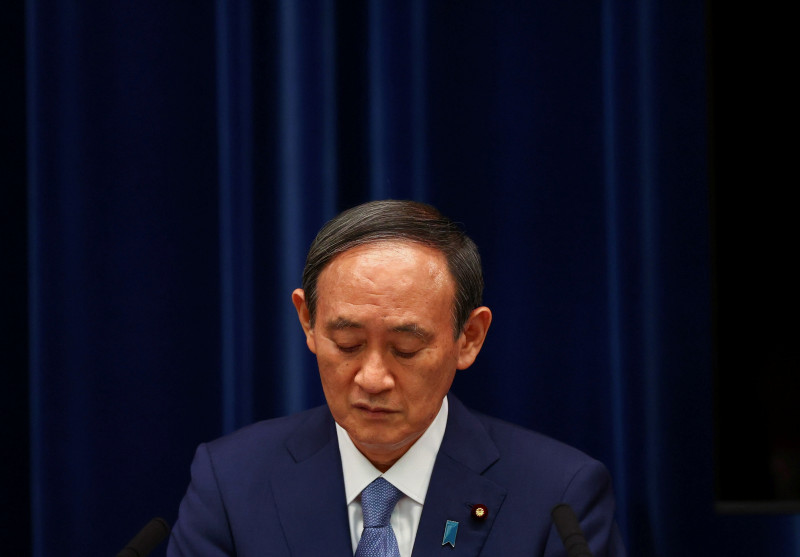
Today, facing a revolt within his own party, Suga said he will step down to focus on the pandemic, setting the stage for his replacement as prime minister after just one year in office.
Known for his steely gaze and sharp, sometimes irritable, replies during press conferences as chief cabinet secretary and right-hand man to predecessor Shinzo Abe, Japan’s longest-serving prime minister, Suga took over last September when Abe abruptly quit, citing health problems.
Suga’s image as a savvy political operator capable of pushing through reforms and taking on the stodgy bureaucracy propelled his support to 74% when he took office.
Initially, populist promises, such as lower mobile phone rates and insurance for fertility treatments, were applauded. He also set up a digital agency to unify central and local government technology systems, an area where Japan has lagged.
But, removing scholars critical of the government from an advisory panel and compromising with a junior coalition partner on policy for healthcare costs for the elderly drew criticism.
His delay in halting the “Go To” domestic travel programme – which experts said probably helped spread the coronavirus – hit hard, while the public grew weary of states of emergency that hurt businesses.
Perceptions that he was more focused on hosting the Olympics than the pandemic also eroded support, although authorities have denied any link between the Games and the spike in infections.
Critics have blamed poor communication skills during press conferences in Parliament for failing to unite the public behind largely voluntary pandemic restrictions.
By last month, when the Olympics closed, Suga’s support had slid below 30%, alarming party leaders and junior lawmakers ahead of polls for the powerful lower house of Parliament that must be held this year, and leading to talk on unseating him. – Reuters, September 3, 2021