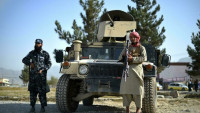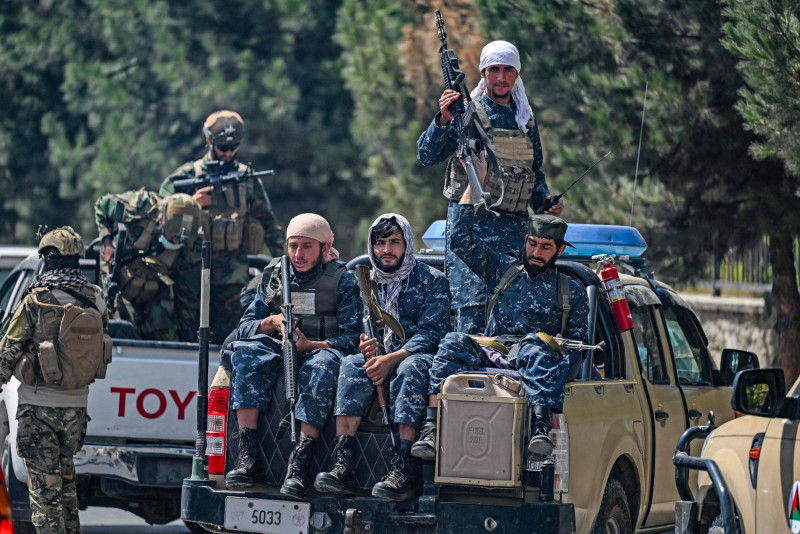
KABUL – The Taliban yesterday claimed total control over Afghanistan, saying they had won the key battle for the Panjshir Valley, the last remaining holdout of resistance against their rule.
Following their lightning-fast victory in mid-August over the former Afghan government’s security forces and the withdrawal of United States troops after 20 years of war, the Taliban turned to fighting the forces defending the mountainous Panjshir Valley.
As the Islamist hardliners claimed victory, their chief spokesman warned against any further attempts to rise up against their rule while urging former members of the security forces to join their regime’s ranks.
“With this victory, our country is completely taken out of the quagmire of war,” chief spokesman Zabihullah Mujahid said.
“Anyone who tries to start an insurgency will be hit hard. We will not allow another,” he later added at a press conference in Kabul.
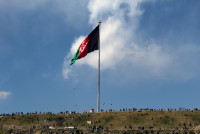
The Taliban published a video of their flag being raised over the governor’s house in Panjshir – underscoring a historic win that has seen the anti-Taliban bastion defeated for the first time during 40 years of conflict.
It remained in the hands of resistance fighters during Soviet rule, a subsequent civil war, and the Taliban’s first regime of the late 1990s.
The National Resistance Front (NRF) in Panjshir – made up of anti-Taliban militia and former Afghan security forces – on Sunday acknowledged suffering major battlefield losses and called for a ceasefire.
But yesterday the group said in a tweet that its fighters were still present in “strategic positions” in the valley.
The NRF includes local fighters loyal to Ahmad Massoud – the son of the famous anti-Soviet and anti-Taliban commander Ahmad Shah Massoud – as well as remnants of the Afghan military that retreated to the Panjshir Valley.
As Taliban fighters amassed in the valley, Massoud yesterday called on Afghans in and out of the country to “rise up in resistance”.
The Taliban are yet to finalise their new regime after rolling into the capital three weeks ago at a speed that analysts say likely surprised even the militants themselves.
As they undertake a mammoth transition into overseeing key institutions and cities of hundreds of thousands of people, Mujahid said an interim government would first be announced, allowing for later changes.
“Final decisions have been taken, we are now working on the technical issues,” he said at a press conference.
Afghanistan’s new rulers have pledged to be more “inclusive” than during their first stint in power, with a government that represents Afghanistan’s complex ethnic makeup – though women are unlikely to be included at the top levels.
Women’s freedoms in Afghanistan were sharply curtailed under the Taliban’s 1996-2001 rule.
This time, women will be allowed to attend university as long as classes are segregated by sex or at least divided by a curtain, the Taliban’s education authority said in a lengthy document issued on Sunday.
But female students must wear an abaya (robe) and niqab (face-veil), as opposed to the even more conservative burqa mandatory under the previous Taliban regime.
However, some universities in Kabul remained closed yesterday and those that did open saw a drastic fall in the number of students – some who complied with the new rules, and others who resisted.
Afghans are also facing a host of other challenges, including looming financial and humanitarian crises, although the Taliban on Sunday pledged to guarantee the safety of humanitarian workers and aid access in a meeting with the UN humanitarian chief. – AFP, September 7, 2021