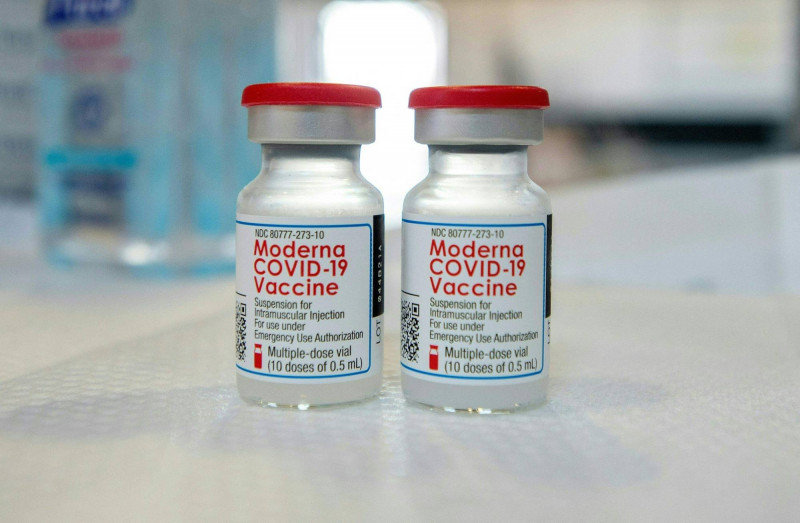
WASHINGTON – A new study released by the US Centres for Disease Control and Prevention (CDC) yesterday is the latest to suggest the Moderna Covid vaccine confers better long-term protection against hospitalisation than Pfizer.
CDC researchers conducted an analysis of nearly 3,689 adults who were hospitalised with severe Covid from March 11 to August 15, this year – a period that precedes and includes the dominance of the Delta variant.
Overall, 12.9% were fully vaccinated with the Moderna vaccine, 20.0% were vaccinated with Pfizer-BioNTech, and 3.1% were vaccinated with Johnson & Johnson.
Over the entire period, the Moderna vaccine was 93% effective against hospitalisation, Pfizer was 88% effective, and J&J was 68% effective.
The loss of efficacy against hospitalisation for Pfizer was particularly pronounced: it fell from 91% in 14-120 days after vaccination to 77% more than 120 days after vaccination.
By contrast, Moderna fell from 93% to 92% when comparing the same two periods.
The study also included a separate analysis of the levels of different types of antibodies provoked by the vaccines, taken from 100 volunteers.
The Moderna vaccine elicited higher levels of antibodies compared with Pfizer and J&J for a key part of the virus’ spike protein, which it uses to invade cells.
There is accumulating research suggesting the Moderna vaccine’s superiority over the Pfizer vaccine, including a previous CDC studies released last week.
The reasons aren’t fully clear, but it could be because the dosage levels are higher – 100 micrograms against 30.
It could also be tied to the dosing interval, with the Pfizer shots given three weeks apart versus Moderna, which are given four weeks apart.
The Food and Drug Administration was holding a meeting of leading independent experts yesterday to weigh the question of giving third doses of Pfizer to the general population, not just immune compromised people. – AFP, September 18, 2021