
WASHINGTON – United States pharmaceutical company Merck yesterday said it will seek authorisation of its oral drug molnupiravir for Covid-19 after it was shown to reduce the chances of newly infected patients being hospitalised by 50%.
A simple pill to treat the coronavirus has been sought since the start of the pandemic, and yesterday’s announcement is hailed as a major step towards that goal.
Anthony Fauci, chief medical adviser to US President Joe Biden, told reporters that “the data is impressive”, and he highlighted that the trial results showed no deaths among patients who received the drug compared with eight in the placebo group.
The US has procured 1.7 million courses of molnupiravir should it be given the green light, with the option to buy more, and global health agency Unitaid said it is working with a partnership called ACT-Accelerator to secure supply for low- and middle-income countries.
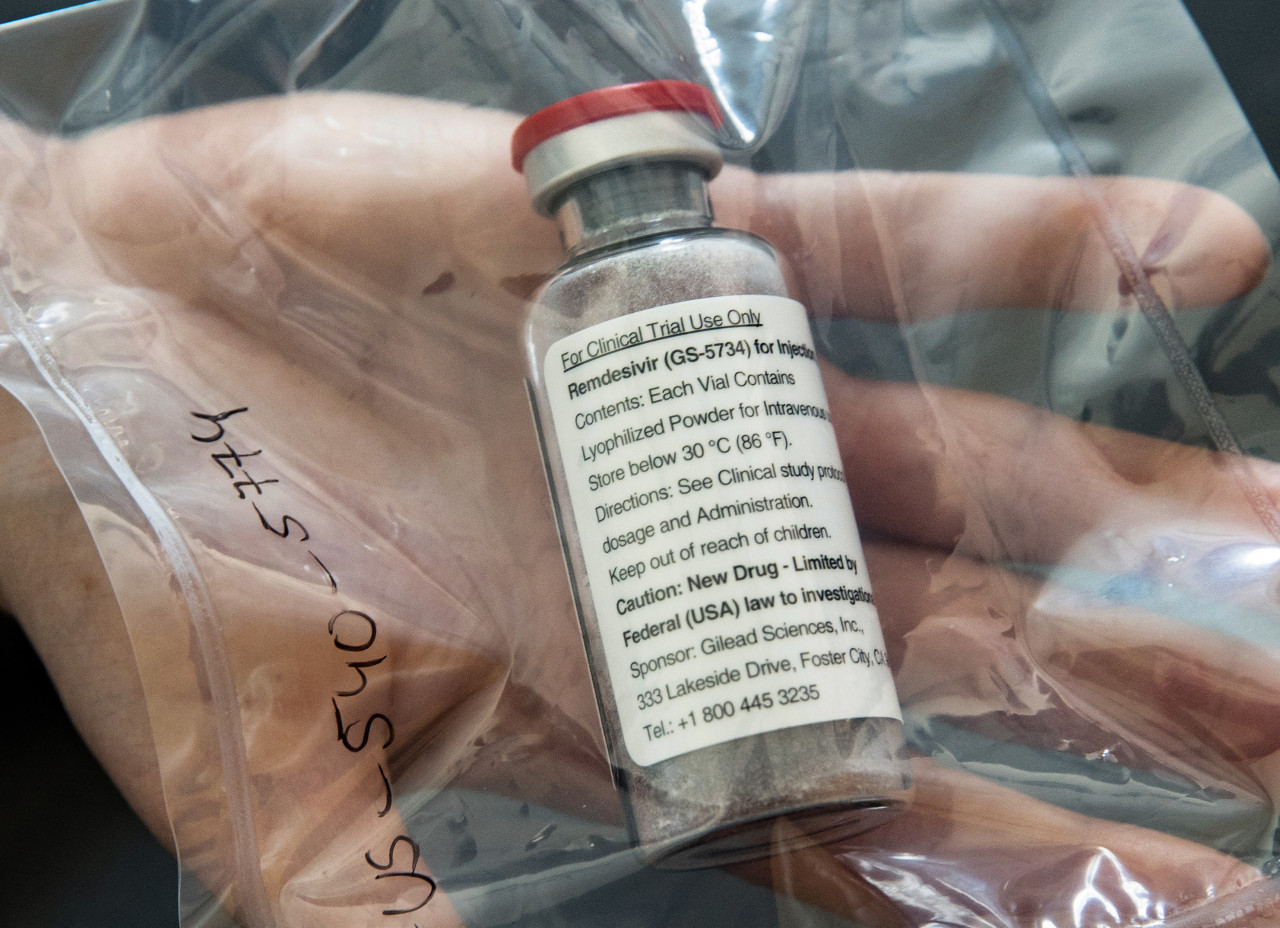
Until now, Covid-19 therapeutics such as monoclonal antibodies and Gilead’s remdesivir have been administered intravenously.
“It’s very exciting to have more options that are easy to deploy,” Natalie Dean, a biostatistician at Emory University who specialises in infectious diseases, told AFP.
“You can have something that’s similarly effective, but if one is much easier to use, that’s going to have a bigger population-level impact.”
But, experts also stressed that if approved, the drug is not a miracle cure, and should complement highly effective vaccines rather than replace them.
Compelling results
In a late-stage clinical trial, Merck and its partner Ridgeback Therapeutics evaluated data from around 770 patients – roughly half of whom received a five-day course of the pill, while the other got a placebo.
All the patients had lab-confirmed Covid-19 with symptoms that developed within five days of them being assigned to their respective groups.
Of the patients who received molnupiravir, 7.3% were hospitalised by day 29, compared with 14.1% of those on a placebo – a relative risk reduction of about 50%.
Efficacy is said to hold up against variants of concern, including Delta, and the drug has a good safety profile.
The results were compelling enough that an independent data monitoring committee in consultation with the Food and Drug Administration (FDA) decided to halt the trial early, which may indicate that it felt it would be unethical to continue with a placebo arm.
Merck said it plans to submit an application for emergency use authorisation to FDA as soon as possible based on these findings, and plans to submit marketing applications to other regulatory bodies worldwide.
Response from the medical community has been favourable, with some notes of caution.
Eric Topol, director of the Scripps Research Translational Institute, tweeted the fact that the results were so positive that the trial was stopped “would be considered a Eureka moment in the fight against Covid-19”.
Some experts warned that it is crucial to administer the drug early for it to be effective. Since it is not always clear who is at risk of developing severe disease, it would have the greatest impact if it were cheap enough and safe enough to distribute widely.
Broad application
Molnupiravir belongs to a class of antiviral drugs called polymerase inhibitors, which work by targeting an enzyme that viruses need to copy their genetic material, and introducing mutations that leave them unable to replicate.
“Viruses are basically little machines, and they need certain components to replicate themselves,” Daria Hazuda, chief scientific officer at Merck’s exploratory science centre, told AFP.
Antivirals disrupt the machinery.
Such drugs are expected to be more variant-proof than monoclonal antibody treatments, which target a surface protein of the virus that is continually evolving.
Molnupiravir was initially developed as an inhibitor of influenza and respiratory syncytial virus, two other important acute respiratory infections, by a team at Emory University.
“If it is proven to be very safe and proven to be effective, then it can be used broadly, irrespective of the diagnosis, to treat and prevent multiple respiratory infections,” said Hazuda. – AFP, October 2, 2021






.jpeg)