SINGAPORE – Even though Australia’s nuclear-powered submarine programme is expected to take more than 10 years before rolling out its first submarine for deployment, if Australia requests to use facilities at Singapore naval bases, the republic will treat such requests as it does now with various countries.
This is according to Defence Minister Ng Eng Hen in his written reply to parliamentary question on assessment on the Australia-UK-US Pact (Aukus).
Ng was asked on the Defence Ministry’s assessment on the Aukus pact and whether the proposed Australian nuclear submarines will be allowed to use Singapore’s port facilities.
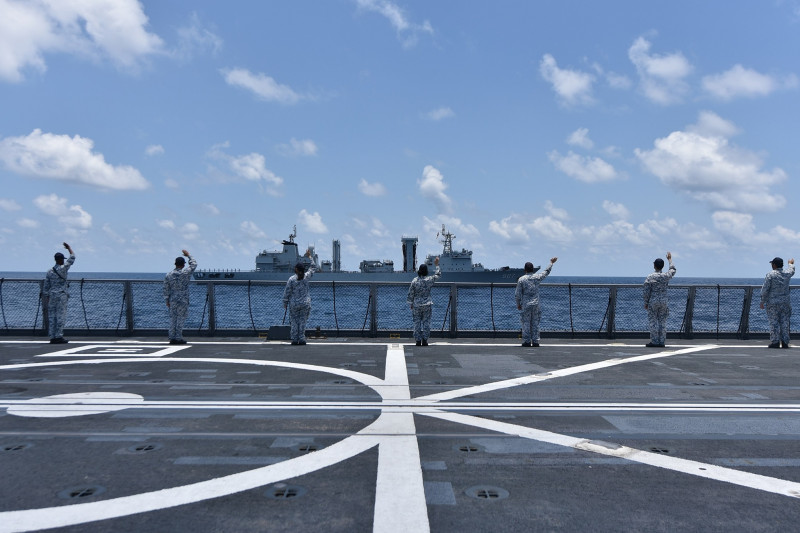
Ng said the republic will facilitate port calls by naval vessels from countries that it has good bilateral ties with and that promote stability in this region.
However, Ng stressed that these vessels will have to abide by the republic’s laws, regulations and rules during port calls, especially those pertaining to safety for nuclear-powered submarines.
The minister noted that multilateral security groupings in any geographic region have been a fact of life, as countries seek to secure their own strategic interests.
“For Singapore, as a small country, we must adjust nimbly to existing and new groupings to guard our own interests, too,” he said.
For example, Ng said Singapore is a member of the Five Power Defence Arrangements (FPDA) between Australia, Malaysia, New Zealand, Singapore and the UK, that commemorates its golden jubilee this year.
Each FPDA exercise can involve up to 4000 troops, 18 ships, 50 to 60 aircraft, and even submarines, but “our Asean neighbours accept this, as the grouping is not aimed at any one country but, as intended in its origin, to act as a security umbrella for the peace and stability of Peninsular Malaysia and Singapore.
“The FPDA is inclusive,” he said, adding that it has invited the secretary-general of the Indonesian Defence Ministry, as well as Asean defence attaches to observe their exercises.
In his reply, Ng also highlighted the 10-nation Asean Defence Ministers’ Meeting (ADMM) and 18-nation ADMM-Plus, which was formed 15 and 11 years ago, respectively.
“This security grouping has conducted more than 20 military exercises among its seven expert working groups in the last decade,” he said.
In Asia, meanwhile, Ng said the Shanghai Cooperation Organisation (SCO), which involves eight member states, four observers and six dialogue partners, recently concluded its 6th biennial multinational counter-terrorism military exercise.
“The quad of Australia, India, Japan, and the US had its first dialogue in 2007 and re-established dialogues in 2017 after a hiatus. The Aukus pact will be the latest addition,” he said.
Whatever the configuration, Ng said Singapore encourages each grouping to contribute constructively to regional peace and stability, “through transparent and open dialogue with others outside the group, and with activities that are non-confrontational, do not escalate tensions and promote a rules-based order”.
“Member nations of these groups should also abide by the Asean treaties that they have signed individually, such as the Treaty of Amity and Cooperation in Southeast Asia.
“My ministry will continue to engage all groups to push for these outcomes.” – Bernama, October 5, 2021