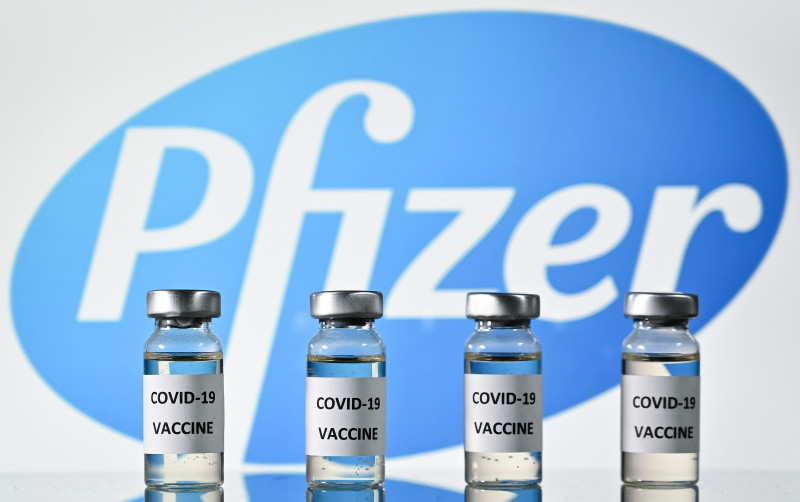
WASHINGTON – United States drug maker Pfizer yesterday said it has formally requested emergency use authorisation for its Covid-19 vaccine in children aged 5 to 11.
Kids have been infected in greater numbers in the latest coronavirus wave driven by the Delta variant, and inoculating young people is seen as key to keeping schools open and helping end the pandemic.
Late last month, Pfizer and BioNTech, the German biotechnology giant that co-developed the vaccine, began submitting data to Food and Drug Administration (FDA) regulators for the highly anticipated authorisation.
Pfizer tweeted yesterday that the two companies have “officially submitted our request” to FDA “for emergency use authorisation of our #COVID19 vaccine in children 5 to <12”.
“We’re committed to working with FDA, with the ultimate goal of helping protect children against this serious public health threat.”
FDA last week said it has scheduled a meeting of an advisory committee to review the data on October 26, before giving its opinion on whether authorisation should be granted.
The agency previously said once the formal submission is completed, it will complete its review “likely in a matter of weeks rather than months”.
The US Centres for Disease Control and Prevention (CDC) will subsequently publish recommendations for use for healthcare providers administering the shots.
“If there is approval or authorisation, and a CDC recommendation, we are ready, we have the supply,” White House Covid-19 coordinator Jeff Zients told CNN following the announcement.
“I think we can all agree that getting a safe and effective vaccine for kids (aged) 5 to 11 is a really important next step in our fight against the virus.”
Youth vaccination key
Children in the 5-to-11 age group received a two-dose regimen of 10μg in the trial, compared with 30μg for older age groups. The shots were given 21 days apart.
The Pfizer jab has been granted full FDA approval for those aged 16 and up, and FDA in May authorised its emergency use on children aged 12 to 15.
Experts said children are essential to vaccinate, to help achieve population immunity against the disease.
While younger kids are less likely to develop severe infection, they can still become sick and transmit the virus to the general population.
“We’re working with states to set up convenient locations for parents and kids to get vaccinated, including paediatricians’ offices and community sites,” said Zients.
Nearly 5.9 million children tested positive for the virus as of September 30, according to the American Academy of Paediatrics.
Vaccines, masks and other mitigation measures against Covid-19 have become deeply political issues in the US – especially for children.
California announced last week that Covid-19 vaccination will be compulsory for all students, a first in the country.
About a third of parents with a child between the ages of 5 and 11 said they will vaccinate their kid as soon as possible, according to a Kaiser Family Foundation survey from end-September.
Another third said they will wait before making a decision, and a quarter said they will not get their child vaccinated.
The Pfizer jab received full, formal approval in the US in August, and is therefore technically available to children in younger age groups if prescribed by a doctor, but US authorities have cautioned against doing this until the safety data is in.
Health officials are focusing in particular on the risk of myocarditis, an inflammation of the heart muscle that has been found to be more common in young adults and adolescents after vaccination, with the aim of determining whether the benefits outweigh risks.
Pfizer and BioNTech are also trialling their vaccine on infants aged 6 months to 2 years, and on children aged 2 to 5.
Initial data for these groups may come before year-end.
The US has an estimated 28 million children aged 5 to 11, according to Census Bureau data from 2019. – AFP, October 8, 2021