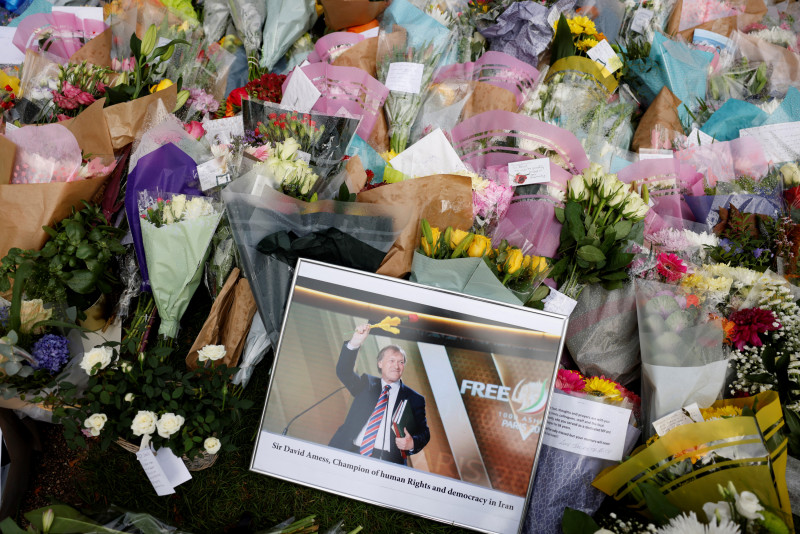
LEIGH-ON-SEA – The attacker who fatally stabbed British lawmaker David Amess was referred to an official counterterrorism scheme for those thought to be at risk of radicalisation, according to media reports.
Police late yesterday said detectives have until next Friday to question the suspect after he was detained under the Terrorism Act, which allows them to extend his detention.
Veteran Conservative MP Amess, 69, was talking with voters at a church in the small town here east of London when he was stabbed to death on Friday.
Police said they are investigating “a potential motivation linked to Islamist extremism”. The investigation is being led by Scotland Yard’s Counterterrorism Command.
The BBC said it has received confirmation from Whitehall officials that the man’s name is Ali Harbi Ali.
Ali, a British citizen of Somali heritage, had been referred to Prevent, the United Kingdom’s scheme for those thought at risk of radicalisation, a few years ago, said the BBC.
‘Fast-paced investigation’
Ali is believed to not have spent long in the programme, which is voluntary in nature, and was never formally a “subject of interest” to domestic security agency MI5, said the BBC report.
Police and security services believe he acted alone and was “self-radicalised”, said The Sunday Times, and he may have been inspired by Al-Shabaab, an al-Qaeda-linked Islamist group in Somalia.
Ali’s father Harbi Ali Kullane, a former adviser to the prime minister of Somalia, confirmed to The Sunday Times that his son is in custody, adding: “I’m feeling very traumatised.”
Police said they have been carrying out searches at three addresses in the London area in a “fast-paced investigation”.
The Sun tabloid reported that the attacker stabbed Amess multiple times in the presence of two female staff, before sitting down and waiting for cops to arrive.
The Daily Mail newspaper said Ali had booked an appointment a week ahead.
Candlelit vigil
Yesterday evening, hundreds of mourners attended a candlelit vigil at a sports field near the scene of the crime, holding a minute’s silence in the MP’s memory.
Prime Minister Boris Johnson earlier in the day visited the crime scene to pay his respects, laying floral wreaths outside the church with opposition Labour leader Keir Starmer in a rare show of unity.
Residents, including members of the Muslim community, also heaped bouquets next to the police tape.
Britain’s politicians were stunned by the highly public attack, which recalled the murder of a pro-European Union lawmaker ahead of the Brexit referendum.
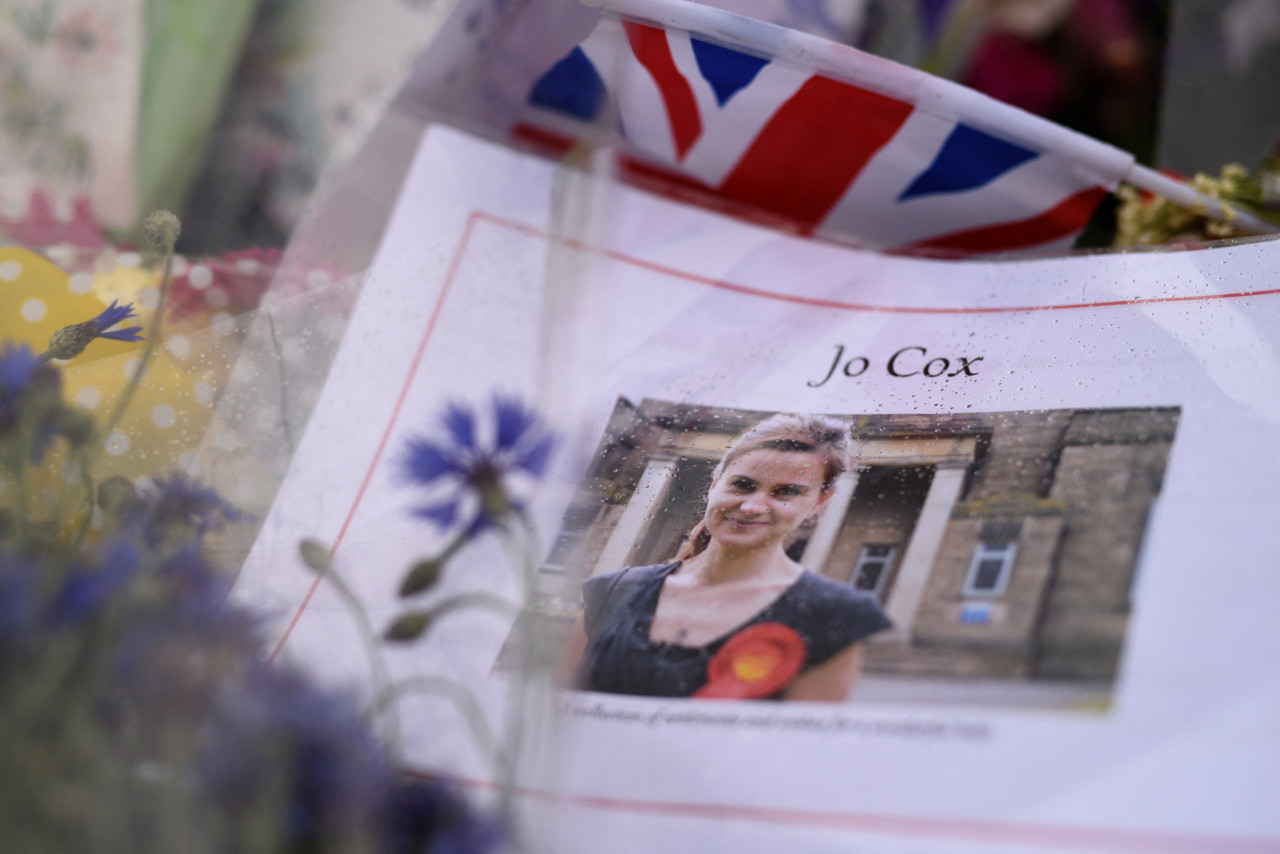
In June 2016, Labour MP Jo Cox was killed by a far-right extremist, prompting demands for action against what lawmakers said was “a rising tide” of public abuse and threats against elected representatives.
Home Secretary Priti Patel on Friday ordered police across the country to review security arrangements for all 650 MPs, and The Sunday Times reported that every MP may be granted security protection when meeting the public.
Increasing threats
Lawmakers and their staff have been attacked before, although this is rare.
But, their safety was thrown into sharp focus by Brexit, which stoked deep political divisions and led to often angry, partisan rhetoric.
Cox’s killer repeatedly shouted “Britain first” before shooting and stabbing the 41-year-old outside her constituency meeting near Leeds in northern England.
Amess was at the other end of the political spectrum and backed Brexit.
A specialist police unit set up to investigate threats against MPs in the aftermath of Cox’s murder said 678 crimes against lawmakers were reported between 2016 and last year.
Amess himself wrote about public harassment and online abuse in his book Ayes & Ears: A Survivor’s Guide to Westminster, published in 2020.
“These increasing attacks have rather spoilt the great British tradition of the people openly meeting their elected politicians,” he said in the book.
MPs have had to install security cameras and meet constituents only by appointment, he added.
Unlike some lawmakers, Amess publicised meeting times for constituents on Twitter and held them in public places, while asking people to book ahead. – AFP, October 17, 2021