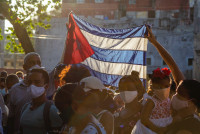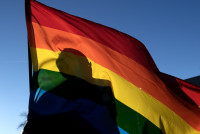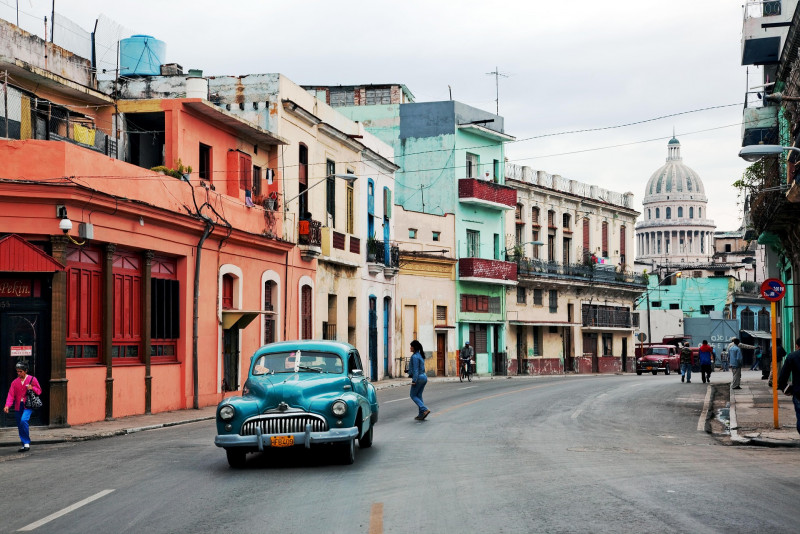
HAVANA – Cubans voted to legalise same-sex marriage and adoption as well as surrogate pregnancies in a referendum over the weekend, the communist country’s electoral officials said yesterday.
Preliminary results indicate an “irreversible trend,” with almost 67% of votes counted so far in favour of the government-backed change, electoral council president Alina Balseiro said on state television.
“The Family Code has been ratified by the people,” she said.
President Miguel Diaz-Canel tweeted: “Yes has won. Justice has been done.”
The updated code represents a major shift in a country where machismo is strong and where the authorities sent LGBTQ people to militarised labour camps in the 1960s and 1970s.
Official attitudes have since evolved, and the government conducted an intense media campaign in favour of the overhaul, which will replace the country’s 1975 Family Code.
The new code permits surrogate pregnancies as long as no money changes hands, and legally recognizes same-sex adoptions, as well as multiple fathers or mothers in addition to the biological parents.
It defines marriage as the union between two people, rather than that of a man and a woman, while also boosting the rights of children, the elderly and the disabled.
“In the end we won!” wrote LGBTQ rights activist Maykel Gonzalez on Twitter.
Diaz-Canel said the change “settles a debt with several generations of Cuban men and women whose family projects have been waiting for this law. From now on, we will be a better nation.”
‘Punishment vote’
According to the National Electoral Council, 74% of Cuba’s 8.4 million eligible voters cast a ballot, with 3.9 million valid votes counted so far in favour and 1.95 million against.
Turnout, however, was well below the last referendum, when a new constitution was adopted in 2019 with 90% of people casting a ballot.
It is also the lowest percentage the communist government has received in a vote since Fidel Castro’s 1959 revolution.
For political scientist and opposition figure Manuel Cuesta Morua, this victory for the government was “pyrrhic.”
“We have new rules for the family... but the regime lost,” he said.
“Firstly, because when you add up the No vote and abstentions, it is practically equal to – if not more than – the sum of those that voted Yes.”
Diaz-Canel acknowledged on Sunday that “for such complex issues, where there is a diversity of criteria,” people might cast “a punishment vote.”
Experts had predicted before the vote that many Cubans would use the referendum as a means to express their disapproval of the government.
Dissidents had called on citizens to reject the code or to abstain.
But Cuban political scientist Rafael Hernandez said adopting the new family code was “an effective step in the direction of social justice,” and that this was the “most important” legal protection for human rights since the revolution.
And Cuban academic Arturo Lopez-Levy, from the University of Holy Names in California, noted that “with this legislation, Cuba is at the forefront” of such rights.
The law required 50% voter approval to be adopted.
The referendum came amid the country’s worst economic crisis in 30 years, which was exacerbated by the coronavirus pandemic.
It was the first time an issue other than a constitutional change had been put to a public vote in Cuba.
The main opposition to the law’s adoption came from Protestant and Catholic churches, the latter of which blasted the changes as “gender ideology.” – AFP, September 27, 2022