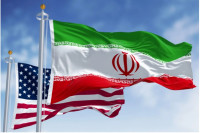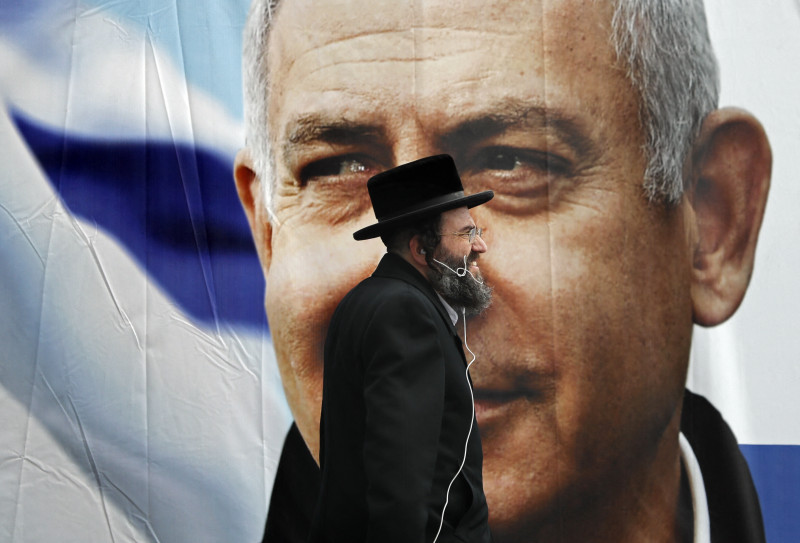
JERUSALEM – Days ahead of its general election, Israel is on alert for possible cyberattacks or influence campaigns from foreign rivals, notably Iran, aimed at sowing further tensions within its bitterly divided population.
Election day on Tuesday is a “desirable target for influence campaigns”, Communications Minister Yoaz Hendel’s office said before Israel holds its fifth vote in less than four years, as its era of unprecedented political deadlock grinds on.
The ministry and the National Cyber Directorate have been preparing to combat direct attacks on the voting infrastructure, including hacking efforts targeting the Central Elections Committee’s servers and websites.
But those concerns are secondary, partly because Israelis vote by paper ballot. More serious are online campaigns aimed at undermining confidence in Israel’s democratic process, officials and experts said.
Elections committee chair Isaac Amit warned of efforts to “delegitimise the results”, thereby “
“harming the democracy... causing schisms and suspicion”.
For Ofir Barel, a researcher at Tel Aviv University, there is evidence of Iranian efforts “to try to influence Israeli society by spreading lies with political content”.
“We see in many instances fake Iranian accounts that can come in large groups of hundreds and either spread divisive and inciting messages, or spread lies to harm the image of a certain politician,” said Barel, of the university’s Workshop for Science, Technology and Security.
He noted that Israel has grown more vulnerable to such attacks given its entrenched political divisions, with the electorate having returned inconclusive results in four straight elections and much of the nation split between supporters of hawkish ex-prime minister Benjamin Netanyahu and his opponents.
“The aim is not to harm a specific politician but to encourage polarisation and chaos in Israeli politics, which is already complicated due to the political gridlock,” Barel said.
The Israel Internet Association, which advocates for open and responsible use of online space, wrote a letter to Facebook’s parent company Meta last month warning of “the lack of sufficient preparation of the popular social networks ahead of the Israel elections”.
The letter pointed to Meta’s more robust efforts to ensure election integrity in other nations with volatile – and occasionally violent – political climates, like the United States, Brazil, Kenya, the Philippines, Ethiopia, and India.
But the group said it had “research-based doubts” about Meta’s community standards enforcement in Israel, citing lack of Hebrew monitoring capacity as a possible cause.
Civil society groups were also stepping up efforts against inflammatory political content online, including Fake Reporter, which has exposed 100 Facebook profiles targeting Netanyahu supporters, as well as broader efforts to incite hatred.
Ahead of the vote, Tel Aviv University’s Institute for National Security Studies (INSS) held a simulation of possible cyber threats.
INSS director Tamir Heyman agreed that the risk to voting and counting processes was “not high” but warned that Israel was “open and susceptible to foreign influence” campaigns aimed at dividing society.
“It’s time Israel had an official body with the responsibility and authority to defend Israeli democracy from foreign content influence,” he said.
Barel said there may be a silver lining in Israel’s cycle of inconclusive elections – with four votes held since 2019, people have had practice tuning out fake online content aimed at inflaming tensions.
“There’s more awareness, people don’t believe everything that is published,” he said.
But, he added, “after so many votes in such a short period of time, the people are tired of elections and politics, they don’t care as much”. – AFP, October 30, 2022

_-_AZIM_RAHMAN_2.jpg)