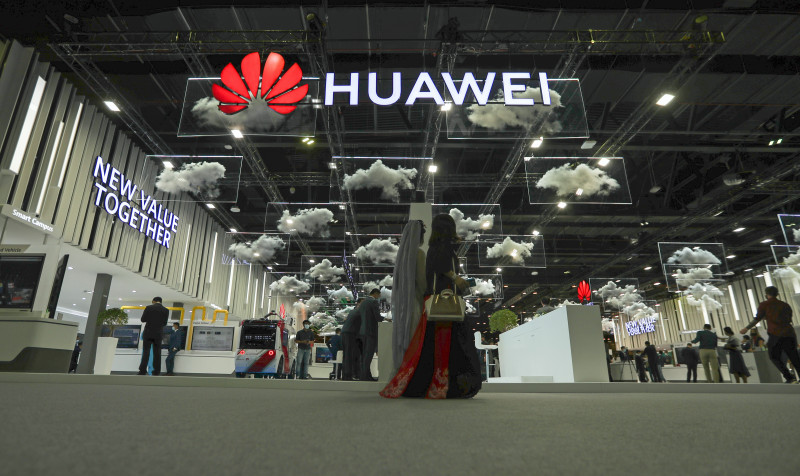
BEIJING – Chinese telecoms giant Huawei today said first-quarter revenue tumbled after harsh United States sanctions ripped into its phone business.
The company has been at the centre of intense US-China trade and technological rivalry in recent years, and the previous Donald Trump administration accused it of potential espionage on behalf of Beijing without providing hard evidence.
As a result, it was placed by Washington on a 2019 blacklist that prevented it from acquiring US-made technology crucial to its operations, in particular, chips.
Its 5G infrastructure has also been removed or delayed in a succession of Western countries on national security concerns, which drew sharp rebukes from Beijing.
Huawei said it generated first-quarter revenue of 152.2 billion yuan (RM96.3 billion) – a fall of 16.5% on-year – and attributed the drop to a decline in consumer revenue as the result of offloading a smart device brand.
The firm sold its Honor budget phone line to a domestic consortium late last year.
The group’s current rotating chairman, Eric Xu, in a statement said “2021 will be another challenging year for us, but it’s also the year that our future development strategy will begin to take shape”.
“No matter what challenges come our way, we will continue to maintain our business resilience.”
Chief financial officer Meng Wanzhou – daughter of CEO and founder Ren Zhengfei – is under house arrest in Canada battling extradition to the US on charges of fraudulently conducting business with Iran in defiance of international sanctions.
Ren, controversial for his past links to the People’s Liberation Army, in February called on US President Joe Biden’s administration to implement a “policy of openness” after the setbacks of the Trump era.
So far, not much has changed on that front.
Germany last week approved a new cybersecurity law that allows its government to block “untrustworthy” suppliers of 5G technology, bringing it in line with other EU countries such as France, which quietly limited orders of Huawei equipment last year.
The United Kingdom, New Zealand and Australia have formally blocked Huawei from their 5G networks following US pressure.
Pressure from Washington weighed on Huawei’s results last year. Unlike in 2019, the group has not yet disclosed in detail the number of phones it sold in 2020. – AFP, April 28, 2021