KUALA LUMPUR – There is a need for the customisation of policies and programmes to enable the identification of sectors or regions where more support is needed amid lockdowns being implemented in the country, said the Economic Club of Kuala Lumpur (ECKL) today.
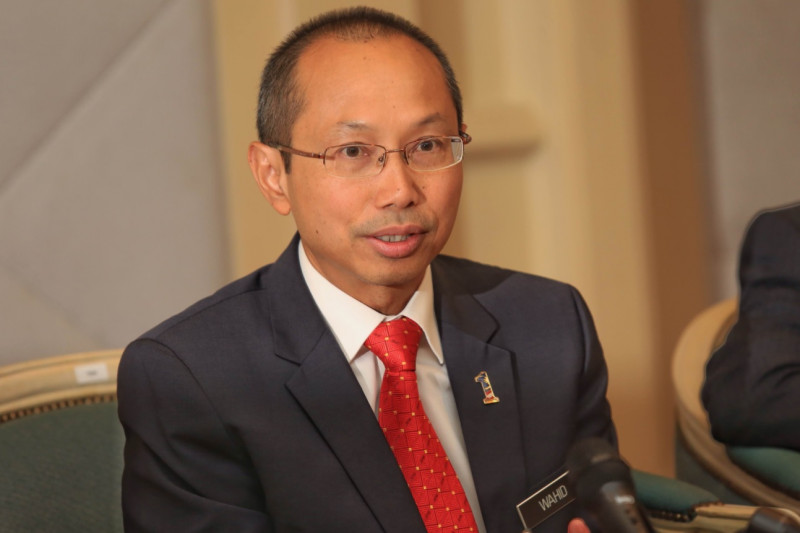
Its chairman, Tan Sri Abdul Wahid Omar, said the third movement control order (MCO) and subsequent full MCO has stifled recovery, resulting in the World Bank lowering its economic growth outlook for Malaysia for the second time to 4.5% this year – down from the 6.0% growth forecast in March.
“The pandemic has had an asymmetric impact on sectors and regions. For example, the food and beverage sector experienced higher closure rates, particularly in northern states, where vendors largely rely on tourists from Kuala Lumpur and Selangor to patronise their food trails.
“Other manufacturing sectors have experienced particularly high closure rates in East Malaysia,” he said during his welcome address at the Malaysian Economic Summit 2021 held virtually today.
Wahid, who is also Bursa Malaysia Bhd chairman, said the government’s efforts to ramp up the vaccination rate should be lauded as it will allow the lockdown to be lifted as soon as possible to save the economy and people’s livelihoods.
Currently, about 11.6 million doses have been administered. A total of 3.6 million people, or 11.2% of the population, have been fully vaccinated while eight million, or 24.6%, have received at least one dose of the Covid-19 vaccine.
“At the current rate of 337,000 doses per day, Malaysia could have some 70% of the people fully vaccinated within 100 days or by end-October.
“It is, therefore, our hope that, as the vaccination rate increases, we can uplift and do away with the broad-based lockdown and instead have more targeted enhanced movement control orders only in highly infected or affected areas,” he said.
He noted that many have complained that the stimulus packages introduced by the government are inadequate.
“But without broad-based taxes, such as the goods and services tax, the government’s resources are rather limited with a fiscal deficit of 6.2% of gross domestic product (GDP) in 2020, which is expected to widen further to 6.8% in 2021 compared with the earlier official forecast of 6.0%,” said Wahid.
He pointed out that the government has been prudent and introduced initiatives that did not unnecessarily put a strain on its fiscal position but, at the same time, cushions the people from the worst effects of the economic downturn.
“It is a delicate balancing act. But too wide a fiscal deficit and high government debt level may risk a downgrade in credit rating, resulting in higher borrowing cost and potentially weakening the currency.
“Having said that, the saving grace is that our current account in our balance of payments for the first quarter of 2021 remained healthy at RM12.3 billion or 3.3% of GDP, and our BNM international reserves of US$111 billion is sufficient to finance 8.2 months of retained imports,” he added.
Wahid said the banking system also remained well capitalised with core equity tier one ratio of 14.8%, sufficient buffer against unexpected risks.
To date, the government has introduced eight economic packages, from the Prihatin Rakyat Economic Stimulus Package (Prihatin) in March last year to the most recent, National People’s Well-Being and Economic Recovery Package (Pemulih) last month.
These packages are collectively worth RM530 billion, out of which a significant RM83 billion is in the form of direct fiscal injections.
The one-day virtual summit was organised by KSI Strategic Institute for Asia Pacific. – Bernama, July 13, 2021