Business

China’s retail sales falter as virus rebounds

It rose 8.5% on-year last month

Updated 5 years ago · Published on 16 Aug 2021 11:30AM

China’s retail sales falter as virus rebounds
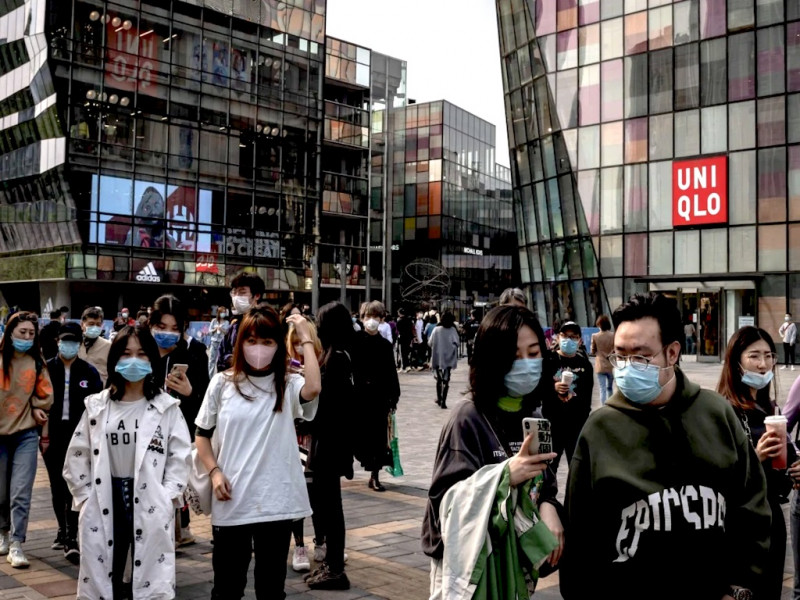
The world’s second largest economy staged a rapid recovery from last year’s coronavirus outbreak, beating back the virus with mass testing and strict lockdowns. – AFP pic, August 16, 2021

BEIJING – Growth in China’s retail sales and industrial production slowed last month, official data showed today, with a rebound of Covid-19 dragging on demand while recent floods disrupted businesses.

The world’s second largest economy staged a rapid recovery from last year’s coronavirus outbreak, beating back the virus with mass testing and strict lockdowns.

But a flare-up across the country due to the Delta variant has threatened the good news on growth with renewed localised lockdowns and extensive travel restrictions.

Retail sales rose 8.5% on-year last month, the National Bureau of Statistics said today, below a Bloomberg consensus forecast of analysts.

This figure was also below 12.1% growth in June, likely reflecting the virus resurgence in dozens of places last month, according to analysts.

“The spread of domestic outbreaks and natural disasters have affected the economy of some regions, and economic recovery remains unstable and uneven,” NBS spokesman Fu Linghui told a press briefing today.

But he added that “the national economy continues to stabilise and recover” overall.

Industrial production rose 6.4% last month, easing as well from the month prior, the NBS said.

China’s urban unemployment rate, meanwhile, ticked up to 5.1%.

Iris Pang, ING’s chief economist for Greater China, told AFP industrial output was weak “because of the semiconductor chip shortage that has affected production”.

A shortage of chips has been sending shock waves through the global economy, squeezing supplies of everything from cars to headphones.

Capital Economics’ chief Asia economist Mark Williams added in a recent note that a “broad-based slowdown” seen last month was likely caused by disruptions in the final week of the month, due to Covid-19 and the aftermath of flooding in central China.

“There were also reports of production lines being halted as workers were unable to travel to factories,” he said. – AFP, August 16, 2021


Related News

Opinion / 14h

Massive attacks in the Thai Deep South aimed at destroying the economy

Malaysia / 1d

Billionaire numbers reach record high as wealth remains concentrated

Malaysia / 3d

Malaysia records 6% GDP growth in Q2 despite global headwinds, says Sim

Malaysia / 5d

Anwar backs One China policy, says Beijing can pursue reunification

Malaysia / 5d

Disturbed woman at KLIA taken to hospital, had forgotten to take medication

Malaysia / 5d

Woman, believed to be foreigner, allegedly causes disturbance at KLIA (video)

Spotlight

Trump’s North Korea gamble deepens Asia’s doubts over US alliances

Malaysia

Rayer denies involvement in 'Maha Kali Red Rally', claims name and photo misused

Malaysia

E-Hailing driver charged with attempted murder after allegedly setting worker on fire

Business

Nation’s economic outlook strengthens as leading index signals continued growth

Malaysia

‘No parent wants her child to be remembered this way,’ says mother of 14-year-old Keziah

Malaysia

RM1.96m Penang land probe: Two ‘Datuks’ remain in custody

Business

K8 cargo: Businessman seeks clarification from MOF, Customs, Petronas

Malaysia

PH leaders hold talks as Melaka election plans take shape

Malaysia

Bersama rejects political alliances, vows to go solo in Melaka state election

You may be interested

Business

K8 cargo: Businessman seeks clarification from MOF, Customs, Petronas

Business

Nation’s economic outlook strengthens as leading index signals continued growth

Business

Matrix Concepts records RM416.7m in 1Q27 sales as geographic diversification gains traction

Business

Govt rules out RM7.5b Datasonic takeover amid identity security concerns

Business

Oil prices pull back after rally as markets brace for tougher Iran sanctions