KUALA LUMPUR – The government ought to consider economic liberalisation through various initiatives, especially from the aspect of international trade, to give more injections of a long-lasting impact on the economy, an economist said.
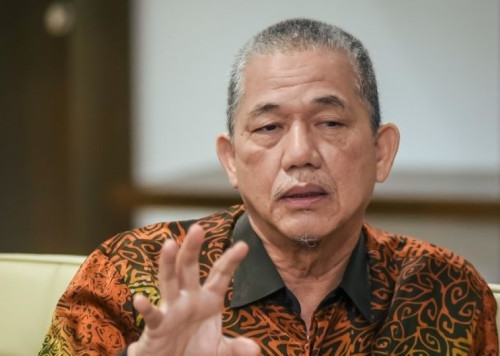
Malaysian Rating Corporation Bhd (Marc) chief economist Firdaos Rosli said the government's initiatives were now more focused on private sector demand and not supply as private sector demand accounted for about 60% of the country's gross domestic product (GDP) at present.
“Supply is a bit difficult (to implement) as the impact is not immediate and if the government opens the economy now, the government will not see the impact immediately in that year, maybe the impact can be seen in the second or third years and so forth.
“But if the government focuses on private sector demand, the impact is immediate. For example, the government gives a Keluarga Malaysia assistance of RM2,000 to a person, he will take the money and spend it.
“But for supply, it is a little slow as a company or FDI (foreign direct investment) has to set up factories, employs workers, this will take time,” he said on Bernama TV’s “Ruang Bicara” programme entitled “Understanding Budget 2022” yesterday.
Firdaos said if the initiative was given to supply, the impact would be more long-lasting and if the government wanted to open the economy, there were several initiatives that the government could introduce, especially in terms of international trade, as this would give more injections of long-lasting impact.
Citing the commodity crisis faced by the country in the 1980s when it was heavily indebted – with debt accounting for more than 100% of GDP – he said the government at that time liberalised the manufacturing sector – i.e. equity to manufacturing was opened 100% to foreign holdings.
“Because of that, FDI from Japan entered the country and grew the economy. Furthermore, the debt burden at that time seemed to be getting less every year as the economy grew faster than the accumulated debt rate,” he said.
Firdaos said in the 1980s before the Asian Financial Crisis, the country's revenue rate increased by about 11.6% annually compared to only 8.0% in terms of expenditure.
In other words, he said the country had more (revenue from) taxes than what was spent at that time and the government could do the same at this juncture by liberalising the economy as it would result in the debt ratio getting smaller.
“The bigger the country's economy, the more economic liberalisation is needed to make the country's debt smaller,” he added. – Bernama, November 3, 2021