Business

Malaysia’s palm oil industry affected by insufficient manpower

Plantation ministry says workers still lacking despite recent approval of 32,000 foreign workers

Updated 4 years ago · Published on 10 Nov 2021 7:45PM

Malaysia’s palm oil industry affected by insufficient manpower
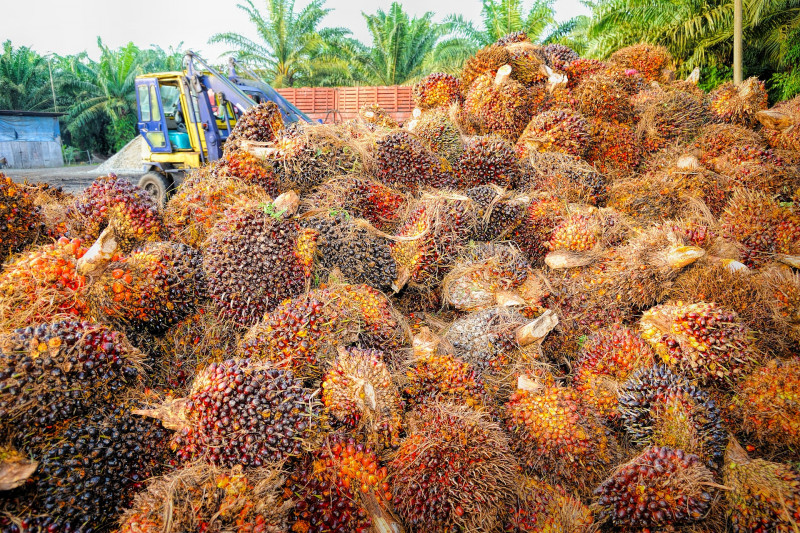
The Plantation ministry says efforts to encourage locals to take up palm oil harvesting jobs have been stymied by a negative perception of the job scope. – Pixabay pic, November 10, 2021

KUALA LUMPUR – Malaysia does not have sufficient manpower for harvesting jobs in the palm oil plantations, said the Ministry of Plantation, Industries and Commodities (MPIC).

MPIC undersecretary Syahnaz Akhtar Mat Ali said the ministry’s efforts to attract local workers for harvesting jobs were hampered by the job scope which was deemed unattractive by locals.

The negative perception had adversely affected the industry, resulting in players having to seek more foreign labour.

“After asking the government to give special approval, we managed to get 32,000 (foreign workers) over the last few weeks, but I think this is still insufficient for the industry players,” he added.

Syahnaz said this during the question-and-answer session at the launch of Nottingham University’s ‘Trafficking-in-Persons (TIP) Project Related to the Manufacturing/Palm Oil Industry’ held virtually today.

On the topic of foreign labour in Sabah and Sarawak, he said that both states had different labour ordinances. 

“Due to the different regulations, there is nothing much that we can do since it is happening in Sabah and Sarawak,” Syahnaz said.

Meanwhile, Nottingham University had embarked on a five-month research project which started on August 30, 2021, and ends on January 31, 2022, with support from the British High Commission.

The project aims to enhance third-party and internal auditors’ competency in detecting and reporting incidences of forced labour in the manufacturing and oil palm industry in Malaysia.

It also aims to sensitise employers to the recruitment process of migrant workers and encourage compliance with labour standards to avoid being complicit in human trafficking.

Through the project, internal and third-party auditors will be trained on what constitutes forced labour from the perspective of the Malaysian labour law, the Anti-Trafficking in Persons (Amendment) Act 2010 and International Labour Organisation standards. – Bernama, November 10, 2021

Related News

Malaysia / 1y

Mandatory EPF contributions for foreign workers to begin in October

Malaysia / 1y

Manage CLQs well or risk losing licence, Sim reminds employers

Malaysia / 1y

Govt proposes mandatory two per cent EPF contribution for foreign workers - PM

Malaysia / 1y

MCA president has 'an archaic thought pattern' says Santiago

Business / 2y

PDC embraces digitalisation through 15 high-impact projects worth RM5 bil

Malaysia / 2y

Group warns of impact from govt’s move to cancel unused foreign worker quotas

Spotlight

Malaysia

Tuanku Muhriz urges Malaysians to uphold Rukun Negara, strengthen unity

Malaysia

PM to bring Felda forensic audit proposal to Cabinet

Malaysia

Malaysia tightens Thailand border security after wave of southern attacks

Malaysia

Mohd Amar’s three-year remark puts PAS’ Kelantan record under spotlight

Malaysia

KPF’s Al-Rawda exposure raises fresh questions over RM119.38 million

By Alfian Z.M. Tahir

Trump’s North Korea gamble deepens Asia’s doubts over US alliances

Malaysia

Rayer denies involvement in 'Maha Kali Red Rally', claims name and photo misused

Business

Nation’s economic outlook strengthens as leading index signals continued growth

You may be interested

Business

Nation’s economic outlook strengthens as leading index signals continued growth

Business

K8 cargo: Businessman seeks clarification from MOF, Customs, Petronas

Business

Matrix Concepts records RM416.7m in 1Q27 sales as geographic diversification gains traction

Business

Oil prices pull back after rally as markets brace for tougher Iran sanctions

Business

Oil prices hold near US$85 as US-Iran tensions keep hormuz risks in focus