
KUALA LUMPUR – Call it whatever you like, GST or SST, but Malaysia needs a reform in its tax collection system – something that allows the government to be sustainable.
At present, the Malaysian tax framework does not provide sufficient revenue nor does it tax all business activity fairly or consistently, said tax experts.
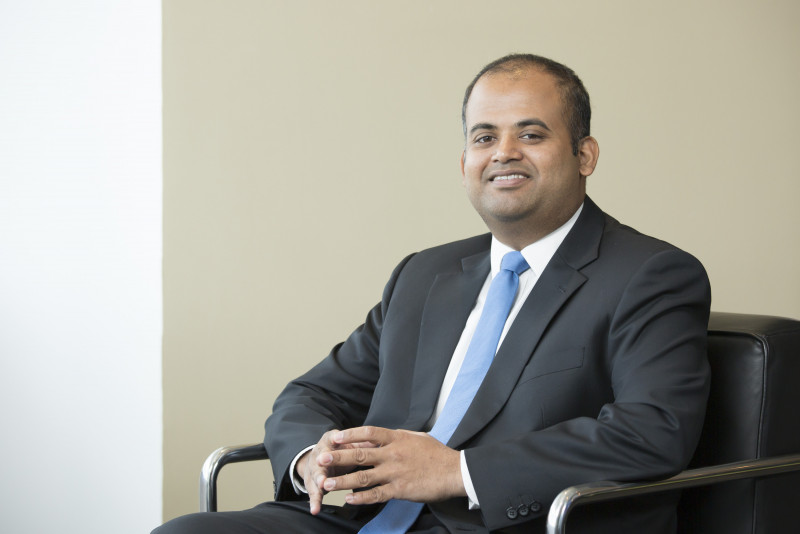
Deloitte Malaysia executive director for indirect tax Senthuran Elalingam told The Vibes that there are a number of valid reasons the goods and services tax (GST) can or should be reintroduced in Malaysia.
“However, GST is not the solution to all our fiscal issues. It is one area in which our tax framework and system can be improved, to ensure a fairer and more equitable collection of tax from all forms of business activity, including businesses currently operating in the shadow economy.
More than 150 countries have adopted a GST or value-added tax (VAT) system, including all countries in Southeast Asia and the Asia Pacific. It will be beneficial for Malaysia, a country that is seeking to be a regional hub, to have a tax system that is consistent and familiar.”
On when GST should be reintroduced, Senthuran said: “As we are coming out of a pandemic, businesses will need time to regroup and re-energise. Equally, consumer sentiment will need to pick up again.”
He also said that the time frame to implement GST may be impacted given the fact the government has spent significant economic capital in providing aid and procuring vaccines over the past 2 years.
“Another critical factor in timing and one that will directly impact the success of any implementation of GST is the period of consultation with businesses and the time given by the government to get ready for the transition.
“If there is a failure to consult and/or a short implementation time frame, this will risk undermining the success of any reintroduction.”
But GST is ‘regressive’
Then again, in reintroducing GST, a valid concern that has been raised by many is that the tax is “regressive” i.e. it impacts those with lower incomes far more than those with higher incomes.
Senthuran said this is because it taxes consumption, and low-income households spend a greater share of their income on consumption, be it for food or essential services.
“What is not often mentioned though is that all transaction taxes that tax consumption, including the SST, are regressive.
“The GST, though, has a built-in mechanism that can reduce the regressive nature of the tax. In particular, the government can exclude from the tax scope basic foodstuff and essential services by applying a 0% rate.
“This ensures that low-income households are not burdened. Unfortunately, this approach means all households, including those with high-income and even tourists and visitors to Malaysia, benefit from this concession.
Another way the government can address this is by ensuring that a portion of the GST collected is returned to low-income households through frequent and regular cash handouts.”
Another frequent discussion point, according to Senthuran, is if the reintroduction of GST could perhaps increase or even reduce prices.
“Unfortunately, the price of goods and services in today’s global supply chain are impacted by a multitude of factors, and tax is a very small part of that.
“Anything – including the value of our ringgit, oil price, supply chain costs, and the availability of critical raw materials – can impact the price of goods and services.”
Senthuran said that our neighbours impose VAT or GST at much higher rates than Malaysia had previously, including Singapore (7%), Thailand (7%), Indonesia (10%), and Vietnam (10%).
Yet, the price comparison of essential goods and services, and the general cost of living vary considerably across these countries, all of which serve to highlight that there are more factors at play than just GST, he added.
“Setting aside all of the above, I stress the importance of not expecting GST to be the cure for all ills.
We should not look at it beyond its primary purpose. This primary purpose is to provide a simple, effective, and efficient method of tax collection from all forms of business activity. It is not meant to be the mechanism in rolling out social policies.
“However, the collected revenue can then be put towards social and other programmes to support the rakyat. At present, the Malaysian tax framework does not provide sufficient revenue, nor does it tax all business activity fairly or consistently,” Senthuran said.
Does our tax collection system need a major reform?
While certain quarters believe the country’s tax collection system needs major reform, Deloitte Malaysia business tax executive director Mohd Fariz Mohd Faruk begs to differ.
“I do not think that the Malaysian tax collection system needs a major reform but a consolidation of the Inland Revenue Board of Malaysia and Royal Malaysian Customs Department could provide a certain level of economies of scale and increased efficiency on the country’s tax administration.
“Our tax systems would also do well to accelerate the adoption of technology to facilitate more online interaction with taxpayers, as well as migrate all official assessment system taxes to self-assessment systems to streamline the entire system.”
Fariz also said that while the pandemic exposed certain shortcomings in the online facilities in the country’s tax system, it has unveiled opportunities for administrators to modernise their approach.
“In some ways, Malaysia has progressed to a self-assessment system, improving the overall efficiency of tax collection.”

Reducing our dependence on oil revenue, direct taxes
On whether Malaysia's current taxation system is sustainable in the long term with government revenues declining amid increasing expenditure, Deloitte Malaysia financial services industry tax leader Mark Chan said Malaysia has room to diversify its tax base, and to lean more towards consumption taxes and GST can be the solution.
“Consumption taxes like the GST will provide the government a more sustainable revenue in the long run and reduce our dependence on oil revenue and direct taxes.”
Chan said the government can also look at better ways to tackle the shadow economy and the implementation of tax identification numbers for businesses.
He added that individual income-earners aged 18 and above should contribute towards more tax collection, as this will increase the number of registered taxpayers and reduce tax arbitrage activities.
“In line with aspirations of the 12th Malaysia Plan, the government can also look at broader tax reform measures such as enhanced efforts in digitalising business transactions to promote greater transparency and identify tax evasion and simplification of tax compliance obligations (especially for small businesses).” – The Vibes, November 16, 2021