Business

Sri Lanka ends farm chemical ban as organic drive fails

Island country currently facing severe economic crisis

Updated 4 years ago · Published on 21 Nov 2021 7:30PM

Sri Lanka ends farm chemical ban as organic drive fails
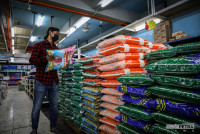
Prices for rice, vegetables, and other market staples have doubled across Sri Lanka. – Pixabay pic, November 21, 2021

COLOMBO – Sri Lanka abandoned its quest to become the world’s first completely organic farming nation today, announcing it would immediately lift an import ban on pesticides and other agricultural inputs.

The island country has been in the grips of a severe economic crisis, with a lack of foreign exchange triggering shortages of food, crude oil, and other essential goods.

Authorities had already walked back restrictions on fertiliser imports last month for tea, the country’s main export earner.

But ahead of planned farmer protests in the capital, Sri Lanka’s agricultural ministry said it would end a broader ban on all agrochemicals, including herbicides and pesticides.

“We will now allow chemical inputs that are urgently needed,” ministry secretary Udith Jayasinghe told the private News First TV network.

“Considering the need to ensure food security, we have taken this decision.”

Vast tracts of farmland were abandoned after the import ban, first introduced in May.

Shortages have worsened in the past week, with prices for rice, vegetables, and other market staples having doubled across Sri Lanka.

Supermarkets have also rationed rice sales, allowing only 5kg per customer.

Farmers’ organisations had planned to march on the national Parliament in Colombo on Friday to demand the import of essential chemicals to protect their crops.

President Gotabaya Rajapaksa had justified the import ban by saying he wanted to make Sri Lankan farming 100% organic.

The policy was introduced after a massive hit to the cash-strapped island’s economy in the wake of the Covid-19 pandemic, with tourism earnings and foreign worker remittances drastically falling. 

Authorities attempted to save foreign exchange by last year banning a host of imported goods, including some food and spices.

Sri Lanka also shut its only oil refinery last month after running out of dollars to import crude. – AFP, November 21, 2021

Related News

Malaysia / 3mth

Covid-19 cases in Malaysia stable, no deaths recorded this year – MOH

Malaysia / 6mth

Bad move to channel EPF dividends into Account 3 for festive withdrawals, cautions economist

Opinion / 10mth

A tale of two administrations: How Warisan and GRS shaped Sabah’s future

Malaysia / 10mth

Government to reassess local white rice supply policies, strategies

Malaysia / 1y

MOH closely monitoring Covid-19 amid rising cases in neighbouring countries

Malaysia / 1y

Price control, subsidies for eggs to be phased out

Spotlight

Malaysia

Tuanku Muhriz urges Malaysians to uphold Rukun Negara, strengthen unity

Malaysia

PM to bring Felda forensic audit proposal to Cabinet

Malaysia

Malaysia tightens Thailand border security after wave of southern attacks

Malaysia

Mohd Amar’s three-year remark puts PAS’ Kelantan record under spotlight

Malaysia

KPF’s Al-Rawda exposure raises fresh questions over RM119.38 million

By Alfian Z.M. Tahir

Trump’s North Korea gamble deepens Asia’s doubts over US alliances

Malaysia

Rayer denies involvement in 'Maha Kali Red Rally', claims name and photo misused

Business

Nation’s economic outlook strengthens as leading index signals continued growth

You may be interested

Business

Nation’s economic outlook strengthens as leading index signals continued growth

Business

Oil prices pull back after rally as markets brace for tougher Iran sanctions

Business

K8 cargo: Businessman seeks clarification from MOF, Customs, Petronas

Business

Oil prices hold near US$85 as US-Iran tensions keep hormuz risks in focus

Business

Matrix Concepts records RM416.7m in 1Q27 sales as geographic diversification gains traction