HONG KONG – Asian stocks and oil prices sank today on fears about a fresh global surge in coronavirus infections and as the future of US President Joe Biden’s massive social spending bill was thrown into doubt after it lost the crucial vote of a moderate Democrat.
With traders beginning to wind down ahead of the festive season, analysts said trade was thinner and markets more susceptible to swings, but the mood has become increasingly glum as central banks start paring their huge financial support to fight inflation.
At the same time, economies are taking a hit as the fast-spreading Omicron coronavirus variant forces governments to reimpose containment measures and consumers are staying at home.
“Omicron remains a concern and cases are on the rise,” said Robert Schein of Blanke Schein Wealth Management. “Investors should be prepared for Covid-19 to continue to be a main factor in market performance heading into 2022.”
“After the bull run we’ve seen over the past 21 months, investors aren’t as used to prolonged periods of volatility.”
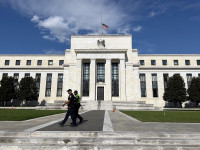
Investors got another negative lead from Wall Street where all three main indexes ended sharply lower on Friday after the Federal Reserve said it would speed up the taper of its bond-buying programme and indicated three interest rate hikes before the end of 2022.
While the announcement was initially welcomed because it cleared up some policy uncertainty, it signalled the beginning of the end of the era of cheap cash that has helped propel global markets to record or multi-year highs for much of the past two years.
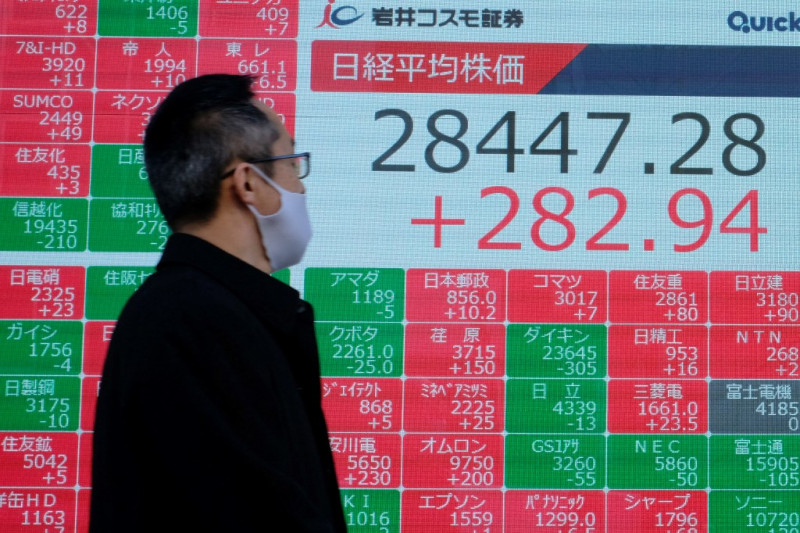
Tokyo and Mumbai shed more than 2%, while Hong Kong fell 1.9% and Seoul 1.8%. Shanghai, Singapore and Bangkok were more than 1% lower. There were also losses in Sydney, Taipei, Manila and Jakarta, though Wellington edged up.
London, Paris and Frankfurt all tumbled at the open.
Dealers were unmoved by news that China had trimmed a key interest rate by five basis points as it looks to reignite the stuttering economy.
Oil prices sink
“It is Omicron’s spread over the festive holidays and Manchin,” Wai Ho Leong, of Modular Asset Management, said. “But most of all, it is the lack of liquidity in all markets.”
The virus spread has hit the oil market on concerns about the impact on demand as countries revert back to containment measures, with both main contracts down more than 3% to extend Friday’s big losses.
“Although the short-term outlook for oil is being sunk by negative virus and US legislative sentiment, we should not discount Opec+ from the equation,” said Oanda’s Jeffrey Halley.
“If Brent crude continues to head south from here, I wouldn’t discount Opec+ stepping in to roll back their recent production increases.”
Investors were also jolted by news that US Senator Joe Manchin would not back Biden’s US$1.75 trillion (RM7.39 trillion) Build Back Better bill, dealing a massive blow to the president and his hopes for giving an extra boost to the world’s top economy.
The West Virginia lawmaker’s vote is crucial to getting the bill through the Senate and his decision leaves Democrats with few options to move forward.
The White House yesterday said it would press Manchin to return to the table and “honour his prior commitments and be true to his word.”
With no fresh spending now in the pipeline, some analysts said they would lower their growth outlook for the United States next year.
“With the Republicans set to sweep the November mid-terms, fiscal policy could turn heavily contractionary at the same time as monetary policy gears up to fight more persistent inflation pressures,” said National Australia Bank’s Tapas Strickland.
Turkey’s embattled lira shed 5% against the dollar after President Recep Tayyip Erdogan cited Muslim teachings to justify not raising interest rates to stabilise the currency.
Erdogan has pushed the central bank to sharply lower borrowing costs despite the annual rate of inflation soaring to more than 20%. – AFP, December 20, 2021