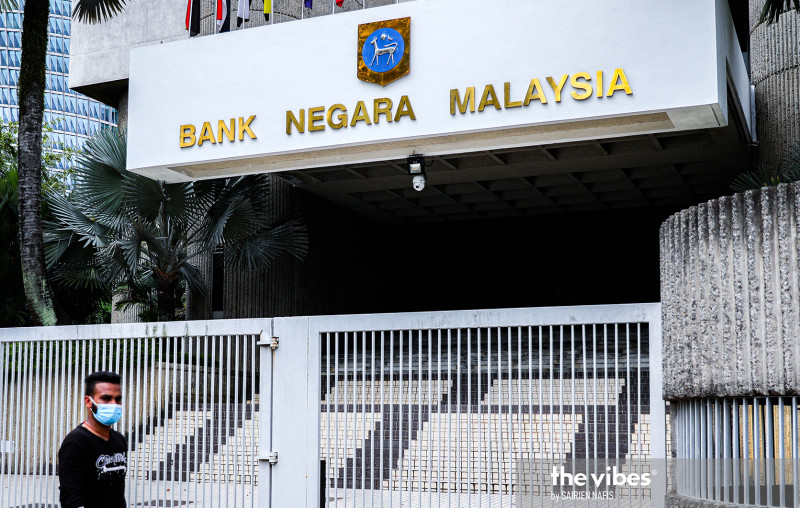
KUALA LUMPUR – Malaysian banks are expected to face some tightening in funding conditions in 2022, said Bank Negara Malaysia (BNM).
In its Financial Stability Review for Second Half 2021 report released today, BNM said monetary policy normalisation in advanced economies could lead to outflows from emerging market economies, including Malaysia, and raise funding costs.
The central bank said domestically, a preference for higher-yielding fixed deposits among depositors as uncertainty subsides, and banks’ renewed competition for deposits to support loan growth as the economy recovers, could also put upward pressure on funding costs.
The impact of these developments on banks is, however, expected to remain manageable owing to their strong liquidity and funding positions, the report said.
It added that banks have remained vigilant in managing credit risks despite the rebound in economic activities towards the end of 2021, reflecting continued uncertainty around Covid-19 developments.
“The high take-up of repayment assistance measures under the Pemulih package, particularly among household and small and medium enterprises (SME) borrowers, also delayed the ability of banks to observe repayment behaviour which would have otherwise provided a clearer picture of borrower stress,” it noted.
The report noted that the banking system profitability was sustained in the second half of 2021, supported by the pick up in lending activities and low funding costs, which helped preserve net interest margins (December 2021: 2.1%; December 2020: 1.94%).
The return on assets and equity of the banking system stood at 1.1% and 9.7%, respectively, in the first half of 2021 versus 1.0% and 8.4% in the first half of 2020, the report said.
It also shared that banks have benefited from low funding costs throughout the year as the growth of cheaper current account savings accounts rose by 12.1%, outpacing that of higher-yielding term deposits (+2.2%).
The BNM report also highlighted that the flexibility provided for banks to use holdings of Malaysian government securities to meet the statutory reserve requirement also contributed to higher interest income as banks allocated excess liquidity into domestic government bonds.
“This helped to cushion the impact of elevated credit costs, modification losses from ongoing repayment assistance and lower-income from trading and investment activities amid rising bond yields,” it said.
The market valuations of publicly listed banks had improved in line with the positive outlook for banks’ earnings in 2022, the report said, adding that this will be supported by sustained growth in lending activities and gradual improvements in the financial condition of borrowers as the economy recovers.
On another note, it said credit costs are expected to remain elevated as relief measures are gradually unwound, however, further additions to provisions are likely to be modest given buffers already built up and continued support for more vulnerable borrowers.
“Latest stress tests affirmed the banking system’s capacity to absorb higher credit losses under severe macroeconomic conditions. Banks are not expected to prematurely release provisions, particularly for their household and SME portfolios, until greater visibility on borrower repayment behaviour is gradually restored.
“Additional modification losses from further repayment assistance for distressed borrowers are also expected to moderate as economic conditions improve,” the report said.
It said Malaysian banks’ had also maintained strong capitalisation levels, with excess capital buffers above the minimum regulatory capital requirements of RM135.4 billion and this strong capital position preserved their ability to support economic recovery.
“These buffers provide banks with an important safeguard against any potential unexpected losses that may materialise amid a still challenging operating environment.
“This in turn, preserves banks’ capacity to support households and businesses’ financing needs through the cycle,” it added. – Bernama, March 30, 2022