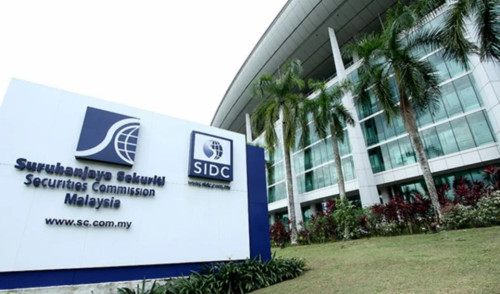

KUALA LUMPUR – The Malaysian Communications and Multimedia Commission (MCMC) must intervene in the formation of a “consortium” among telecommunications companies planning to acquire majority stakes in Putrajaya’s special purpose vehicle Digital Nasional Bhd (DNB).
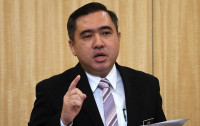
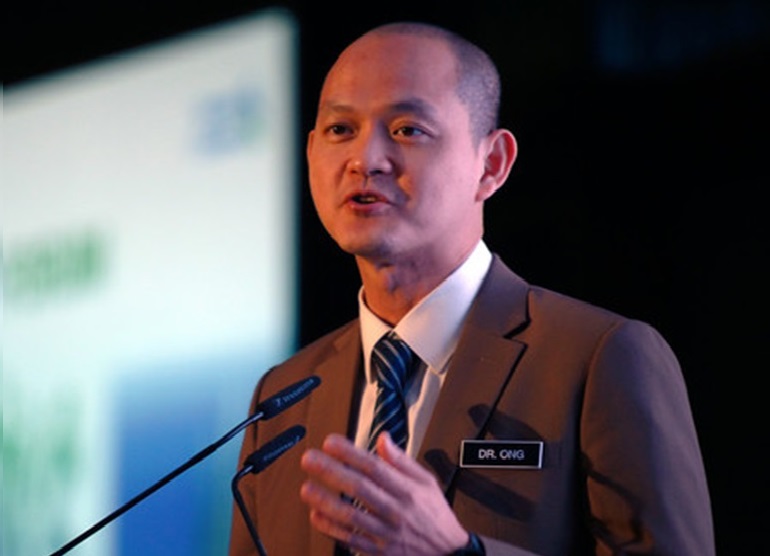
Bangi MP Ong Kian Ming said the commission must step in and make it clear that the offer and formation of a “consortium” involving Celcom Axiata Bhd, Digi Telecommunications, Maxis Bhd, and U Mobile – also informally known as CDMU – is not in the interest of the public.
He told The Vibes that this was because there is a possibility the “consortium” will use the majority stakes to slow down the country’s 5G roll-out.
“In addition, MCMC also has to step in to play its regulatory function of determining if the Reference Access Offer (RAO) published by DNB on its website is an offer which is fair to the telcos,” said the opposition lawmaker.
“(This) allows DNB to keep to its promise of its ‘recovery cost model’ of 5G infrastructure roll-out at the price to the telcos that were publicly announced, which is less than 20 sen for (one) GB (gigabyte).”
The CDMU group had reportedly sent a letter to the Finance Ministry earlier this month, seeking at least 51% of stakes in DNB instead of the 70% offered by the government that was to be shared with other mobile network operators (MNOs), according to Reuters late last week.
In the letter, the telcos argued they were unable to “exercise influence and control to safeguard our investment”.
Meanwhile, an industry insider said the idea of the telcos controlling the 5G network from a wholesale and retail perspective “will kill the competitive playing field” and potential price reduction for consumers.
“This is considered a two-way cartel, which is as bad as a monopoly,” the insider said.
“We should handle this from an anti-competition law perspective. Malaysia prohibits any anti-competitive agreements such as price-fixing, bid-rigging, sharing market, and abuse of dominant position in any market for products or services.”
“This is to promote healthy competition and fair trading and ultimately, to protect the interest of the consumers.”
Another insider had recently estimated that at least 40 million mobile broadband subscriptions are facing further delays in receiving 5G connectivity as the major telco companies grapple over a commercial agreement with DNB.
The RAO agreement, which details the pricing, terms, and conditions, and a catalogue of services offered by DNB for the 5G network, has recently been a bone of contention among the MNOs.
The reluctance of the telcos to sign the RAO is also hampering DNB’s target of achieving 80% population coverage by the end of 2024, and 90% coverage by 2027.
The insider also predicted that at least 15% of the Malaysian population would have been enjoying 5G speeds by the end of April if the major MNOs had jumped on DNB’s Klang Valley pilot project last December.
Conversely, industry expert Faiz Fadzil said the telcos’ refusal to latch on to the government’s DNB offer was due to the terms and conditions involved.
“Looking at the precedent of the original terms, there were areas that were vague and unfavourable to operators,” Faiz said.
“One example was in service delivery. If there are failures such as network outages, which party would be made responsible to address any losses incurred by users?”
“Customers would blame the operator, and the operator would say it’s DNB, while DNB may pass the buck back to the operator.
“The deal in its present form may have shortcomings that operators would want to resolve before accepting it.” – The Vibes, May 26, 2022