Business

M’sian tech sector to benefit from growing US-China tensions: PIVB

Bank expects positive spillover effects due to relocation of industries from the rival countries to Asean region

Updated 3 years ago · Published on 25 Oct 2022 3:00PM

M’sian tech sector to benefit from growing US-China tensions: PIVB
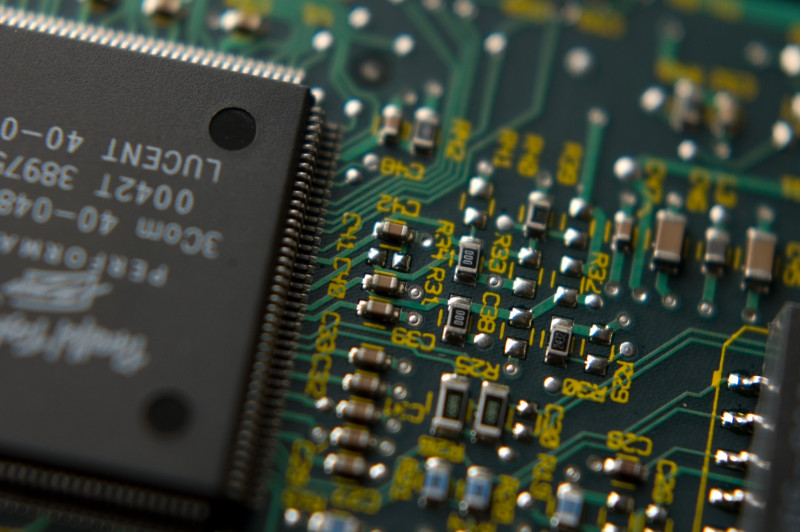
Public Investment Bank Bhd says that investors should take another look at technology stocks with strong fundamentals in the long term, given the attractive risk-reward benefits. – Pixabay pic, October 25, 2022

KUALA LUMPUR – Public Investment Bank Bhd (PIVB) is maintaining its “overweight” stance on the technology sector as it sees more inflows of investments into the Asean region, with Malaysia standing to benefit significantly from the growing US-China standoff.

PIVB said that investors should take another look at technology stocks with strong fundamentals in the long term, given the attractive risk-reward benefits.

Malaysia stands out in the region, it said in a research note today.

“We believe there will be positive spillover effects (from) the relocation of industries from China and the US to this region in order to minimise future risks arising from increased US-China tensions.

“Malaysia is among the leading countries in terms of investments for the semiconductor, telecommunications and technology industries as it has a favourable ecosystem, including talent, infrastructure, and a business-friendly environment,” it explained.

Malaysia’s outsourced services assembly and test and automated test equipment players could benefit from trade diversion from the US and China, PIVB said, adding that the ringgit’s current weakness is also attractive for foreign investors.

“Malaysia’s semiconductor industry, which takes up 13% of global chip assembly and testing market share, is set to benefit from the recently passed US CHIPS and Science Act (US$52.7 billion / RM250 billion in federal subsidies allocated to support chip manufacturing) in the long term, as more assembly and testing jobs are needed to cater for the new state-of-the-art chip fabrication plants with process technology seven nanometres and below,” it added. (US$1=RM4.74) – Bernama, October 25, 2022
Related News

Tech / 1d

Penang’s Tech Dome celebrates 10th anniversary with opening of new space gallery

Education / 2w

Malaysia must embrace AI in education to avoid falling behind

Malaysia / 4w

Police investigate personnel accused of insulting local community while travelling in China

Malaysia / 1mth

Controversy in China, woman comes forward to apologise (video)

Opinion / 1mth

ASEAN’s renaissance: A new lease of life in the multipolar world

Malaysia / 1mth

Comedian calls out viral behaviour of Malaysians abroad, questions ‘erosion of shame’ in social media age (video)

Spotlight

Malaysia

After Johor, the uncomfortable question for Anwar’s critics: Were we too impatient?

By The Vibes Says

Malaysia

Network School's business licences revoked, to cease operations tomorrow

Opinion

Orang Asli in Pahang: Token gestures or genuine recognition?

Malaysia

Tuition teacher sentenced to 105 years in prison and 70 lashes for raping daughter

Malaysia

Azam Baki denies involvement in RM178.29 million contract linked to brother’s company

Malaysia

Aminuddin urges NS voters to weigh manifesto promising benefits for M40 and B40 groups

Malaysia

No need to resign, PM has absolute power if there is doubt – Ahmad Zahid

World

Gaza’s water crisis deepens as families face thirst, disease and collapsing sanitation systems

You may be interested

Business

Govt boosts SME digitalisation support with new smart manufacturing co-investment scheme

Business

Malaysia posts record RM340.9 billion trade in June as exports jump 45.4%

Business

Central bank policies remain crucial in shaping currency market movements

By Alfian Z.M. Tahir

Business

Plastics industry faces tough year as raw material volatility add to cost pressures

Business

Oil prices rally above US$84 per barrel as US-Iran conflict deepens

Business

Oil prices near five-week high as US-Iran conflict fuels supply concerns