Business

Electricity tariff, labour costs hike too much for us, auto groups tell govt

Component makers warn they will be forced to pass these expenses along to consumers

Updated 3 years ago · Published on 29 Dec 2022 11:41AM

Electricity tariff, labour costs hike too much for us, auto groups tell govt
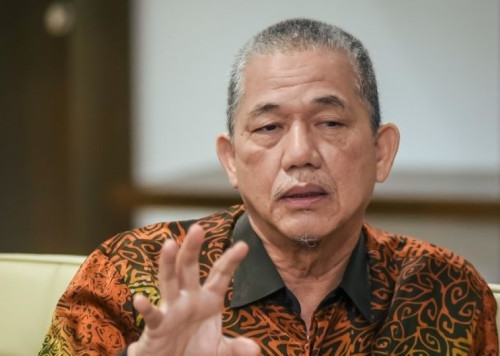
Perodua Suppliers Association president Helmi Sheikh Mahmood says the electricity tariff hike will have a profound impact on every industry, regardless of size, as the net result will be shared by all. – ABDUL RAZAK LATIF/The Vibes pic, December 29, 2022

KUALA LUMPUR – Automotive component makers are calling on the government to defer the implementation of the “sudden upward revision” of the electricity tariff surcharge by more than 566% to between 20 sen and 27.7sen/kWh beginning January 1, 2023, from 3.0 sen/kWh currently.

Perodua Suppliers Association president Helmi Sheikh Mahmood said the increase “will have a profound impact on every industry, regardless of size, as the net result will be shared by all.”

Helmi was speaking in a joint statement on behalf of the Proton Vendors Association, Toyota Suppliers Club, Honda Malaysia Suppliers Club, and the Malaysian Automotive Component Parts Manufacturers Association.

He said that the group of automotive component manufacturers understands the government’s intentions in removing subsidies on the medium voltage and high voltage industrial users to mitigate the impact of high coal costs on the energy sector.

“That being said, the soon-to-be-implemented tariff coupled with the recently revised Employment Act 1955 (Amended 2022) will be too heavy for us to bear,” Helmi said in the joint statement.

He stated that the amended act, which saw an increase in the minimum wage by 25% to RM1,500 from RM1,200, coupled with the reduction of weekly work hours from 48 hours to 45 hours as well as the lower threshold of those who are entitled to overtime compensation, have already increased overhead costs considerably.

“These two factors (tariff hike and the revised Employment Act 1955 (Amended 2022) would be too heavy for us to absorb and as a result, the industry will have to pass these costs on to customers.

“This would have a devastating impact on the automotive industry as this would result in a massive increase in vehicle prices,” Helmi said.

“We too wish to serve Malaysia and we kindly ask the government to delay the increase in power tariff and work with us to ensure any changes, with regard to policies, laws, taxes, incentives, tariffs or other initiatives would have the desired effect,” he added. – Bernama, December 29, 2022


Related News

Community / 1d

Budget 2027: Hoteliers want minimum wage revision to be localised

Malaysia / 1w

MSMEs exempted from new minimum wage rate hike – Minister

Malaysia / 3w

Government extends electricity subsidy protection to 800 kWh until year-end

World / 3mth

UK Prime Minister Keir Starmer announces resignation

Malaysia / 7mth

Non-AI data centres restricted, power and water supply sufficient – PM Anwar

Opinion / 8mth

Significant milestones achieved in MA63 implementation last year

Spotlight

Malaysia

Five fatal helicopter crash victims honoured in Sarawak state awards

Malaysia

No Malaysian is left behind; Budget 2027 puts people first - Anwar  

Malaysia

Panama hit by 6.4-magnitude earthquake

Malaysia

Haze blankets 33 areas with unhealthy air

Malaysia

Malaysia’s 2027 Budget is a steady one: people-oriented continuity rather than bold reform

Malaysia

Budget 2027: What is in it for me?

Malaysia

Budget 2027 steps up Sabah, Sarawak funding by RM2.2b amid push for development parity

Malaysia

Budget 2027: Maternity leave entitlement increased, minimum pension raised to RM1,350

You may be interested

Business

Budget 2027 channels RM270m to SMEs through crowdfunding, P2P financing

Business

Budget 2027 targets foreign e-commerce platforms, channels billions into local firms and startups

Business

Oil slips on Trump’s Iran remarks, but supply risks and strong US dollar keep markets on edge

Business

Malaysia draws US$9.5b in orders for US$1.5b sukuk, cuts borrowing costs