
JOHOR BARU – As the world gears towards a shift from internal combustion engines (ICEs) to electric vehicles (EVs), it is high time for Malaysia’s automotive industry to move towards more sustainable modes of transportation.
Malaysian Electric Vehicle Owners’ Club president Datuk Shahrol Halmi told The Vibes that long-term government policies are the way forward to encourage local automotive manufacturers to dip their toes in the EV market.
When Budget 2023 was tabled by former finance minister Datuk Seri Tengku Zafrul Tengku Abdul Aziz in October, it was announced among other things that EV charging equipment manufacturers would receive a 100% tax exemption on statutory income from assessment year 2023 to 2032, along with a 100% investment tax allowance.
However, Shahrol suggested it would make sense for the government to ensure a vibrant local market for EVs.
“Ultimately, it’s just good industrial policy to encourage our local automotive supply chain to evolve as vehicle technology moves from ICEs to EVs globally.
“Our local vehicle manufacturers’ primary market is Malaysia itself, so it would make sense for the government to ensure there is a vibrant local market for EVs.
“All manufacturers thrive on certainty, so the government can endeavour to set long-term policies that encourage moving from ICEs to EVs, such as gradual reduction of fossil fuel subsidies, annual carbon emission targets, and possibly even a target year to ban new ICE sales.”

Shahrol acknowledged obstacles to creating a local EV market with affordable products that would appeal to the masses, particularly the high cost of batteries.
However, he added that this can be negated by a two-pronged approach involving the introduction of smaller-capacity batteries and an effective EV charging infrastructure.
He said this would not only benefit privately owned EVs, but would pave the way for public transportation vehicles such as buses.
“The cost of each vehicle can be significantly reduced by using smaller-capacity batteries, which increases efficiency but shortens driving range.
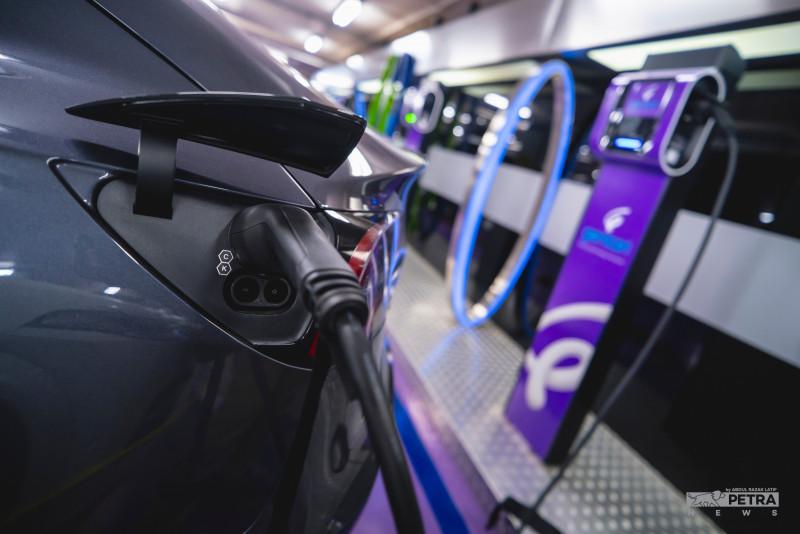
“The government can put more focus on making Malaysia's EV charging infrastructure denser, so that these shorter-range EVs are more practical to use for long-distance travel.”
Given the high costs of replacing EV batteries may turn away prospective buyers, Shahrol said these vehicles usually come with an eight-year or 160,000km warranty for the batteries.
He added that this can be supplemented by strict monitoring to ensure manufacturers comply with the terms.
“Direct government support for charging point operators would help (stimulate demand). There should also be strict monitoring of how well the manufacturers comply with the standard eight-year, 160,000 km battery warranties given.
“However, it is notable that demand is quite strong for the recently launched BYD Atto 3 and Ora Good Cat, so there’s also the factor of having the right product.” – The Vibes, January 9, 2022