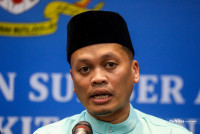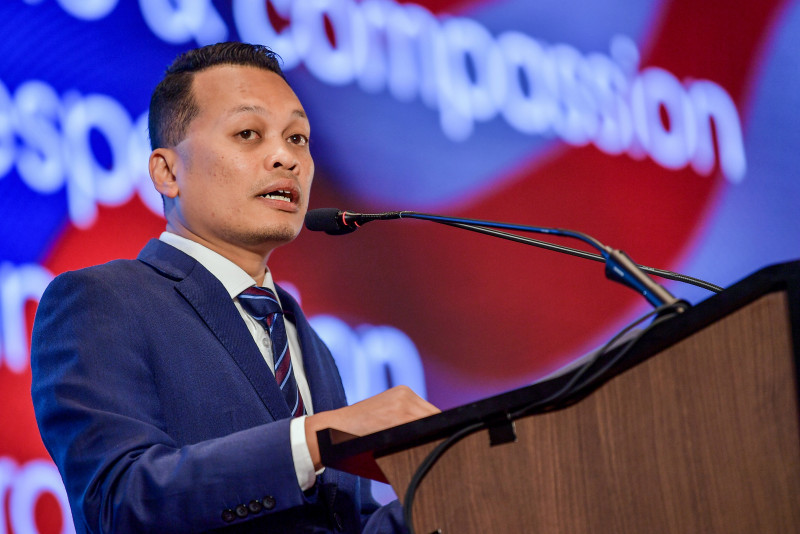

KUALA LUMPUR – Malaysia has the potential to be at the centre of a fully interconnected Asean power grid if cross-border trades continue to be promoted, said Natural Resources, Environment and Climate Change Minister Nik Nazmi Nik Ahmad.
While the issue might be a “big and contentious” talking point, efforts towards advocating inter-Asean trades in Malaysia must be discussed to realise the nation’s capability as the core of the Asean power grid.
“There is an increase in interest (for Malaysia) to promote cross-border trade, hence the need to facilitate market-based competition throughout the value chain and for the industry to be prepared.
“Through interconnection, surplus capacity can potentially be exported to other countries in the future and vice-versa.
“(By) creating cross-border competition, overall efficiency will also be improved,” the Setiawangsa MP said during his welcoming speech at the energy transition town hall on Tuesday.
It was reported in January that YTL PowerSeraya Pte Ltd and TNB Power Generation Sdn Bhd (TNB Genco) have jointly announced an agreement to export and import 100MW of electricity from Malaysia to Singapore via a newly upgraded interconnector.
YTL PowerSeraya is a wholly owned subsidiary of Malaysia’s first independent power producer (IPP) YTL Power International Bhd, while TNB Genco is a wholly owned subsidiary of Tenaga Nasional Bhd (TNB).
TNB Genco managing director Datuk Nor Aman Mufti said then that the agreement is a positive step for the strengthening of cross-border energy supply towards the realisation of a fully interconnected Asean power grid.
Meanwhile, Nik Nazmi’s speech also called on TNB to alter its dynamics to align with reform objectives outlined under the Malaysian Electricity Supply Industry (Mesi 2.0) and engage with IPPs currently responsible for nearly half of conventional generation capacity.
“The objectives of reform under Mesi 2.0 are to increase the industry’s efficiency to future-proof the industry, structure, regulations, and key processes, while empowering consumers.
“The local energy market must readily challenge orthodoxies and adopt technological change or advancement as the energy policy focuses on clean energy generation,” he said.
Policies for the environment
He also highlighted how Malaysia aspires to achieve net-zero greenhouse gas emissions earliest by 2050, as announced in October last year by the Finance Ministry in its Economic Outlook Report 2023.
“There is definitely a need for regulators and government bodies, especially the Energy Commision and the Sustainable Energy Development Authority, to create a suitable environment that supports the acceleration of energy transition,” he said.
A revised Nationally Determined Contribution, Nik Nazmi added, has also been submitted to unconditionally reduce economy-wide carbon intensity against Malaysian gross domestic product by 45% in 2030, compared to 2005 levels.
Besides that, he also assured that the government is committed towards ensuring that there is a good balance between consumers’ and industries’ needs, as exemplified by the implementation of targeted subsidies that protect lower income groups while creating wealth distribution and shifting the market to be more energy efficient.
“It was quite heartening that among the first decisions made by the government (led by Prime Minister Datuk Seri Anwar Ibrahim) was to announce revised electricity tariffs (where we) raised tariffs for medium (MV) and high-voltage (HV) non-domestic users,” he said.
In December last year, Nik Nazmi said that MV and HV industrial users as well as multinational corporations will be slapped with a electricity tariff surcharge at 20 sen per kilowatt hour (kWh) starting January 1 this year, through the imbalance cost pass-through mechanism.
He reiterated Anwar’s promise that domestic users, low-voltage (LV) users such as small and medium enterprises and those categorised as specific agriculture (tariff H) will not face any surcharge increase.
MV users are those who utilise 11kV cables for their electricity supply – these include factories and commercial lots such as malls.
However, specific agricultural industries categorised as MV users are exempted under tariff H.
HV users have been designated as large factories such as car assembly lines, which utilise 132kV cables for their electricity supply. – The Vibes, March 9, 2023