Business

‘Subsidy allocation for next year may increase with rising crude oil prices’

Economy minister says amount currently paid now small compared to future

Updated 2 years ago · Published on 10 Oct 2023 6:46PM

‘Subsidy allocation for next year may increase with rising crude oil prices’
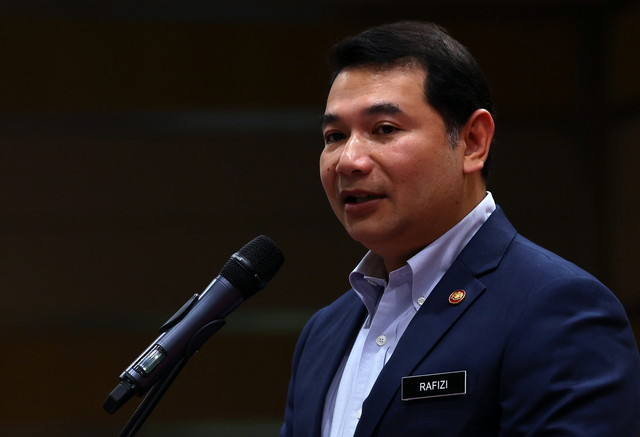
Rafizi Ramli warns that the country’s subsidy expenditure could go higher going forward amid rising global energy prices in the background, especially if the government is unable to minimise the gap between subsidised and unsubsidised diesel. – Bernama pic, October 10, 2023

KUALA LUMPUR – The government is expected to increase its subsidy allocation next year on the back of rising oil prices, which could lead to higher subsidy for petroleum products, said Economy Minister Rafizi Ramli.

He cautioned that the country’s subsidy expenditure could go higher going forward amid rising global energy prices in the background, especially if the government is unable to minimise the gap between subsidised and unsubsidised diesel.

Crude oil price hit US$80 (RM378.40) per barrel last month and analysts have raised their 2024 oil price forecasts up to US$100 per barrel.

“The amount that we are paying now is actually small compared to what we will have to pay in the future,” Rafizi said on the sidelines at the launch of the 28th Malaysia Economic Monitor: Raising the tide, lifting all boats by The World Bank today.

The Auditor-General Report earlier today revealed that the federal government spent RM55.443 billion on subsidies in 2022, which is an increase of 322.1% or RM42.309 billion, against RM13.134 billion in 2021.

Subsidies for petroleum products recorded the highest at RM45.184 billion, or 81.5% of the total expenditure.

Rafizi emphasised that the government has been spending on blanket subsidies that are no longer sustainable.

“This is at the expense of (those) who are supposed to get better protection and better help,” he added.

Commenting on the expectation of higher oil prices next year, he reiterated that the government should move quicker to avoid a ballooning subsidy bill.

“Expectation of higher oil (price) means that we have to move quicker, because even at (the average) US$80 per barrel, we are looking at a subsidy expenditure of around RM50 billion. 

“So, if it goes up to US$100 per barrel, the subsidy bill will go (even) higher. And (as long as) there is a blanket subsidy, it will distort consumption,” he said. – Bernama, October 10, 2023


Related News

Malaysia / 1mth

Ocean Thunder tanker carrying crude oil arrives in Malaysia

Malaysia / 1mth

Global oil pressures driving fuel price; Criticisms misplaced, says economist

Malaysia / 2mth

Amanah VP praises steps taken to deal with Middle East crisis

Malaysia / 2mth

Driving licences expired for more than 36 months are not eligible for RON95 subsidy – JPJ

Malaysia / 2mth

Report: Subsidised RON95 entitlement to be reduced from 300 to 200 litres per month

Malaysia / 2mth

West Asia conflict: Fuel prices continue to soar

Spotlight

Malaysia

Former head of a ministry's corporate communications unit acquitted of bribery charge

Malaysia

Two sisters die trapped in Johor house fire as escape routes cut off by flames

Malaysia

NS election speculation intensifies as Aminuddin granted audience with state ruler

Malaysia

Teenager who drove recklessly, causing death remanded for further investigation

Malaysia

Police looking for trio involved in violent armed robbery in Penang (video)

Malaysia

Family of five killed as car crashes into water pipe in Serian

Malaysia

'I was once spat on by a pakcik' — Marina denies fear of contesting Malay-majority seats

Malaysia

Jewellery shop among six premises destroyed in fire (video)

You may be interested

Business

Ringgit gains as US trade policy concerns offset strong American economic data

Business

SpaceX targets historic US$75 billion IPO in record-breaking market debut plan

Business

Private capital set to power AI data centre boom as global tech capex forecast raised to US$5.3 trillion

Business

Ringgit eases against US dollar as strong American data and Gulf tensions boost greenback

Business

Time for banks to step up and do their part, stresses former finance minister

By Ian McIntyre