
AMERICAN presidencies are defined by the entertainment they inspire as much as the real-world impact they leave behind. Yet, when people look back, pop culture is often interwoven in the tapestry of history.
Entertainment during the Obama administration was marked by a sense of pop-optimism. It was typified by the iconic ‘Hope’ poster by artist Shepard Fairey.
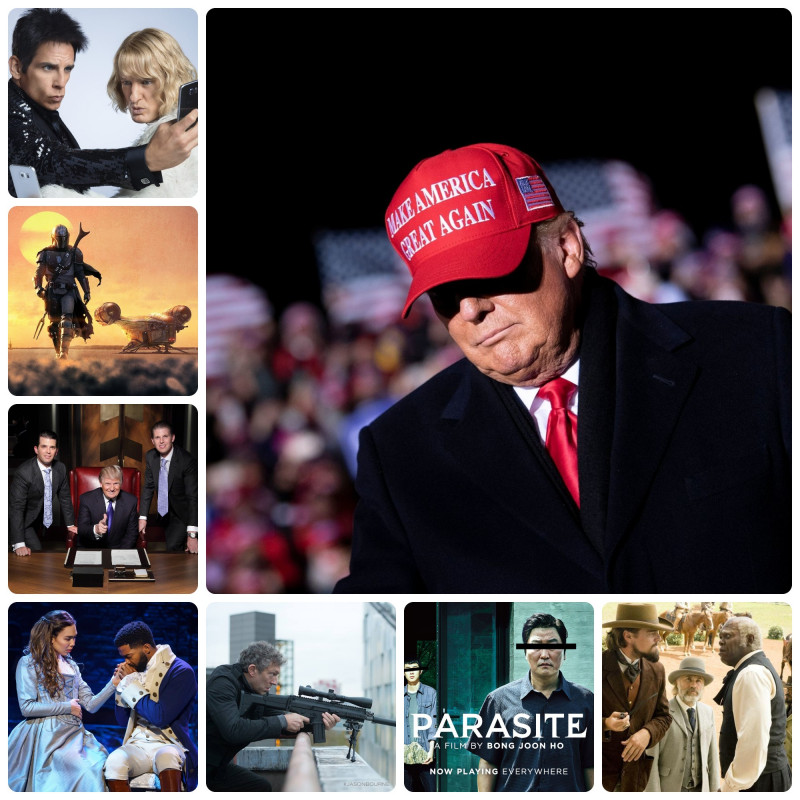
The hit Broadway play ‘Hamilton’, a rap-musical featuring minorities playing the roles of historically white Founding Fathers, was very much the defining pop culture relic of the era.
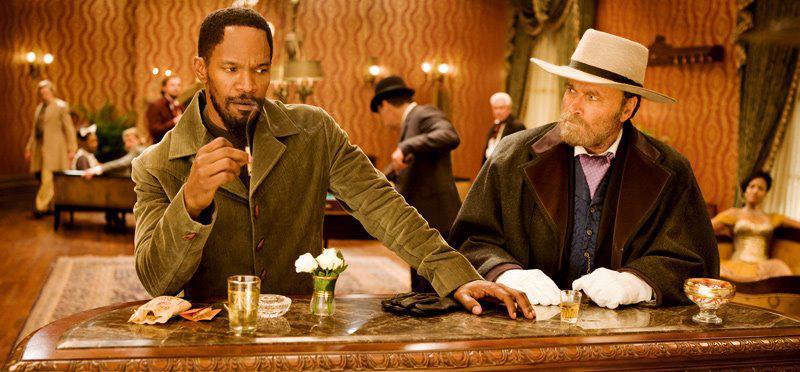
There was also an explosion in the number of films that focused on the black experience, namely ‘Django Unchained’, ‘The Butler’ and ‘12 Years a Slave’. Each of which took a decidedly different view of history.
The ‘Bourne’ spy thriller saga was emblematic of the Bush administration. It was a series of action movies that grew ever more distrustful of the government as it went along. ‘The Dark Knight’ was another landmark film, showing a superhero resorting to less than ethical means to defeat his ultimate foe.
The Trump presidency is a peculiar case. Considering that Donald Trump himself was a creation of entertainment industry mythmaking.
Through his extensive cameo appearances (‘Home Alone 2’, ‘Zoolander’) and his hit reality show ‘The Apprentice’, the facade of a dealmaking New York real estate robber baron was born and shared across the airwaves.
There’s an argument to be made that he wouldn’t have ascended to the highest office in the land were it not for his pop-culture omnipresence.
Hollywood, not exactly a fan of the average Republican president, found Trump especially repulsive. One can look at the celebrity attendees of his inauguration compared to those of the Obama and Biden administrations.
Many films that were released focused on social unease – be it economic or racial. Most likely in response to the openly combative racial atmosphere of the Obama era. This only became exacerbated during Trump’s tenure.
‘Get Out’, the 2017 horror film written and directed by Jordan Peele became a hit because it reflected unspoken truths about the dynamics between seemingly well-meaning rich white people and black people they supposedly support.
“... I would have voted for Obama for a third term, if I could. Best President in my lifetime, hands down,” a villainous character intones, implying that those who appear outwardly friendly may not have your best interests at heart.
The film also shows how racism isn’t the province of the often stereotyped ‘rednecks’ and ‘hillbillies’, but also of the elite. Though they keep theirs under wraps and are more insidious about it.
2019’s ‘Knives Out’, which on the surface is a murder mystery revolving around the death of a family patriarch, very much has issues of class on its mind. One of the protagonists is an immigrant’s daughter who is tolerated by the elite family she works for.
But, when the situation comes to a boil, their honest selves’ come out, treating her with condescension at best and outright nativist bile. Once again, the well-off are not always your friends.
Class struggle is very much at the forefront of the most recent Best Picture winner at the Oscars. South Korea’s ‘Parasite’, was the first-ever foreign language film to receive that honour – to the consternation of Trump.

Surprisingly, or perhaps not, the film was uproariously received by celebrities and other high society types in the US. Even though it skewers elite condescension and how the rich don’t understand the struggles of the working class.
Even though it addresses social issues that are seemingly unique to South Korea, the film’s awareness of the effects of capitalism on everyone makes its message universal. Under this economic system, greed becomes very tempting to anyone and everyone.
But perhaps the best example of Donald Trump’s impact on the entertainment industry is the fact that many parts of it – at least in the United States – are on life support due to the impact of the Covid-19 pandemic.
‘Avengers: Endgame’ was billed as a climactic cinematic event, the end of a 20-plus movie event stretching back to 2007’s 'Iron Man'. Little did we know that it would be the final moviegoing event for some time.
It seems that blockbusters have migrated to the small screen, as typified by Disney Plus’ ‘The Mandalorian’. What was once seen as a large scale experience – new Star Wars! – could now be watched on phones and tablets.
Netflix seems to be breaking new ground with viewership numbers for its programming. ‘Queen’s Gambit’, ‘Bridgerton’ and ‘Lupin’ in quick succession have succeeded in solidifying the streaming platform as the future of entertainment.
With cinema chains in the US – and other countries which are in various stages of lockdown – on life support and entertainment conglomerates shifting to the small screen, the future of the big screen experience is very much in doubt. – The Vibes, January 23, 2021