
THE Feast of the Assumption is celebrated by Catholics all over the world on August 15 to commemorate the assumption of the Virgin Mary into heaven.
Mass, vigils and processions are held leading up to the feast day which honours the Mother of Jesus.
The Catholic community in Melaka, particularly the Portuguese community in Bandar Hilir, however, have a unique twist to their Feast of the Assumption celebrations.
On this day, the community here commemorates a period when they faced religious persecution from the Dutch administrators who were Protestant reformists.
The Dutch clamped down on the Catholic church and community in Melaka when they occupied what used to be a thriving port city along the Straits of Melaka between 1641–1824. The first 50 years of this period were the most challenging for the Catholic community in Melaka.
During this time, masses were held by fugitive priests in secret places and spaces, hidden away from the authorities. And the Feast of the Assumption of Mary was during this time held in the middle of a sugarcane plantation that used to cover what is today Bandar Hilir in Melaka, said Melaka Heritage Watch Ad-Hoc Action Group spokesperson Martin Theseira.
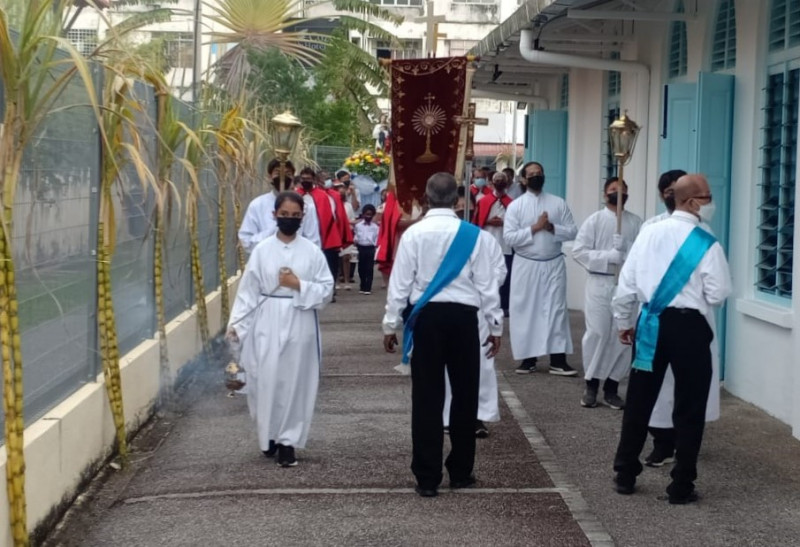
Every year, the procession route from and back to the Chapel of Assumption on Praya Lane is lined with sugar cane stalks to commemorate the resolve of the ancestors of the Portuguese community to keep their Catholic faith alive by defying the Dutch rules and regulations.
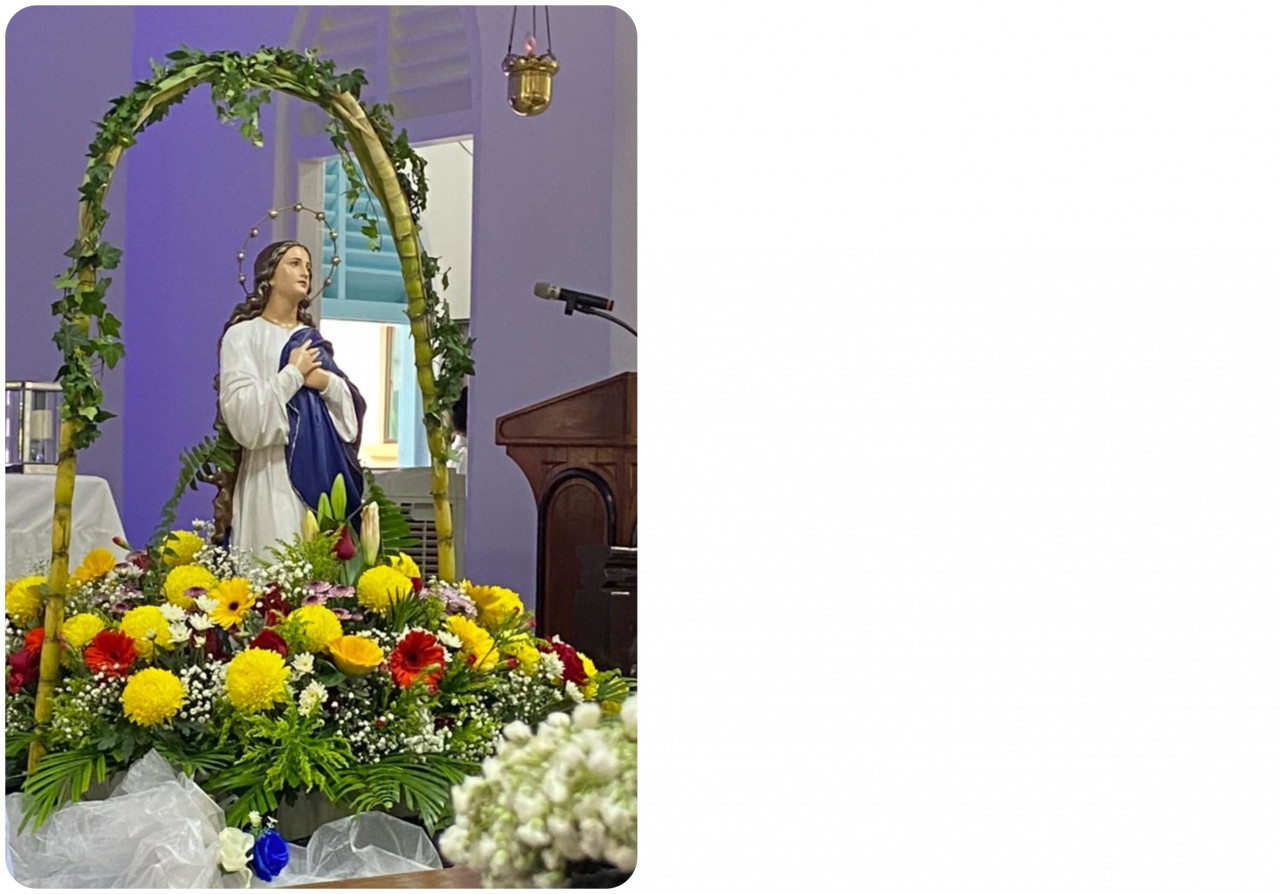
This year the community celebrated the feast on a modest scale after a two-year hiatus following lockdowns and restrictions imposed over the Covid-19 pandemic period. Almost 400 people from all over the country attended mass and took part in the procession at the chapel this year.
Theseira said: “The struggle and stories of our descendants are passed down, and continue to live on in traditions like this.”
An article in the Journal of the Malaysian Branch of the Royal Asiatic Society by Peter Borschberg titled: Ethnicity, Language and Culture in Melaka after the Transition from Portuguese to Dutch Rule (Seventeenth Century) states the reduced number of Roman Catholics during the Dutch occupation in Melaka led to a majority of monasteries and churches being closed or converted to residences, slave boarding houses, hospitals, schools and libraries.
Catholicism was allowed to be practiced, but this was restricted to only one church. The name of the church is not mentioned, but it is presumably located near the quarter between the surviving ‘white Portuguese’ and the separated ‘mesticos’ (native and Portuguese mixed lineage) population in Tranquerah (known now as Tengkera).
However, relics and artifacts of the Catholic community were scrutinised and some were deemed inappropriate and offensive – like the bones of Japanese and devotional objects. The Portuguese community went to lengths to smuggle and hide these items in their homes, and in the jungles and islands outside Melaka.
The Dutch were keen to encourage the Roman Catholic clergy to remain in Melaka but the latter was reluctant to swear allegiance to the Dutch Republic – seemingly a conflict of interest that follows such an oath as they would be going against the See of Rome and the authority of Spain, which is why the Dutch resolved to ship the defiant local Catholic priests off to Batavia (present-day Jakarta). – The Vibes, August 17, 2022