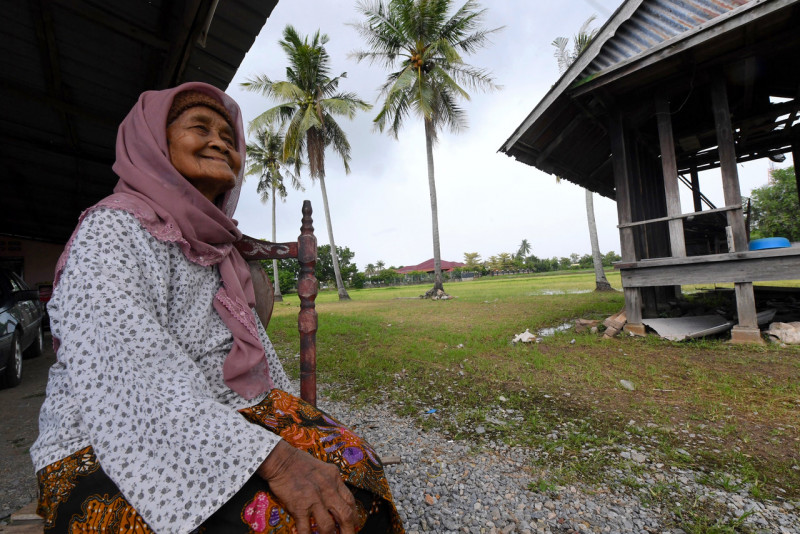
KANGAR – At a traditional Malay house, a nonagenarian was seen sitting on a rickety wooden chair, staring at the rice fields while singing Japanese songs that she learned during the Japanese occupation of Malaya during World War Two.
Recalling life during the colonial times, Dah Cha, 95, fondly known as Nek Dah, said the Japanese army was fierce and villagers – especially young ladies – were afraid to leave their homes.
However, compared to the past, Nek Dah said she was now more afraid of the Covid-19 pandemic, which she described as the unseen enemy.
“In the old days, the people were scared of the Japanese force because they wanted to conquer our land, and they were cruel enough to kill people. However, today’s generation is facing the deadly Covid-19 pandemic that can kill just about anyone.
“This makes me scared of Covid-19 compared to the Japanese army because we can run and hide if we saw them, but this new enemy (Covid-19) is invincible,” she told Bernama when met at her house in Kampung Padang Jawa, recently.
Although her memory has faded a bit, Nek Dah was often assisted by her daughter Gayah Ahmad, 66, in remembering old times and being aware of the current situation.
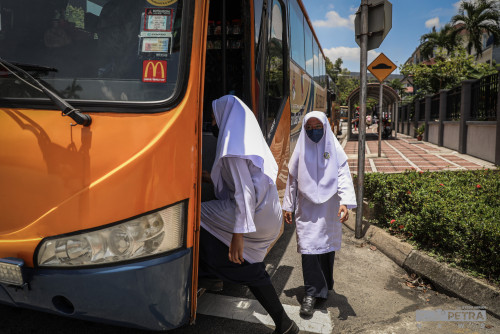
“At that time, we were scared to go to school. I only managed to go until Standard Three before my mother asked me to quit school because she was fearful of the Japanese army. Now, the younger generation is worried to go to school because of Covid-19 and in fact, the schools are also closed,” she said.
The mother of four said she never thought that her grandchildren and great-grandchildren would face a relatively similar situation to the Japanese occupation, where people were afraid to leave home because they did not know what kind of danger might await them.
Elaborating, Nek Dah said her mother prohibited her from leaving home and she would only help her transplant rice seedlings at the paddy field near the house.
To avoid being recognised by Japanese soldiers, Nek Dah said she would cover her head and face with batik cloth and this was no different to the current situation, where people are required to wear face masks to prevent the spread of Covid-19.
Therefore, she said all quarters must work together to fight Covid-19 and ‘free’ the country from the pandemic threat. – Bernama, July 1, 2021