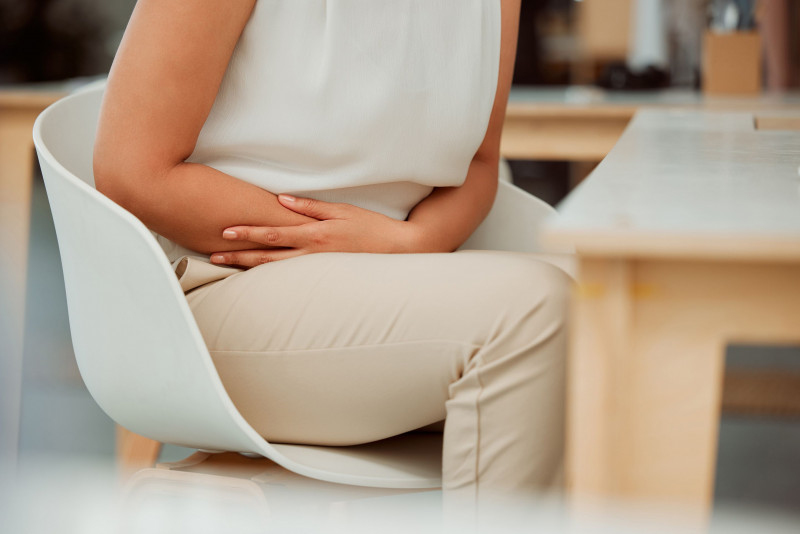
SPAIN has proved a pioneer in Europe by adopting, in February, a law seeking to introduce menstrual leave for women suffering from painful periods. A new measure on the Old Continent which aims to break certain taboos, and is pushing other countries to start thinking more seriously about menstrual health at work.
As World Menstrual Hygiene Day (May 28) approaches, the Swedish brand Intimina presents the results of a survey* conducted in the UK, highlighting the many clichés surrounding painful periods, as well as women's fear of being stigmatised in the workplace.
Shattering taboos
Conducted by Censuswide among more than 1,000 women, the study shows that nearly two thirds of respondents (63%) are in favor of paid menstrual leave in the UK, and nearly half (49%) say they have already felt the need to use such a measure.
The question is whether, in the absence of a law granting such leave, employers are really willing to go the extra mile for women suffering from painful periods. Indeed, only one in ten respondents said their employer would be willing to offer a few days off if they had severe symptoms during that time of the month.
"No one should be stigmatised, excluded, or discriminated against just because they menstruate. Severe menstrual symptoms should be treated like any other health issue. Women who suffer from debilitating menstrual symptoms should have access to paid leave. In every country. Period," said Thorsten Kiefer of Wash United, the organisation with which the Intimina brand has partnered for this global day of action to advocate for the implementation of menstrual leave.
Another, not insignificant, finding is that nearly one in two women (49%) reports a 'lack of sympathy' from employers or managers when bringing up the subject of menstrual pain at work.
This observation has an impact on the mental health of the women concerned, to the point that one in four respondents says that they have already felt the need to justify this type of absence with all sorts of excuses, sometimes even the most unusual.
Catching a mysterious virus, or getting food poisoning after eating bad shrimp are among the most popular excuses used for absence due to painful periods, with 28% and 20% of votes respectively.
Mental health impacts
However, this only concerns women who are absent due to menstrual pain, since most continue to work despite their symptoms. The survey reports that for 20% of British women, this has a negative influence on their well-being and mental health.
"Menstruation affects everybody differently, and for some their period can come with severe physical and mental symptoms. Not being able to take time off due to discomfort or having to lie to an employer can create stress and anxiety which can cause health to deteriorate even further," says Dr Susanna Unsworth, Intimina's gynecology specialist.
To mark World Menstrual Hygiene Day, the Swedish feminine care brand is launching the 'Useless Spanish Lessons' campaign, which parodies an online language tutorial. The idea is to list all the excuses or pretexts that women in Spain no longer need to resort to using when they suffer from menstrual pain.
It is also a way to highlight this first step forward in Europe. Note that elsewhere in the world, Japan, Zambia, Taiwan, South Korea and Indonesia have also established a menstrual leave, all with very different conditions, and not always paid. – ETX Daily Up, May 26, 2023
*This survey was conducted by Censuswide in March 2023 among 1,017 women in the UK.