MALAYSIA has made some improvements to its air quality since 2005 when a state of emergency was announced as its Air Pollution Index (API) exceeded 500.
Its most recent annual API rating from 2022, was an improvement on the previous year, partly because the country experienced more humidity and rain in 2022.
Despite some steps forward, vehicle smoke, industrial activity emissions and the burning of plantations for land clearing and landfills continue to contribute to suboptimal air quality in Malaysia.
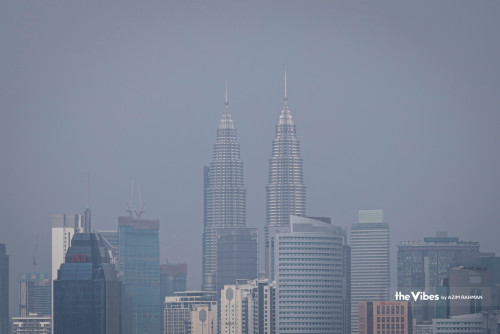
For decades the country has also experienced haze, which has been blamed partly on smoke from forest fires blowing over from Indonesia.
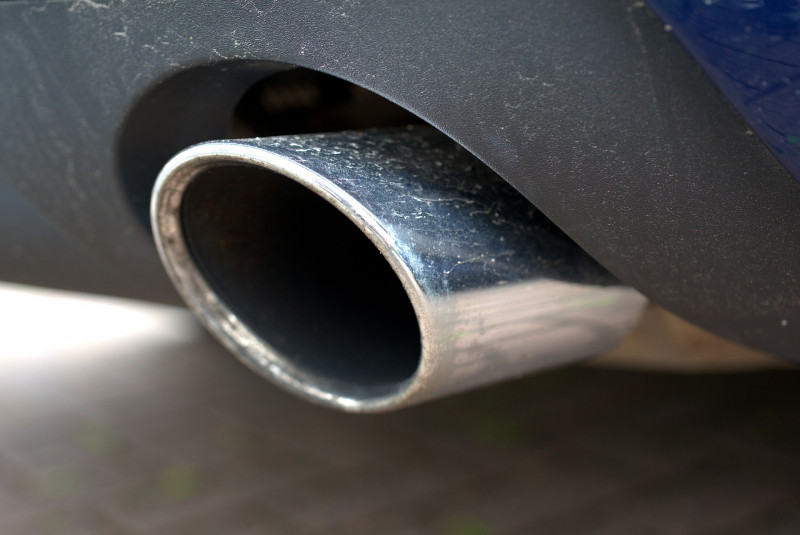
In more recent years, an increase of vehicles on its road has also caused an increase in carbon monoxide in Malaysia’s air, especially in its cities.
As Malaysia grapples with these challenges, it will need forward-looking new initiatives – including policies to reduce greenhouse gases and air pollutants – to ensure its air quality doesn’t further deteriorate.
The latest API indicates that in 2022, Malaysia’s urban areas recorded the highest levels of the air pollutant PM10 – inhalable particles with diameters 10 micrometres and smaller, which can induce adverse health effects – compared to non-urban areas.
One factor impacting Malaysia’s air quality is the growing number of vehicles on the nation’s roads. Records from the Road Transport Department Malaysia in the 2022 Department of Environment report indicate a 4.5% increase in registered motorcycles in 2022 compared to 2021; in the same year, cars increased by almost 4%, and vans by almost 2%.
Urban areas also recorded higher levels of tropospheric ozone (O3), a secondary air pollutant gas that is primarily released on hot days, mostly from industrial emissions and motor vehicle exhausts.
Malaysia has also recorded climbing carbon monoxide (CO) emissions in recent years mainly due to the increase in motor vehicles, which mostly consume fossil fuel.
Private cars most dominant polluters
To put these figures into perspective, data on Malaysia’s air quality are not all bad: The country has cleaner air than its neighbours Indonesia and Thailand, and national emissions data obtained from the Department of Environment Malaysia (DOE) shows significantly lower levels of PM10 overall when compared with other Organisation for Economic Co-operation and Development (OECD) countries.
But there is, nevertheless, some cause for concern.
Newly registered vehicles in Kuala Lumpur contribute approximately 6% of these emissions nationwide, an analysis of urban air pollutants has found.
That research determined that emissions of PM10 from private cars were the most dominant at 214,427kg, followed by emissions from motorcycles, at 118,582kg.
Private cars also contributed more carbon monoxide and nitrogen oxide (NOx) in 2014 compared to 2010 (14,605 kg of CO and 5,726 kg of NOx in 2014, compared with 9,830kg of CO and 3,854kg of NOx in 2010).
The increase is small compared with other OECD nations. Total emissions for PM10 and NOx were also lower in Malaysia than in most countries in 2022, the Department of Environment report shows.
However, there is some room for improvement: the study also found that carbon monoxide emissions in Malaysia were higher than in Asian countries such as Japan and Korea, as well as in other European countries.
National policies
And the number of cars on Malaysia’s roads shows no signs of slowing. Nor is its uptake of electric vehicles currently significant enough to counter these increasing vehicle emissions.
Some of the Malaysian national policies already in place for better air quality include the national target to cut carbon intensity against gross domestic product (GDP) by 45% by 2030; the Renewable Energy Act; the National Green Technology Policy; the National Energy Efficiency Plan and the National Policy on Climate Change.
Malaysia also pledged, at the 26th United Nations Climate Change Conference of the Parties (COP26) in 2021, to reduce greenhouse gas emissions.
Through these policies, the country is committed to implementing self-adjustment measures against the effects of climate change by accelerating the phase-out of coal use, reducing deforestation, converting the use of motor vehicles to electric vehicles, and encouraging investment in renewable resources.
The reduction of carbon emissions in the power generation sector and the improvements to energy efficiency are expected to contribute as much as 70% of the overall carbon mitigation potential in Kuala Lumpur by 2030.
More green transport needed
But more is needed.
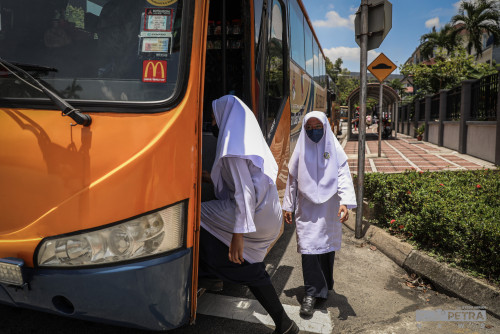
Malaysia could consider adopting more green transport initiatives, as the trend of emissions of pollutants from the transportation sector in Malaysia is on the increase compared to other OECD countries.
On this front, the Kuala Lumpur City Hall’s membership of the C40 Cities Climate Leadership can play a role. Indeed, the issue of climate change has significantly encouraged the development of more intensive, practical and integrated acts, policies, and strategies by policymakers and stakeholders in Malaysia to combat air pollution.
Incentives such as tax credits for those using green technologies, including electric vehicles, should encourage more consumers to use affordable green vehicles that consume less fossil fuel.
Incentives can also be given for the use of energy-efficient vehicles and plug-in hybrid-efficient vehicles, as implemented successfully in other Asian countries (China, Japan, India), Europe, and the United States.
However, the growth of the electric vehicle industry in Malaysia is hampered by factors such as high prices, slow infrastructure implementation, and technological limitations.
If Malaysia is to successfully combat vehicle-related emissions to avoid further deterioration of its air quality, efforts must be undertaken by stakeholders to address these issues. – The Vibes, January 8, 2024
Siti Haslina Binti Mohd Shafie is a senior lecturer at the Geography Section, School of Humanities, Universiti Sains Malaysia.
Published under Creative Commons and in partnership with 360info.org