SARAWAK’S last nomadic people, the Penans, are unwilling to share their knowledge on medicinal plants, acquired orally through the ages, with anyone outside the tribe.
In 2020, Universiti Malaysia Sarawak (Unimas) research team looking into the medicinal plants of the Selugo Penans at Long Kerong, Baram, had to agree to certain terms and conditions before it was given the permission to undertake the study.
“They fear that if the world knows what they know, then rampant exploitation of the forest could set in and everything could be taken away from them,” the lead researcher Franklin George said.
“They believed they needed to hold on to something.”
Franklin, a Penan of Long Kerong himself, had to thrash out the deal with the civil society group, the People’s Association for Development and Education of Penan Sarawak, for permission to conduct the research.
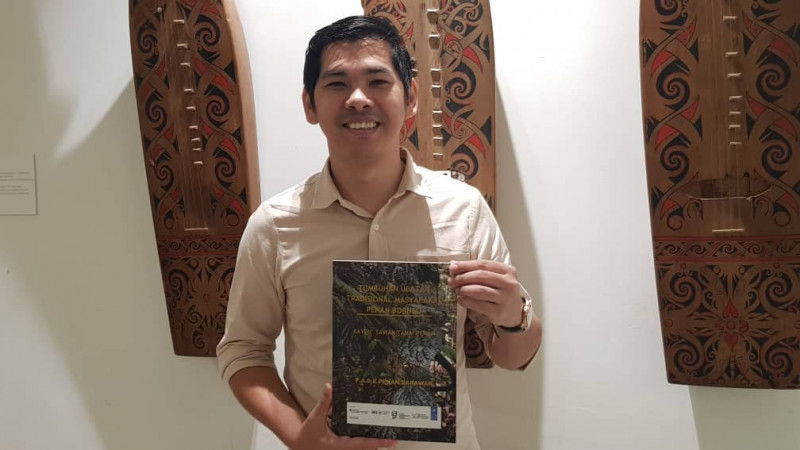
The main condition is not all the plants the research team found to contain medicinal properties could be documented in the book, “Tumbuhan Ubatan Tradisional Masyarakat Penan Borneo” (Traditional Medicinal Plants of the Penan Community in Borneo), Franklin wrote.
Of the 100 odd plants found, the Penans would only agree to have just 53 to listed in the book. The book also could not be sold. It could only be circulated for studies among local researchers.
Franklin said samples of the plants the team collected are not even deposited in any biological repository as they have no permission to do so.
“They are jealously guarding their knowledge for a simple reason,” Franklin explained.
“Sharing will threaten their existence.”
While many Penans – who broadly come under the Orang Ulu Dayak category – have adopted a sedentary lifestyle, a good many of them are semi-nomads and a few hundred still hang on to the old way of life by roaming the thick forests of upper Baram for food and animals.
Deforestation due to logging has made it increasingly difficult for the Penan to sustain their nomadic lifestyle.
When it comes to their people, the Penans are not shy to share their botanical knowledge.
“The young are taught at a very tender age by their parents or family elders the various plants found in the forests, which ones have medicinal properties and which ones to avoid,” Franklin said when speaking to reporters after his weekend talk on the medicinal plants of the Selugo Penans in Kuching.
The talk is based on Franklin's 138-page book “Tumbuhan Ubatan Tradisional Masyarakat Penan Borneo”.
The proverb “doctor, heal thyself” holds true among the Penans, who, when they reach the age of understanding, are taught about medicinal plants that could be found in the forests around them so they can treat themselves in medical emergencies.
“Everything is done orally,” Franklin said.
He said he remembered so well how his father would share his rich botanical knowledge by explaning what the various plant species they encountered in their many walks in the forest to their farm, during hunting or fishing, are for.
“Rushing to the clinic for treatment if you are sick is out of the question as the nearest clinic could be hours away,” he said.
He said that was why having the knowledge on medicinal plants is so important to the Penans.
“If they are bitten by a poisonous snake, for example, they’ll surely die before they reach the clinic.”
Franklin, who has a master’s degree in social science from Unimas’ Institute of Social Informatics and Technological Innovations which focused on documenting, digitalising, and preserving Oroo, the sign language used by nomadic Penan groups, even has a real life testimony to share.
During the research, he said he witnessed firsthand how the life of the former headman of Long Kerong was saved with a local concoction extracted from a plant after he was bitten by a poisonous snake.
The nearest health clinic was at Lio Matu, a Kenyah settlement that is about four to five hours journey by boat.
Though they raced him to the clinic by boat, en route they applied their age-old remedy made from a type of vine which the locals know as “Bengoo Pelanok”.
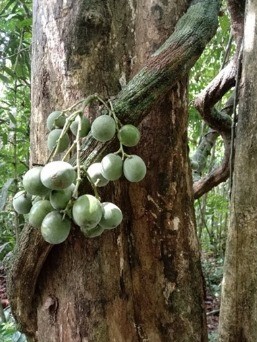
The vine’s scientific name is “Fibraurea Tinctoria – Menispermaceae”.
To produce the antidote for the snake bite, the fruits of the plant are squeezed and the extracted juice is then applied on the bitten area.
The roots and the leaves of the plant are also burned, and the ashes applied onto the wound.
Franklin said by the time the headman reached the clinic, he had recovered from the snake bite.
The plant, the Penans believed, is also good for treating fever and insect bites.
For fever, the roots of the plant are steamed and the infused steamed water taken orally.
To treat varicose veins and pain in the joints, they will look for the creeping plant known locally as “Arii”.
Its scientific name is “Piper Beetle or Piperacae”.
The plant is boiled, and the boiled water taken orally.
The plant could also be used to treat itchiness.
The leaves are first shredded and then squeezed for their juice.
The juice is then applied to the itchy parts of the body.
If they have diarrhoea, they will look for the “Beripun” tree – a “rubbery” tree with large leaves.
They boil the cambium part of the tree’s bark for about an hour and after cooling down, they will drink the boiled water.
For toothache, the Ikup plant, whose scientific name is “Bauhinia Acuminata – Fabaceae”, holds the treatment.
The roots of this small plant with double leaves are burnt to get their ashes.
The ashes are then stuffed into the aching tooth’s cavity.
The rubber on the stalk could also be used for toothache.
Long Kerong, situated along the upper reaches of the Baram River, can be reached in 8 to 10 hours from Miri by paved road, logging road and river but the journey can be challenging due to the rugged terrain. – August 18, 2024.